Trump Threatens 100% Tariff on Any Country Imposing a Digital Tax on US Companies
Trump threatens a 100% tariff on any country taxing US digital services, one day after the EU finalized its new trade deal with Washington.

Dubai | EcoPulse24
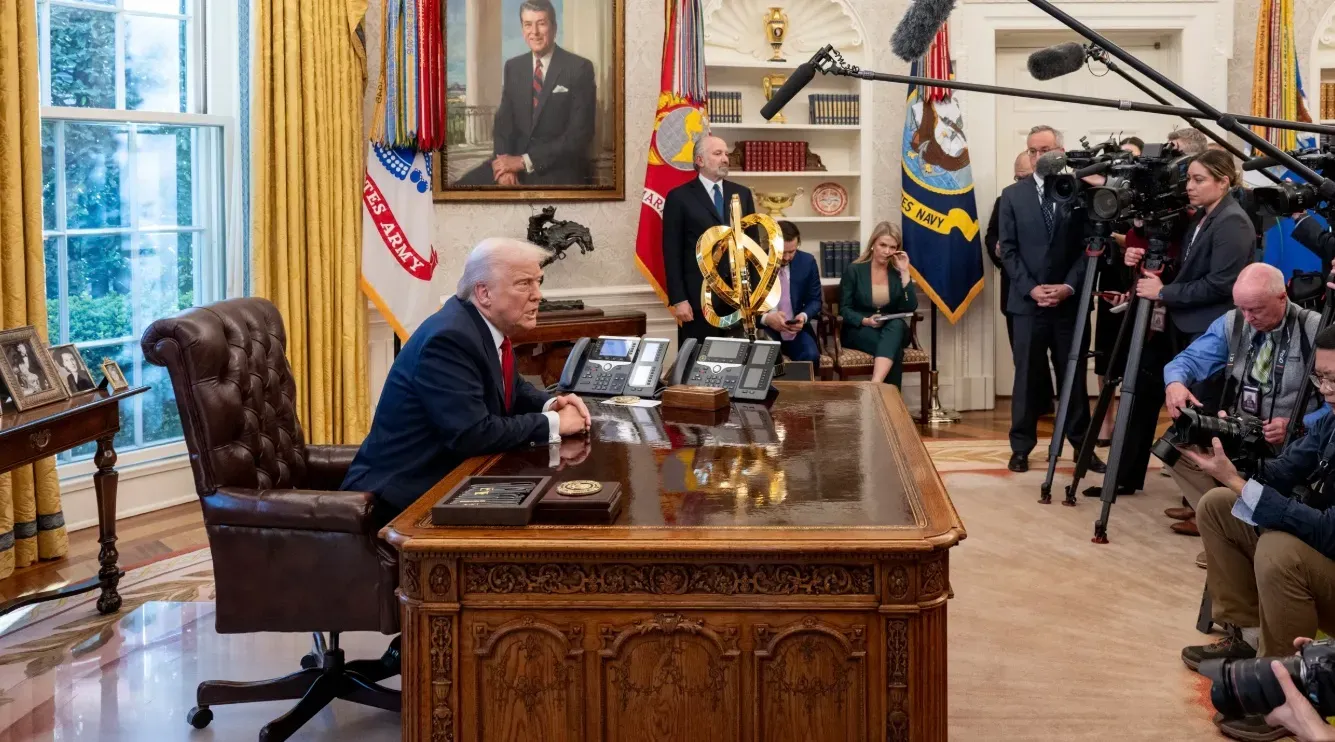
In a fresh escalation of pressure on US trading partners, President Donald Trump threatened to impose a 100% tariff on any country that taxes digital services provided by American companies - a warning that came just one day after the European Union signed off on a trade agreement with Washington.
The threat, in Trump's own words
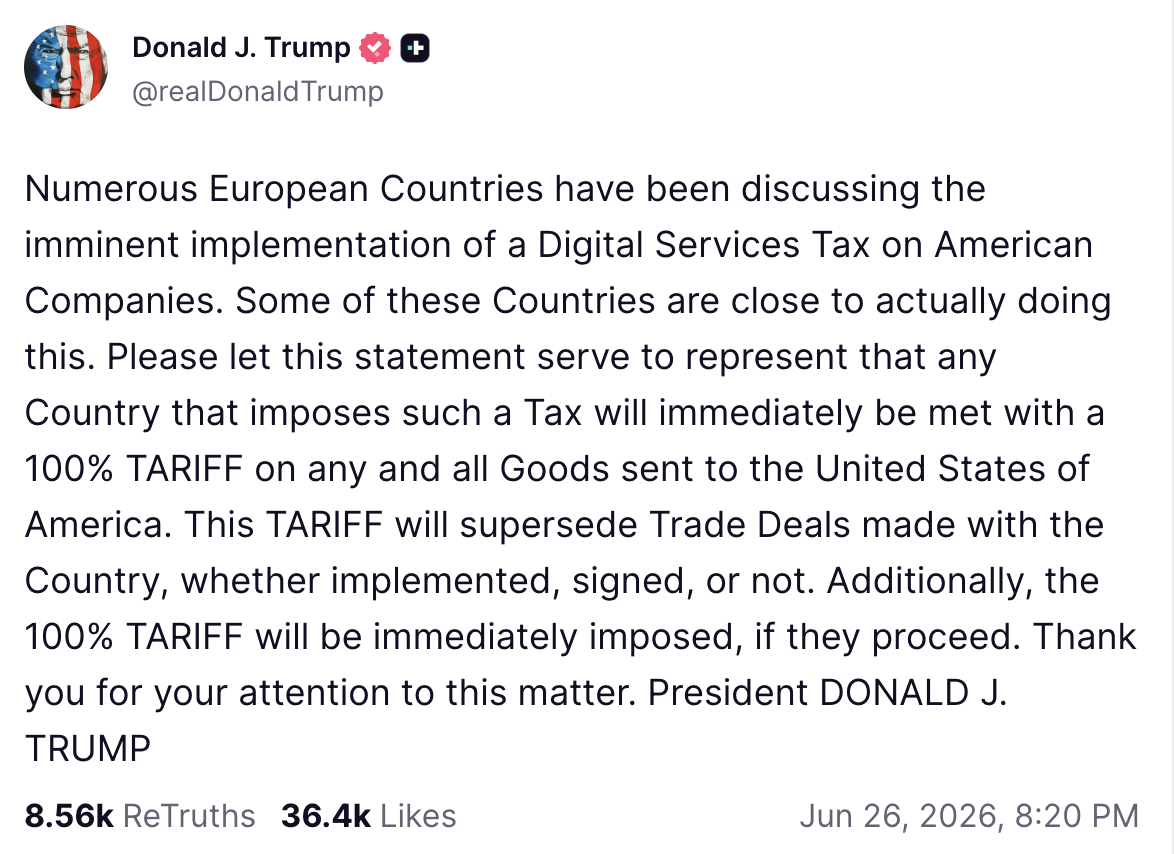
Trump wrote on Truth Social on Friday: "European Countries have been discussing the imminent implementation of a Digital Services Tax on American Companies. Some of these Countries are close to actually doing this. Please let this statement serve to represent that any Country that imposes such a Tax will immediately be met with a 100% TARIFF on any and all Goods sent to the United States of America."
He added that the tariff "will supersede Trade Deals made with the Country, whether implemented, signed, or not," and that it "will be immediately imposed" should countries proceed with their digital-tax plans.
What is the "Digital Services Tax" being targeted?
The tax in question is aimed at companies that do business in a country but lack a physical presence there and do not pay income tax. According to the nonpartisan Tax Foundation, roughly half of all European members of the Organisation for Economic Co-operation and Development have proposed, announced, or already implemented a digital services tax, and such taxes would mostly affect US companies.
Timing: one day after the EU trade deal was finalized
The timing is notable. Trump's comments came a day after the European Union gave its final sign-off to a trade agreement with Washington that sets a 15% tariff ceiling on most of the bloc's exports to the US. Yet digital taxes were not part of that agreement and have remained a sticking point between the US and the European bloc, and Trump has set a July 4 deadline for the EU and the US to finalize the broader trade deal.
The legal complication: does Trump have the authority to act on this?
This is a critical point for accurate coverage: the Supreme Court previously struck down Trump's global "reciprocal" tariffs, and it is unclear which statute he would use to carry out his latest threat. Specifically, the high court ruled that the International Emergency Economic Powers Act did not authorize the Trump administration to unilaterally impose sweeping global tariffs of that kind.
In response to that ruling, Trump announced he had signed an executive order imposing a new global 10% tariff under Section 122 of the Trade Act of 1974, though tariffs created using that statute can last for only 150 days, with any extension requiring congressional approval.
Not the first time: a precedent from Trump's first term
Trump also threatened retaliation against countries that proposed digital taxes during his first term in office; in 2020, the US Trade Representative launched investigations into nine European Union countries that had adopted or were considering digital taxes. More recently, just this month, Trump warned France it would face 100% tariffs on wine and champagne unless Paris scrapped its levy on US companies.
A live example: the United Kingdom
One country already applying this type of tax is Britain, which is no longer part of the EU and has, since 2020, levied a 2% digital services tax on revenues earned by search engines, social media sites, and online marketplaces that "derive value" from UK users. The UK government justified the tax at the time as designed to "ensure the large multinational businesses in-scope make a fair contribution to supporting vital public services."
Data Table
| Metric | Value | Status |
|---|---|---|
| Threatened tariff rate | 100% | LIVE (direct statement) |
| Date of statement | Friday, June 26, 2026 | LIVE |
| EU-US trade deal tariff ceiling | 15% on most exports | LIVE |
| Deadline for finalizing broader deal | July 4, 2026 | LIVE |
| UK's current digital services tax rate | 2%, since 2020 | LIVE |
| Share of European OECD members with a DST proposed/announced/implemented | About half | LIVE (Tax Foundation estimate) |
| Trump's current global tariff (Section 122) | 10%, capped at 150 days | LIVE |
| Prior threat against France (wine/champagne) | 100% | HELD (historical context, this month) |
| Countries investigated by USTR in 2020 | 9 EU countries | HELD (historical context) |
EcoPulse24 Analysis
This threat is not an isolated statement - it fits a recurring pattern in Trump's trade policy: using tariffs as direct leverage against any tax policy targeting US technology companies, regardless of existing signed trade agreements. The timing is telling: the threat landed just one day after Europe concluded lengthy trade negotiations with Washington, revealing that digital taxation remained an unresolved fault line rather than a settled side issue within that deal. The legal gap is equally significant - since the Supreme Court already struck down the statutory basis Trump previously relied on for sweeping tariffs, it remains unclear whether this threat is currently enforceable as stated, or functions primarily as a pre-emptive negotiating tool.
Sources & References
Editorial Note
Disclaimer
© 2025 EcoPulse24. All rights reserved.