UAE Airports Serve Over 1.4 Million Passengers in March 1 – 12 as Traffic Recovers
UAE airports served over 1.4 million passengers between March 1-12, signaling a gradual return to normal operations despite ongoing regional conflict.

EcoPulse24 | Abu Dhabi
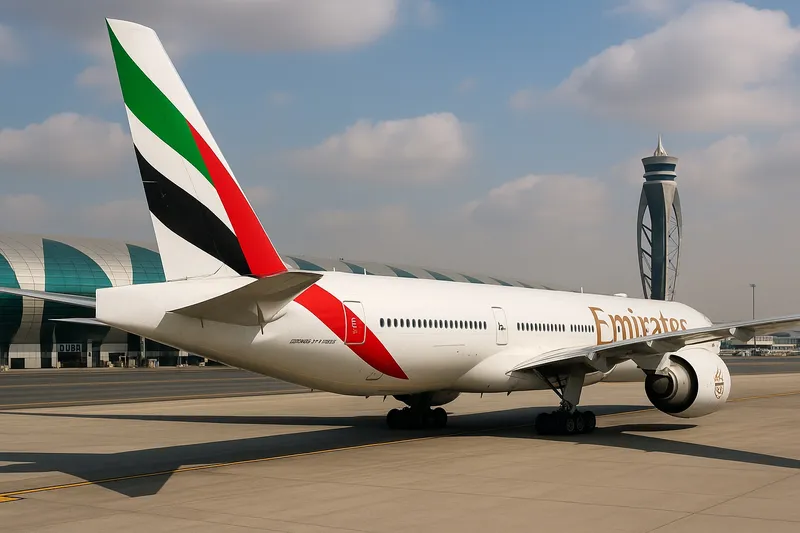
UAE airports served more than 1.4 million passengers between March 1 and 12, 2026, according to the UAE General Civil Aviation Authority (GCAA), marking a significant step toward normalizing air traffic operations as the country navigates ongoing regional tensions stemming from the Iran war.
Traffic Recovery Gains Momentum
The GCAA confirmed that air traffic in the UAE is witnessing a gradual return to normal operational levels, following the country's professional management of the exceptional circumstances in the region. The 1.4 million passenger figure across a 12-day window represents a meaningful acceleration in throughput compared to the first days of the regional conflict, when travel activity contracted sharply amid flight diversions, airspace closures, and heightened security measures.
The UAE's major international hubs - Dubai International Airport (DXB) and Abu Dhabi International Airport (AUH) - are among the world's busiest aviation nodes. Their gradual return to activity reflects both the resilience of UAE infrastructure and the country's coordinated crisis management, which has included close coordination with airlines and international aviation authorities.
Operational Context
When the regional conflict escalated in late February, UAE airports faced unprecedented operational challenges, including airspace restrictions, temporary flight suspensions by multiple carriers, and heightened passenger anxiety. Some international airlines suspended or rerouted flights to avoid flying over conflict zones, leading to capacity reductions and longer flight times on alternate routes.
Despite these pressures, UAE aviation authorities maintained 24-hour coordination with the military, civil defence, and national emergency committees to ensure safe passage for civilian aircraft. The GCAA said the recovery is progressing "in line with national safety standards," with air traffic control operating at full capacity.
Economic Significance
Aviation is a cornerstone of the UAE economy, contributing an estimated 15% of GDP when including downstream tourism and logistics activities. Any sustained disruption to air traffic carries profound implications for trade, tourism, and the broader service economy. With the UAE handling tens of millions of transit passengers annually, the speed of recovery will be closely watched by airlines, airports, and investors worldwide.
Dubai Airports and Abu Dhabi Airports are not only travel hubs but also critical freight gateways for the Middle East. The partial resumption of cargo flights has helped ease pressure on supply chains that were already strained by the Strait of Hormuz blockade affecting sea routes. Air freight has therefore seen a temporary surge in demand, particularly for high-value and time-sensitive goods.
Government Response and Coordination
The UAE government has implemented a series of emergency aviation protocols since the start of the conflict, including real-time coordination with neighboring air traffic management centers, enhanced security screenings, and dynamic route adjustments. These measures have allowed a growing number of international carriers to resume services to UAE destinations, with several major airlines announcing return of flights to Dubai in recent days.
The GCAA also reported that evacuation operations organized by the Ministry of Foreign Affairs and the National Emergency Crisis and Disaster Management Authority (NCEMA) have successfully repatriated approximately 6,000 UAE nationals from various conflict-affected or high-risk areas, further demonstrating the operational capacity of the aviation system under stress.
EcoPulse24 Analysis
EcoPulse24 Analysis: The 1.4 million passenger milestone is a clear signal that the UAE aviation sector is proving more resilient than feared, and that the government's crisis coordination has been effective. However, a full recovery to pre-conflict passenger volumes remains contingent on a broader de-escalation across the region. Airlines are unlikely to fully commit to resuming normal schedules until geopolitical visibility improves. The data from mid-March will be crucial - if growth in passenger numbers accelerates into late March, it will reinforce investor confidence in the UAE's economic stability. Conversely, any further escalation could reverse these gains quickly. For now, the trajectory looks cautiously positive.
Explore Related Coverage
Sources & References
Editorial Note
Disclaimer
© 2025 EcoPulse24. All rights reserved.