UAE Central Bank Foreign Assets Hold Above AED 1 Trillion in April, Reinforcing Monetary Resilience
Abu Dhabi | EcoPulse24 Foreign assets cross AED 1 trillion threshold amid regional uncertainty The Central Bank of the United Arab Emirates maintained its foreign assets at AED 1,002.3 billion in Apri

Abu Dhabi | EcoPulse24
Foreign assets cross AED 1 trillion threshold amid regional uncertainty
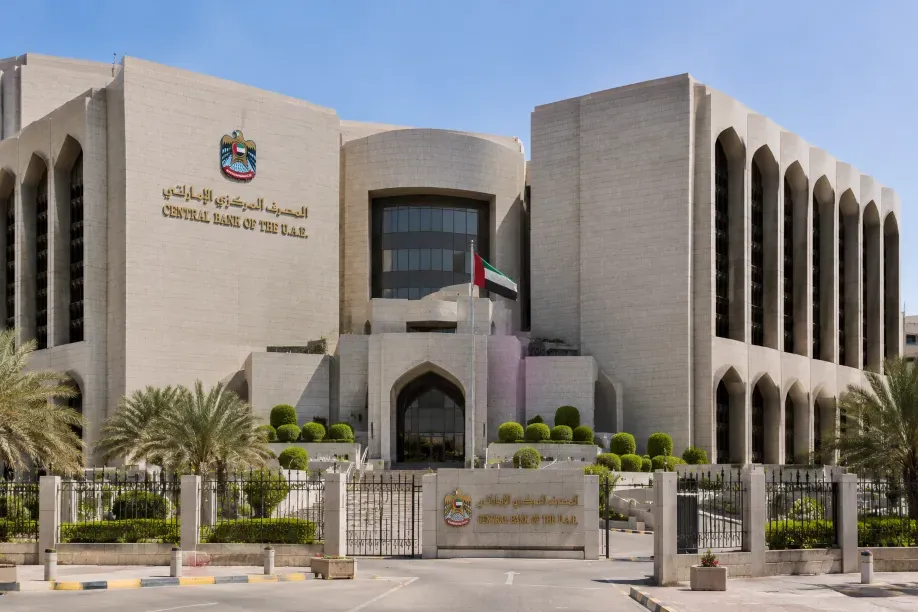
The Central Bank of the United Arab Emirates maintained its foreign assets at AED 1,002.3 billion in April 2026, holding firmly above the one-trillion-dirham mark and reinforcing the country's external reserve position at a time of heightened regional economic uncertainty. The figure, disclosed as part of the Central Bank's monthly Monetary and Banking Developments report, underscores the depth of the UAE's external liquidity buffer and the institutional strength underpinning its monetary framework.
A reserve position built for external shocks
Foreign assets at this scale provide the Central Bank with a substantial operational margin to manage exchange rate stability, absorb capital flow volatility, and respond to shifts in global commodity markets - all of which remain active risk factors in the current regional environment. The UAE dirham's peg to the US dollar has long been anchored by the strength of the country's external reserve position, and April's data confirms that this anchor remains firmly in place.
For international investors and sovereign counterparties assessing Gulf monetary credibility, a foreign asset base exceeding AED 1 trillion - equivalent to approximately USD 272 billion - places the UAE Central Bank among the most well-capitalised reserve institutions in the emerging market universe.
Broad money growth confirms structural economic momentum
The strength of the external position is further supported by the domestic monetary picture. Money supply aggregate M2 grew 17.8% year-on-year in April, while M3 expanded 17.6% over the same period. These are not transitory monthly readings - they reflect a sustained expansion cycle that has built consistently across successive months, driven by private sector deposit growth of 19.5% annually and individual deposit growth of 10.8% year-on-year.
April banking scorecard - selected indicators
| Indicator | April 2026 | Monthly Change | Annual Change |
|---|---|---|---|
| Central Bank Foreign Assets | AED 1,002.3B | 0.0% | - |
| Money Supply M2 | AED 2,870.4B | ~0.0% | +17.8% |
| Money Supply M3 | AED 3,407.7B | ~0.0% | +17.6% |
| Money Supply M1 | AED 1,064.3B | −0.8% | +5.2% |
| Corporate Deposits | AED 1,431.8B | +1.5% | +19.5% |
| Individual Deposits | AED 878.4B | +1.3% | +10.8% |
| Gross Bank Assets | AED 5,570.1B | +0.2% | - |
| Gross Credit | AED 2,720.7B | +0.9% | - |
Source: Central Bank of the UAE - Monetary & Banking Developments, April 2026
Institutional confidence reflected across deposit categories
The annual growth rates across deposit categories carry a signal that monthly figures alone cannot convey. Corporate deposits expanding at nearly 20% year-on-year indicate that businesses operating in the UAE are deploying capital into the banking system at an accelerating pace - a behaviour consistent with confidence in the operating environment and expectations of continued economic activity. Individual deposit growth of 10.8% reflects the same dynamic at the household level, pointing to rising savings capacity and financial inclusion within the resident population.
EcoPulse24 Analysis
The UAE Central Bank's April data delivers a picture of institutional monetary strength that is difficult to replicate elsewhere in the region. The combination of foreign assets exceeding AED 1 trillion, double-digit annual broad money growth, and a steadily expanding credit base represents a convergence of external resilience and domestic momentum that few Gulf central banks can currently match.
What makes the foreign asset figure analytically significant is not the absolute number alone, but its stability. Holding foreign assets above the one-trillion-dirham threshold at a time when regional geopolitical pressures are reshaping capital flows and energy price expectations demonstrates that the UAE's reserve accumulation strategy is functioning as designed - as a structural buffer, not a cyclical variable.
The 17.8% annual growth in M2 deserves particular attention from macro analysts. This level of broad money expansion, sustained over multiple months, reflects a genuine deepening of the UAE's financial system rather than a one-off liquidity injection. It is being driven by private sector activity - corporate and individual deposits growing in tandem - which gives the expansion a productive character that distinguishes it from government-led liquidity cycles seen elsewhere in the Gulf.
Taken together, April's monetary data affirms that the UAE continues to operate its monetary framework from a position of deliberate institutional strength: deep reserves, expanding domestic liquidity, and a banking sector growing in lockstep with the real economy. In the current global environment, that combination represents a significant competitive advantage for the UAE as a regional financial hub and a destination for sovereign and institutional capital.
Sources & References
Editorial Note
Disclaimer
© 2025 EcoPulse24. All rights reserved.