UAE economy grows 5.6% as central bank strengthens financial resilience and digital transformation
UAE's 2025 GDP grew 5.6% as non-oil sectors, digital finance, and strong regulation boosted economic and financial system resilience.

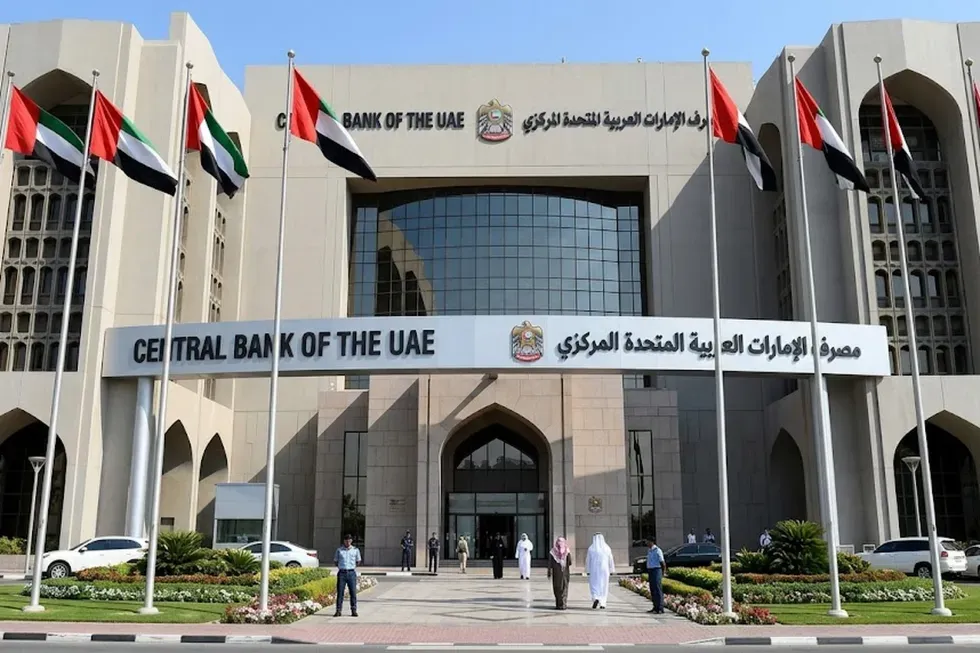
Abu Dhabi | EcoPulse24
CBUAE highlights strong growth and financial system resilience in 2025
The Central Bank of the UAE (CBUAE) reported strong economic performance in 2025, with real GDP growth reaching 5.6%, supported by expanding non-oil sectors and proactive monetary policies that helped maintain inflation at a stable 1.3%, reinforcing the competitiveness of the national economy.
The report emphasized the financial system’s high resilience in adapting to global developments, driven by advanced regulatory frameworks, prudent monetary management, and digital innovation, positioning the UAE as a leading global financial hub.
The banking sector demonstrated strong momentum, with total assets reaching AED 5.4 trillion, alongside a 17.9% increase in credit and a 16.2% rise in deposits, reflecting robust liquidity conditions and the sector’s ability to support economic expansion.
The insurance sector also recorded solid growth, with gross written premiums rising 15.5% to AED 75.2 billion and total assets reaching AED 166.7 billion, reinforcing its role in financial stability and economic protection.
Strengthening financial resilience through proactive supervision
The CBUAE enhanced its regulatory framework by increasing capital buffers and introducing a neutral buffer of 0.5% to ensure continued credit flow. Stress tests confirmed the banking sector’s ability to withstand shocks, with capital adequacy ratios remaining above regulatory thresholds and asset quality improving.
Supervisory priorities were expanded to include climate risks and IT governance, while the adoption of SupTech tools and big data analytics enabled a shift toward proactive risk assessment and improved digital readiness across the financial system.
New legal framework strengthens stability and independence
Federal Decree-Law No. (6) of 2025 marks a structural shift by integrating supervision of banking and insurance sectors, enhancing financial stability and operational independence. The law grants the central bank broader powers for early intervention, restructuring, and protecting depositors, while reinforcing its role as a liquidity provider of last resort.
Digital transformation drives global competitiveness
The UAE continues to advance its financial infrastructure through strategic digital initiatives, including the rollout of the Digital Dirham as an official payment instrument, the launch of the “Jisr” platform for international settlements, and the activation of the “Al Tareq” open finance platform.
The number of licensed fintech companies increased to 36, while settlement processes were automated and international central depository systems enhanced, supporting the transition toward a fully integrated digital financial ecosystem.
UAE financial and economic performance snapshot 2025
The following indicators reflect the strength of the UAE’s financial system and economic performance:
| Indicator | Value | Trend |
|---|---|---|
| Real GDP Growth | 5.6% | Strong |
| Inflation | 1.3% | Stable |
| Banking Assets | AED 5.4 trillion | High |
| Credit Growth | 17.9% | Expanding |
| Deposit Growth | 16.2% | Strong |
| Insurance Premiums | AED 75.2 billion | Rising |
| Fintech Companies | 36 | Expanding |
EcoPulse24 Analysis
The CBUAE report reflects a structural transformation in the UAE economy, shifting from an oil-dependent model toward a diversified system driven by non-oil sectors and financial innovation. Strong growth combined with low inflation highlights the effectiveness of monetary policy in maintaining macroeconomic balance.
More importantly, the resilience of the banking sector is no longer defined solely by scale, but by its ability to absorb shocks. Stress test results and improved asset quality indicate a transition toward a more mature, risk-aware financial system capable of navigating global uncertainty.
The new legal framework strengthens institutional independence and enhances early intervention capabilities, reducing systemic risk and reinforcing long-term confidence in the financial system.
At the same time, digital transformation is emerging as a key competitive advantage. Initiatives such as the Digital Dirham and open finance platforms position the UAE at the forefront of global financial innovation, supporting long-term sustainability and efficiency.
In a global environment marked by energy shocks and tightening financial conditions, the UAE model stands out for combining stability with growth, supported by proactive policy and strategic investment in future-ready infrastructure.
Overall, the report signals a transition toward what can be described as “institutional resilience,” where the financial system is not only stable, but structurally equipped to adapt and sustain growth under evolving global conditions.
Explore Related Coverage
Sources & References
https://centralbank.ae/me…annual-report-en.pdf
Editorial Note
Disclaimer
© 2025 EcoPulse24. All rights reserved.