UAE Exits OPEC and OPEC+ to Boost Production Flexibility Amid Global Energy Shifts
UAE will exit OPEC and OPEC+ in 2026 to boost oil production flexibility and pursue a more independent, diversified energy strategy.

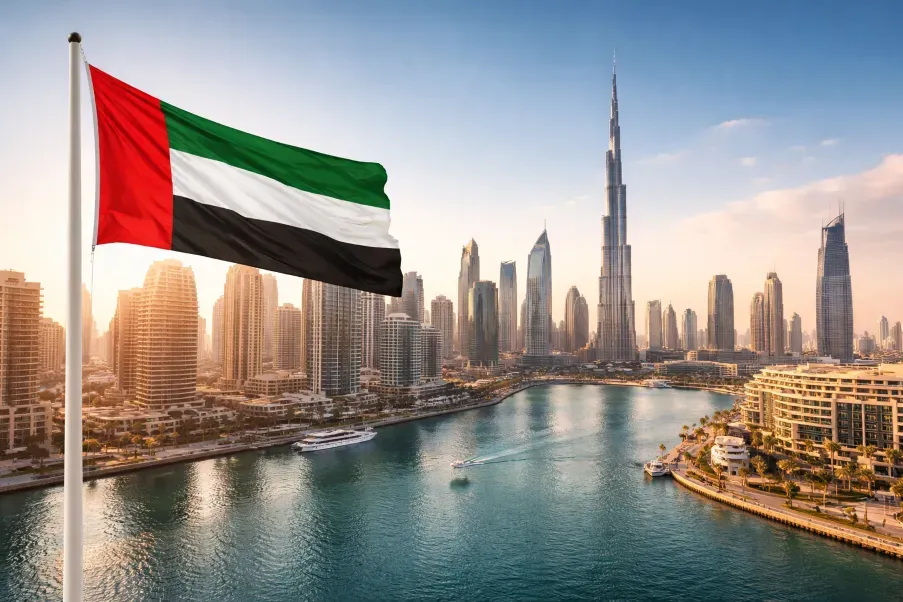
Abu Dhabi | EcoPulse24
UAE OPEC oil production energy
The United Arab Emirates has announced its decision to exit OPEC and the OPEC+ alliance effective May 1, 2026, marking a strategic shift toward greater production flexibility as global energy markets face rising geopolitical volatility.
The move follows a comprehensive review of the country’s current and future production capacity, as well as evolving market dynamics driven by tensions in the Gulf and the Strait of Hormuz. By stepping outside collective quota frameworks, the UAE aims to enhance its ability to respond more rapidly to global demand while reinforcing its position as a reliable, low-cost, and low-carbon energy producer.
This transition signals a structural repositioning within the global oil system. Rather than adhering to coordinated supply limits, the UAE is moving toward a more independent production model, allowing for gradual and calibrated output increases aligned with market conditions. This provides the country with greater agility to capitalize on supply tightness, particularly in an environment where disruptions continue to shape pricing.
Despite the exit, the UAE emphasized its continued commitment to global market stability and cooperation with both producers and consumers. The decision reflects not a withdrawal from global responsibility, but a recalibration of how that role is executed in line with national economic priorities and long-term energy strategy.
The shift also aligns with a broader diversification agenda, as the UAE continues to invest across the energy value chain, including oil, gas, renewables, and low-carbon solutions. This positions the country as a multi-dimensional energy hub capable of adapting to both traditional and transitional energy demand.
Key Elements of UAE Exit from OPEC and OPEC+
The following table outlines the main components of the decision and its implications:
| Element | Details |
|---|---|
| Effective date | May 1, 2026 |
| Decision | Exit OPEC and OPEC+ |
| Objective | Increase production flexibility |
| Production approach | Gradual, market-aligned increases |
| Market context | Gulf tensions and Hormuz disruptions |
| Strategy | Energy diversification and investment |
| Commitment | Continued support for market stability |
EcoPulse24 Analysis
The UAE’s decision to exit OPEC and OPEC+ represents a structural shift in the global energy landscape, moving beyond a tactical production adjustment toward a redefinition of how major producers engage with the market. In an environment shaped by geopolitical uncertainty and supply disruptions, rigid quota systems are increasingly challenged by the need for flexibility and speed.
With one of the most competitive cost structures globally and significant investment in production capacity, the UAE is uniquely positioned to operate outside coordinated frameworks without losing influence. This transition enables the country to optimize timing and scale of production increases, particularly during periods of elevated demand or constrained supply.
More broadly, the move reflects an emerging trend toward decentralization in oil market management. While OPEC has historically played a central role in stabilizing prices through collective action, evolving market conditions may push more producers to prioritize national strategies over group coordination. This raises important questions about the future cohesion and effectiveness of OPEC in managing global supply.
The timing of the decision is also critical. With ongoing disruptions in the Strait of Hormuz and heightened geopolitical risk, the ability to increase production independently becomes a strategic advantage. However, this flexibility must be balanced carefully to avoid oversupply risks that could destabilize prices.
Importantly, the UAE’s continued investment in renewables and low-carbon energy signals that this is not a purely oil-driven strategy. Instead, it reflects a broader vision of energy leadership - one that integrates hydrocarbons with emerging energy systems to maintain relevance in a transitioning global market.
Ultimately, the UAE is shifting from a coordinated production role to an independent, responsive producer model. If sustained, this move could reshape the balance of power within global oil markets and redefine how stability is achieved in an increasingly complex energy environment.
Explore Related Coverage
Sources & References
Editorial Note
Disclaimer
© 2025 EcoPulse24. All rights reserved.