UAE Markets Volatile Amid Selling Pressure and Rising Oil Prices; Liquidity Exceeds AED 1.19 Billion
UAE markets dropped amid rising oil prices and tensions, but liquidity stayed high, signaling portfolio shifts over mass exits.

Abu Dhabi | EcoPulse24
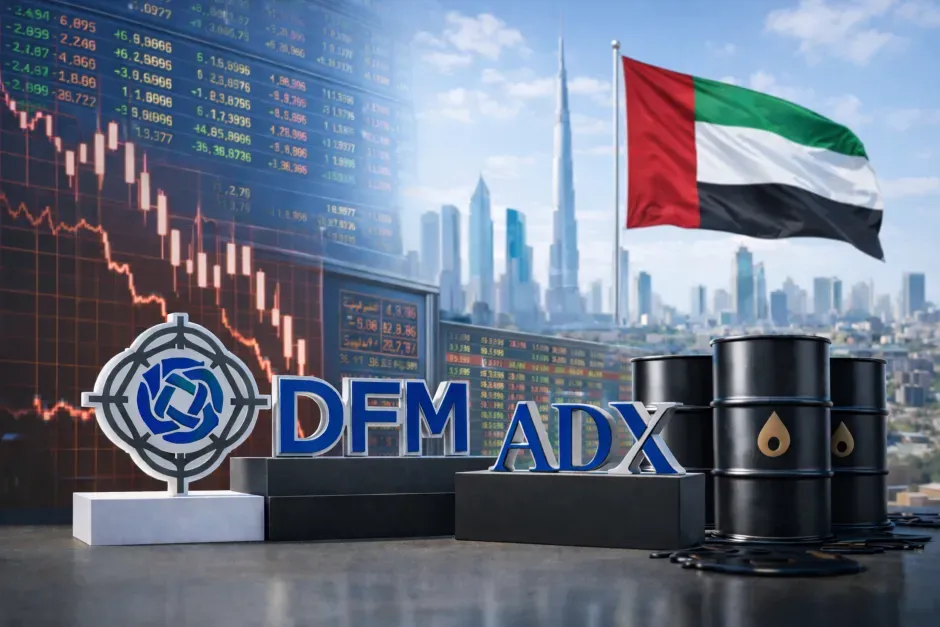
UAE stock markets came under marked selling pressure during the latest trading session, amid rising geopolitical tensions in the region and higher global oil prices. These factors weighed on investor sentiment and led to declines in several leading stocks, even as market liquidity stayed robust across both the Dubai and Abu Dhabi exchanges.
On the Dubai Financial Market, the General Index ended the session down sharply, closing at 5,917.22 points - a drop of 197.49 points, or 3.23%, compared to the previous session. This represents one of the steepest daily drops in recent weeks. Key stocks such as Emaar Properties fell to AED 13.95, Emaar Development to AED 16.65, Dubai Islamic Bank to AED 7.66, Emirates NBD to AED 29.40, DEWA to AED 2.85, and Salik to AED 6.18. Of the listed companies, 44 declined, 8 advanced, and 5 remained unchanged, signaling a clear tilt toward selling activity.
Trading volumes remained relatively high despite the selling, with 344.7 million shares exchanged in over 23,000 transactions. Total trading value reached AED 1.19 billion, underscoring sustained investor activity in the market despite prevailing caution.
In Abu Dhabi Securities Exchange, the general index fluctuated within a narrow range, generally trending lower and hovering around the 9,900-point level. Selling pressure was seen in several leading stocks from the banking, real estate, and energy sectors. Price movements in Abu Dhabi’s blue chips were relatively limited compared to Dubai, but the overall market remained under the shadow of regional tensions and elevated energy prices.
Trading volumes in both markets indicate continued liquidity inflows, suggesting that the current declines reflect portfolio repositioning rather than a mass market exit in response to geopolitical risks.
Overall, UAE markets are navigating a volatile global environment, with Middle East tensions driving oil prices above $80 per barrel and prompting investors to reassess risk in financial markets. This has led to increased caution, especially in emerging markets, with some funds shifting to defensive assets until there is greater clarity on geopolitical developments.
EcoPulse24 Analysis:
The movements in UAE markets reflect a repricing of regional risk rather than changes in corporate fundamentals. Abu Dhabi’s market shows greater stability due to its diversified components and the weight of energy-linked companies. High liquidity levels indicate investors are reallocating rather than exiting, as the global backdrop remains characterized by elevated energy prices and geopolitical uncertainty.
Explore Related Coverage
Sources & References
Editorial Note
Disclaimer
© 2025 EcoPulse24. All rights reserved.