Aqaba Container Terminal Handles 472,680 TEUs in H1 as Transit Cargo Surges 155%
Aqaba Container Terminal handled 472,680 TEUs in H1 2026, with transit cargo up 155%, boosted by upgrades, sustainability, and AD Ports investment.

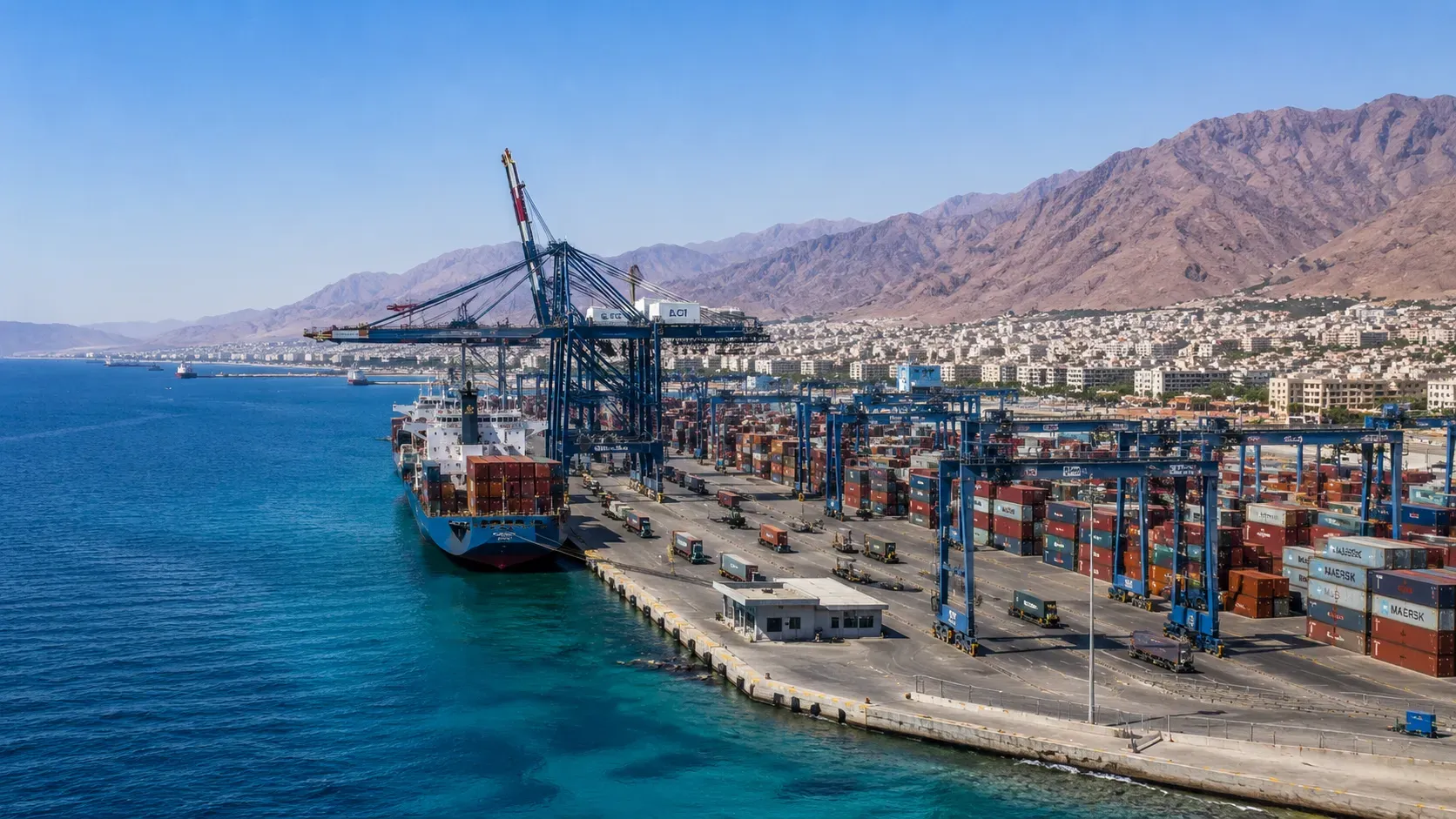
Aqaba | EcoPulse24
SEO Title
Aqaba Container Terminal (ACT) delivered solid operational performance during the first half of 2026, driven by strong growth in transit cargo, continued infrastructure investments, and progress in sustainability, reinforcing its role as one of the region's key logistics gateways.
The terminal handled 472,680 twenty-foot equivalent units (TEUs) during the first six months of the year, compared with 468,062 TEUs in the same period of 2025.
The strongest performance came from transit cargo, which climbed 155.1% year-on-year to 60,178 TEUs, up from 23,593 TEUs a year earlier, highlighting Aqaba's growing importance as a regional transshipment and logistics hub.
Truck traffic also remained strong, with 188,927 truck gate movements recorded during the period, compared with 182,490 movements in the first half of 2025.
Infrastructure Investments Support Growth
The improved performance follows a series of infrastructure upgrades implemented over the past year, including quay rehabilitation works and the deployment of new Ship-to-Shore (STS) cranes, enabling higher vessel-handling productivity despite continued geopolitical challenges affecting regional shipping routes.
During the reporting period, ACT handled eight container vessels carrying more than 5,000 TEUs, including one vessel that recorded 10,884 TEUs, the largest container throughput handled by the terminal.
The port also welcomed Jordan's first LNG-powered container vessel, KOTA ODYSSEY, reflecting the shipping industry's gradual transition toward lower-emission maritime transport.
Sustainability Remains a Strategic Priority
Alongside operational growth, ACT continued advancing its environmental strategy.
During the first half of 2026, the company reported:
-
29% reduction in greenhouse gas emissions compared with its 2022 baseline.
-
75% reduction in electricity-related emissions.
-
Continued development of its 6 MW solar power project.
-
Progress toward ISO 50001 Energy Management System certification.
-
Expansion of electric-powered terminal equipment to reduce diesel consumption.
ACT aims to reduce emissions by 65% by 2030 and achieve Net Zero emissions by 2040.
Performance Highlights
| Indicator | H1 2026 | H1 2025 | Change |
|---|---|---|---|
| Container Throughput | 472,680 TEUs | 468,062 TEUs | +1.0% |
| Transit Cargo | 60,178 TEUs | 23,593 TEUs | +155.1% |
| Truck Gate Movements | 188,927 | 182,490 | +3.5% |
| Greenhouse Gas Emissions | -29% vs. 2022 baseline | - | - |
Performance Comes Months After AD Ports Group Investment
The results come roughly five months after AD Ports Group signed a 30-year concession agreement with Aqaba Development Corporation (ADC), acquiring a 70% stake in the joint venture established to manage and operate Aqaba's multipurpose port, while ADC retained the remaining 30%.
The agreement included an investment of approximately AED 141 million (USD 38.4 million) to modernize port infrastructure, enhance operational efficiency, and strengthen Aqaba's integration into AD Ports Group's global logistics network.
The sharp increase in transit cargo volumes and continued investments in equipment, digitalization, and sustainability broadly align with the strategic objectives announced when AD Ports entered the Jordanian market, positioning Aqaba as a more competitive logistics gateway serving Jordan and the wider Levant region.
EcoPulse24 Analysis
ACT's first-half performance demonstrates how operational efficiency and targeted infrastructure investments can strengthen a port's competitiveness even amid shifting regional trade dynamics.
The exceptional growth in transit cargo suggests Aqaba is increasingly benefiting from evolving shipping patterns across the Eastern Mediterranean and the Red Sea. Combined with AD Ports Group's long-term investment strategy, infrastructure modernization, and sustainability roadmap, the terminal appears well positioned to expand its role as a regional logistics hub connecting Jordan, the Levant, and international shipping corridors.
Explore Related Coverage
Sources & References
Editorial Note
Disclaimer
© 2025 EcoPulse24. All rights reserved.