UBS Bank: Oil Prices Could Exceed $100 if Strait of Hormuz Disruptions Persist
UBS warns oil may exceed $100 if Strait of Hormuz disruptions persist, raising 2026 forecasts due to Middle East tensions and supply risks.

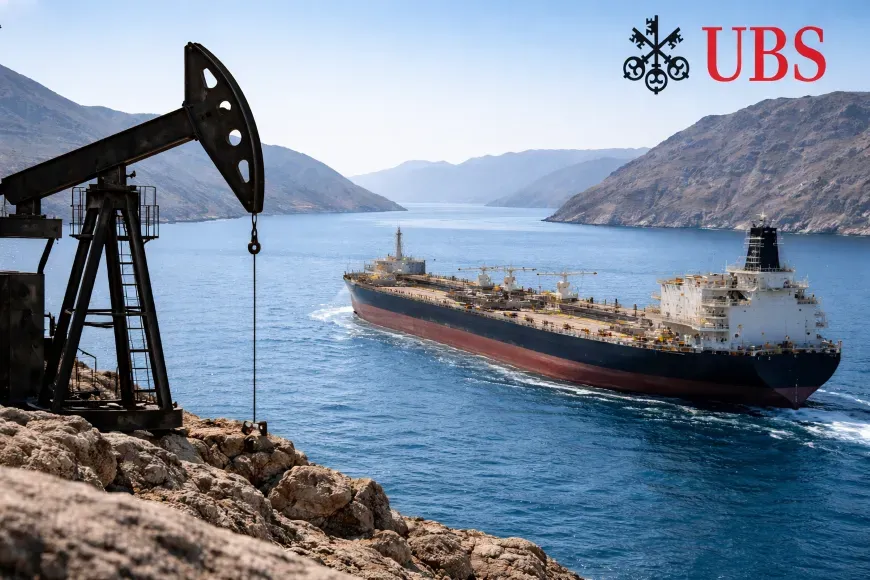
Zurich | EcoPulse24
Swiss bank UBS has raised its oil price forecasts for 2026, citing increased military escalation in the Middle East and mounting disruptions in the Strait of Hormuz. UBS warns that Brent crude could surge well beyond earlier expectations, potentially exceeding $100 per barrel if the crisis continues.
In a research note, UBS stated that the current geopolitical climate necessitates a reassessment of oil market outlooks, especially given the risks linked to shipping through the Strait of Hormuz - one of the world’s most crucial energy corridors.
Updated Forecasts:
- Q1 2026: Average $71 per barrel, with March possibly nearing $80.
- Full-year 2026: Average $72 per barrel, up $10 from previous forecasts.
- 2027: Forecast unchanged at $70 per barrel.
- 2028: Forecast held at $75 per barrel, with risks skewed to the upside.
The revised outlook comes as Brent traded near $82.32 per barrel, its highest since January 2025, while US West Texas Intermediate (WTI) hovered around $74.73.
UBS outlines three main scenarios for oil prices:
1. $90 Scenario: Prices could reach this level if attacks or tensions targeting Middle Eastern energy infrastructure, especially LNG export facilities, persist.
2. $100+ Scenario: Prolonged shipping disruptions in the Strait of Hormuz could drive Brent above $100 per barrel due to global supply concerns.
3. Price Floor: Even with a quick de-escalation, prices are unlikely to return to the $60 per barrel seen earlier this year, given shifts in global supply-demand balances.
UBS’s upward revision reflects heightened anxiety among financial institutions about the impact of current geopolitical crises on energy markets. Disruptions in the Strait of Hormuz - which handles around 20% of global oil trade - directly increase market risk premiums. The outlook comes amid heightened uncertainty as some regional oil and gas supplies are disrupted, boosting the likelihood of continued price volatility in the coming months.
EcoPulse24 Analysis:
UBS’s revised forecasts signal a significant shift in how major financial institutions view the energy market. Geopolitical risks are now a core pricing factor, not just a temporary influence. If tensions persist in key maritime chokepoints such as the Strait of Hormuz, oil could remain above $70 for longer than previously anticipated.
Explore Related Coverage
Sources & References
Editorial Note
Disclaimer
© 2025 EcoPulse24. All rights reserved.