US-Taiwan Deal Lowers Tariffs to 15% and Injects $500 Billion in Chip Investments
US-Taiwan deal cuts tariffs to 15%, boosts US chip investments by $500B, and eases trade for tech, auto, and pharma sectors.

Washington | EcoPulse24
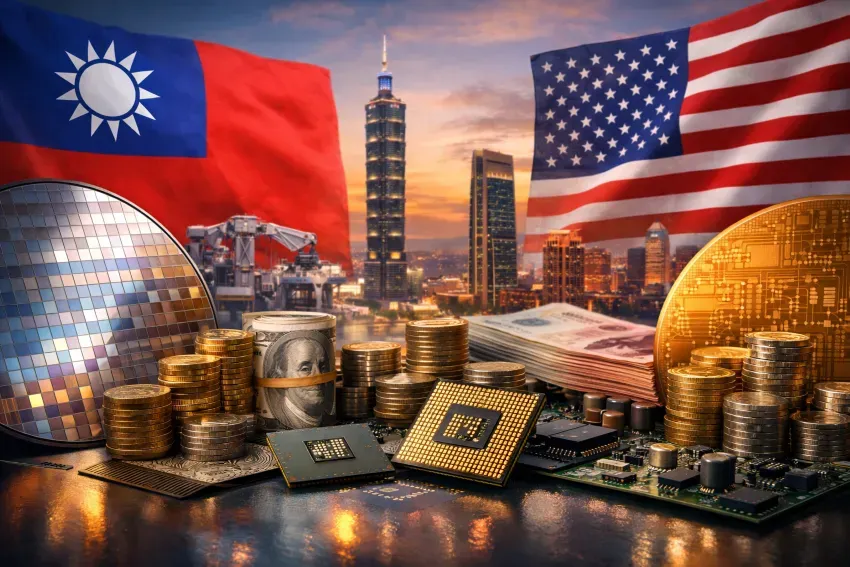
The United States and Taiwan have reached a long-awaited trade agreement that reduces tariffs on Taiwanese imports to 15% from 20%. In parallel, Taiwanese chip companies have committed to increasing funding and investments in their US operations to a total of $500 billion.
Under the agreement, Taiwan's technology sector will inject $250 billion in direct investments to expand advanced semiconductor, energy, and artificial intelligence activities in the US, in addition to $250 billion in credit guarantees to support US chip supply chains, according to data from the commerce ministries of both countries.
The deal puts Taiwan on par with Japan and South Korea in terms of tariffs, with the new rate not stacking on top of 'Most Favored Nation' tariffs. It also sets a 15% sectoral tariff cap on auto parts, wood, and related products, and exempts Taiwanese-manufactured generic drugs from taxes.
The agreement has direct implications for TSMC, the world's largest AI chip manufacturer and a key supplier to Nvidia, including customs facilitations during the construction of new US factories. These allow for the duty-free import of volumes up to 2.5 times current capacity during the build-out, dropping to 1.5 times after full operations begin.
Washington has also pledged to expand investments in key Taiwanese sectors - chips, AI, defense, and biotech - while providing land, infrastructure, tax incentives, and visas to ensure the execution of investments.
Analysis:
The agreement eases tariff pressure on Taiwan's exports and supports the reshoring of chip value chains within the US, capitalizing on the AI boom and rising data center demand. In turn, it bolsters US industrial influence and secures strategic supplies, while giving Taipei commercial certainty to sustain strong, tech-driven economic growth.
Explore Related Coverage
Sources & References
Editorial Note
Disclaimer
© 2025 EcoPulse24. All rights reserved.