US Treasury Yields Climb as Iran Tensions and Inflation Fears Pressure Fed Outlook
The yield on the benchmark 10-year US Treasury note rose back above 4.5%, snapping a five-session decline

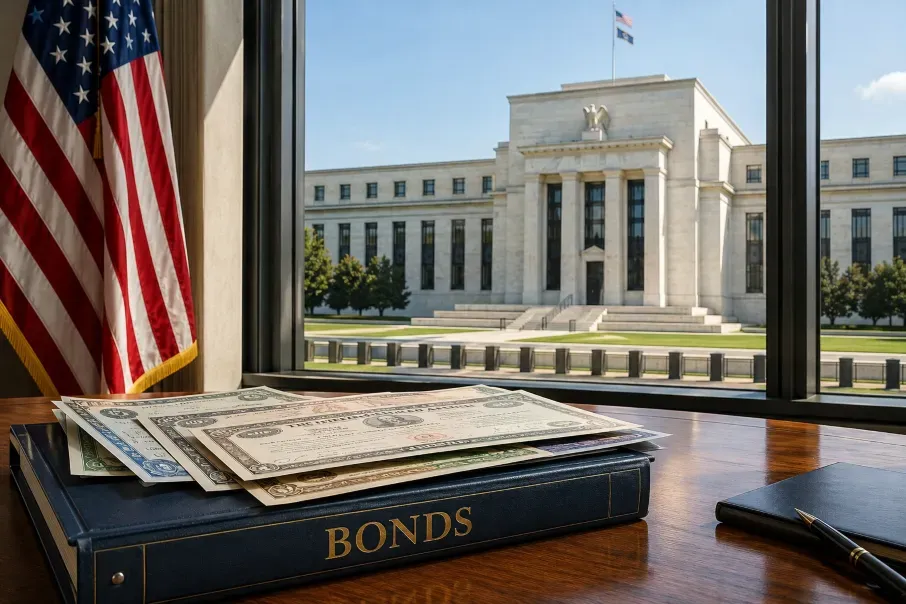
Washington | EcoPulse24
US Treasury yields moved higher on Thursday as renewed geopolitical tensions involving Iran reignited inflation concerns and reinforced market expectations that the Federal Reserve may need to keep interest rates elevated for longer.
The yield on the benchmark 10-year US Treasury note rose back above 4.5%, snapping a five-session decline, while the 30-year Treasury yield climbed to 5.03%, one of the highest long-term borrowing levels in recent months.
Markets reacted after reports of fresh US strikes targeting an Iranian military facility reduced hopes for a near-term diplomatic breakthrough between Washington and Tehran.
At the same time, negotiations remained deadlocked over key issues including:
-
Iran’s nuclear program,
-
security control around the Strait of Hormuz,
-
and broader regional military tensions.
Energy and Inflation Risks Return to Focus
The rebound in Treasury yields reflects growing investor concern that elevated oil prices and geopolitical instability could keep inflation pressures higher than previously expected.
Oil markets have remained highly volatile in recent weeks as tensions around the Gulf and Hormuz shipping routes intensified, raising fears of supply disruptions and renewed energy-driven inflation.
Higher energy prices typically feed into:
-
transportation costs,
-
industrial production,
-
supply chains,
-
and consumer inflation expectations.
Those concerns have complicated market expectations for potential Federal Reserve rate cuts later this year.
Fed Officials Maintain Hawkish Tone
Minneapolis Federal Reserve President Neel Kashkari said Thursday that bringing inflation lower remains his top priority, emphasizing that consumer prices are still too high despite a relatively resilient US labor market.
Investors are now focused on the upcoming Personal Consumption Expenditures (PCE) inflation report, the Fed’s preferred inflation gauge, for additional signals on the direction of monetary policy.
Current market pricing suggests roughly a 50% probability that the Federal Reserve could raise interest rates again by December.
Long-Term Yields Pressure Global Markets
Rising Treasury yields tend to tighten financial conditions globally by:
-
increasing borrowing costs,
-
strengthening the US dollar,
-
pressuring equity valuations,
-
and reducing liquidity across risk assets.
The move is particularly important because the 30-year Treasury yield reflects investor expectations regarding:
-
long-term inflation,
-
economic growth,
-
fiscal sustainability,
-
and structural interest-rate conditions inside the US economy.
EcoPulse24 Analysis
The latest move in US Treasury markets suggests investors are increasingly viewing the Iran conflict not simply as a geopolitical event, but as a direct macroeconomic inflation risk.
A 30-year Treasury yield above 5% represents a psychologically and financially important threshold because it signals significantly higher long-term capital costs across the global economy.
The simultaneous rise in:
-
oil prices,
-
Treasury yields,
-
and geopolitical uncertainty
points toward a potential return of “energy-driven inflation” - one of the most difficult scenarios for central banks to manage.
At the same time, the resilience of the US labor market continues giving the Federal Reserve room to maintain restrictive monetary policy without immediate recession pressure.
However, persistently elevated yields could increase pressure on:
-
global equities,
-
emerging markets,
-
commercial real estate,
-
and highly leveraged sectors dependent on cheap financing.
The broader implication is that markets are becoming increasingly sensitive to the intersection of:
energy security,
geopolitics,
inflation,
and sovereign bond markets.
Sources & References
Editorial Note
Disclaimer
© 2025 EcoPulse24. All rights reserved.