Washington Allows Export of Nvidia H200 Chips to China… Trump Announces Agreement with Xi Jinping
US allows Nvidia H200 chip exports to China with a 25% tariff, amid security concerns and bipartisan criticism.

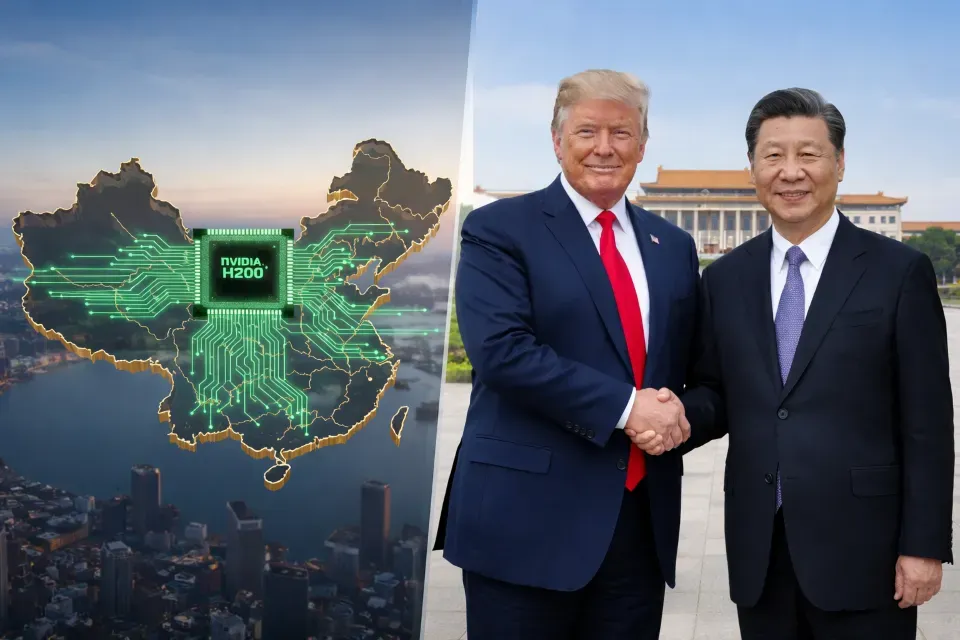
The United States has announced that it will allow the export of advanced AI chips, the Nvidia H200, to China, imposing a 25% tariff on sales. This marks a significant shift in high-sensitivity technology export policy. President Donald Trump revealed the decision via "Truth Social," stating he had informed Chinese President Xi Jinping, who reportedly responded positively.
The U.S. Department of Commerce is finalizing a new regulatory framework that will also apply to competing companies like AMD and Intel. This decision follows a report from Semafor indicating that the deal was close to approval, leading Nvidia's stock to rise by 3% during the session and an additional 2% in subsequent trading.
Export Conditions: Advanced Technology Under Strict Oversight
Exports will be allowed under a framework that considers U.S. national security, with buyers required to undergo approval checks from the Department of Commerce. The framework includes the tariff as a result of an "import tax from Taiwan," alongside mandatory security reviews before any shipments of chips are sent.
Nvidia described the decision as a "thoughtful and important balance for the United States," allowing it to maintain a share of the Chinese market without compromising advanced technologies.
Criticism from Congress… and Political Division
The decision has sparked a wave of internal criticism in Washington; Democratic members have deemed the move a "huge economic and security failure," while Republicans warned that Beijing could exploit these chips to enhance its military capabilities and strengthen defense AI applications.
China Aims to Reduce Dependence on Nvidia… and Accelerate Local Development
China is already working to reduce its reliance on Nvidia, issuing directives to companies against purchasing lower-capacity versions like the H20, while intensifying local development efforts through firms like Huawei and Cambricon. Thus, despite the allowance of imports, the H200 may face internal regulatory caution.
Market Effects and Global Supply Chains
This decision represents a compromise between a complete export ban and allowing the shipment of more advanced Blackwell chips to China. However, it comes amid rising security concerns, particularly following the dismantling of a $160 million Nvidia chip smuggling network in 2024.
At the start of trading in China, the SSE STAR Chip and CSI Semiconductor indices fell by 1% before recovering later.
Strategic Implications: Trade Gains… and Technical Risks
- On Nvidia: The deal expands its revenues from the Chinese market but carries risks of technology leakage, as Washington retains Blackwell and Rubin chips for U.S. customers.
- On China: It will gain access to the powerful H200 – six times more capable than the previously allowed H20 – but its use may be restricted for security reasons.
- On Global Supply Chains: The decision reshapes the balance of power between U.S. national security and commercial competition, amid ongoing tensions regarding the military applications of advanced chips.
Sources & References
Editorial Note
Disclaimer
Please review the Terms & Conditions.
© 2025 EcoPulse24. All rights reserved.