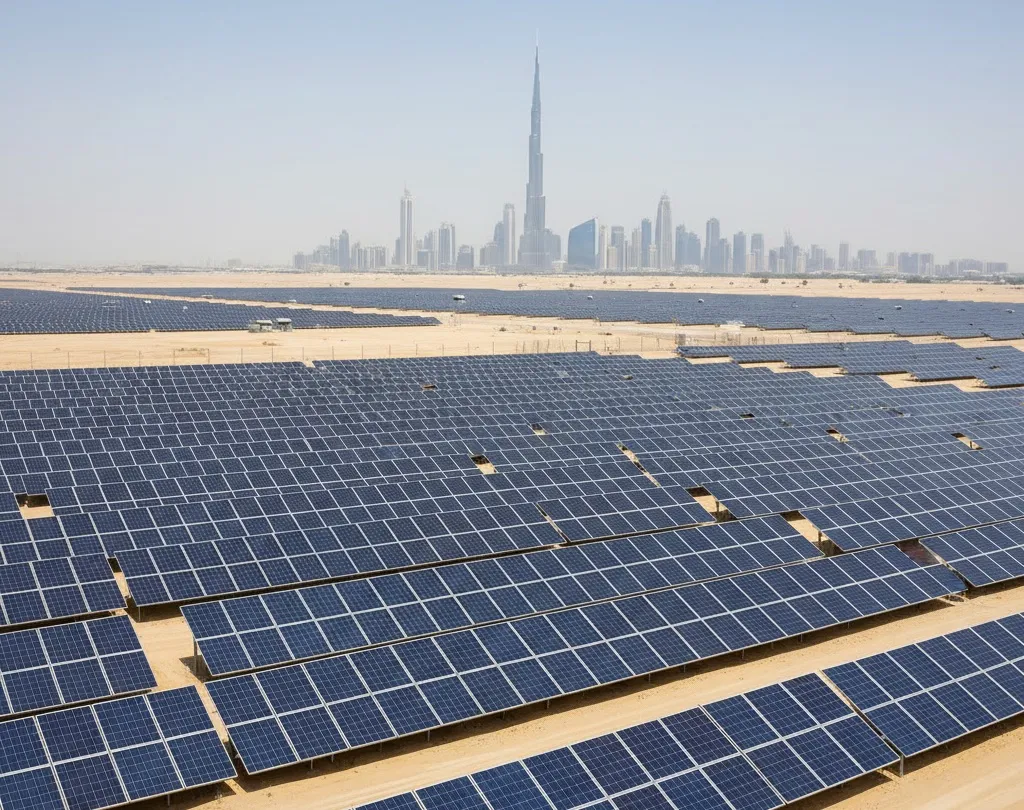
An investigative analysis by EcoPulse24
THE PRODUCTIVITY PARADOX
When temperatures routinely exceed 45°C, labor becomes a regulated commodity rather than a market variable. The UAE's response isn't rhetorical - it's legislative and enforced with precision.
The UAE Ministry of Human Resources and Emiratisation (MoHRE) prohibits outdoor work during midday hours from 12:30 PM to 3:00 PM, June 15 through September 15 annually - a policy now in its 20th consecutive year. Violations carry financial weight: AED 5,000 per worker, escalating to AED 50,000 for multiple infractions.
The enforcement isn't theoretical. In 2024, MoHRE conducted 134,000 inspections, achieving 99.9% compliance with only 51 infractions recorded. This represents systematic monitoring across construction sites, infrastructure projects, and outdoor service operations throughout the peak summer months.
For businesses, the mathematics are straightforward: summer productivity operates on compressed timelines. A construction project that might complete foundation work in eight-hour shifts during winter months must either extend to pre-dawn and evening hours during summer, or accept timeline elongation. The same work gets done, but the operational window narrows significantly.
The government provides over 6,000 rest stations specifically for delivery workers, acknowledging that the logistics economy - already operating on tight margins - cannot simply pause for heat. Instead, infrastructure adapts: shaded break areas, hydration stations, and mandatory rest periods become cost of doing business rather than optional amenities.
The policy includes limited exemptions, but these reveal the stringency of the baseline rule. Only work deemed "technically essential and not postponable" - specialized asphalt application requiring specific temperature windows, concrete pouring with time-sensitive chemical processes, emergency infrastructure repairs - qualifies for midday operation, and even then under enhanced safety protocols.
This creates a tiered economy: indoor work proceeds normally, temperature-sensitive outdoor work shifts to early morning and evening hours, and the remaining outdoor activity compresses into narrower daily windows or seasonal concentration during cooler months.
The ripple effects extend beyond construction. Event planning, outdoor maintenance, landscaping, facility management - any business model built on outdoor human activity - must engineer around the heat prohibition. Not as occasional adjustment, but as permanent operating constraint built into annual planning, pricing structures, and resource allocation.
For multinational companies entering UAE markets, this isn't familiar territory. Labor regulations in most developed economies focus on minimum wages, working hours, and safety standards. Heat-specific work prohibitions enforced through systematic inspection regimes represent fundamentally different operational parameters.
The adaptation challenge intensifies for industries where outdoor work isn't incidental but core. Facilities management companies maintaining the UAE's extensive landscaping and outdoor infrastructure must essentially operate dual-shift systems: abbreviated summer hours compensated through intensity and premium labor costs, then normalized winter operations when environmental constraints ease.
What emerges is an economy that has thoroughly internalized climate as binding operational constraint. The legal framework doesn't debate whether heat affects productivity - it mandates operational adjustments and enforces compliance at scale. Businesses that succeed in this environment don't resist the constraints; they engineer business models that function within them.
THE SUPPLY CHAIN RECALCULATION
The global perishables supply chain has quietly reorganized around the Gulf as critical node. Not because of geographical convenience - the region sits at challenging thermal intersection between major production zones and consumer markets. But because infrastructure investment has made temperature-controlled logistics operationally reliable despite extreme ambient conditions.
Emirates SkyCargo moves 900-1,000 tonnes of perishables daily across its global network, with 22,500 tonnes monthly representing its largest business segment by tonnage. In FY 2023-24, total cargo reached 2.2 million tonnes, an 18% year-over-year increase.
These aren't regional numbers - they represent global flows. In May 2023 alone, Emirates SkyCargo transported 3,590 tonnes of fresh-cut flowers, a 20% increase year-over-year, primarily from Ecuador and Kenya to European and GCC markets. The Netherlands, Ecuador, and Kenya feature prominently in both export origins and import destinations, with the UAE and Saudi Arabia among the top four import markets.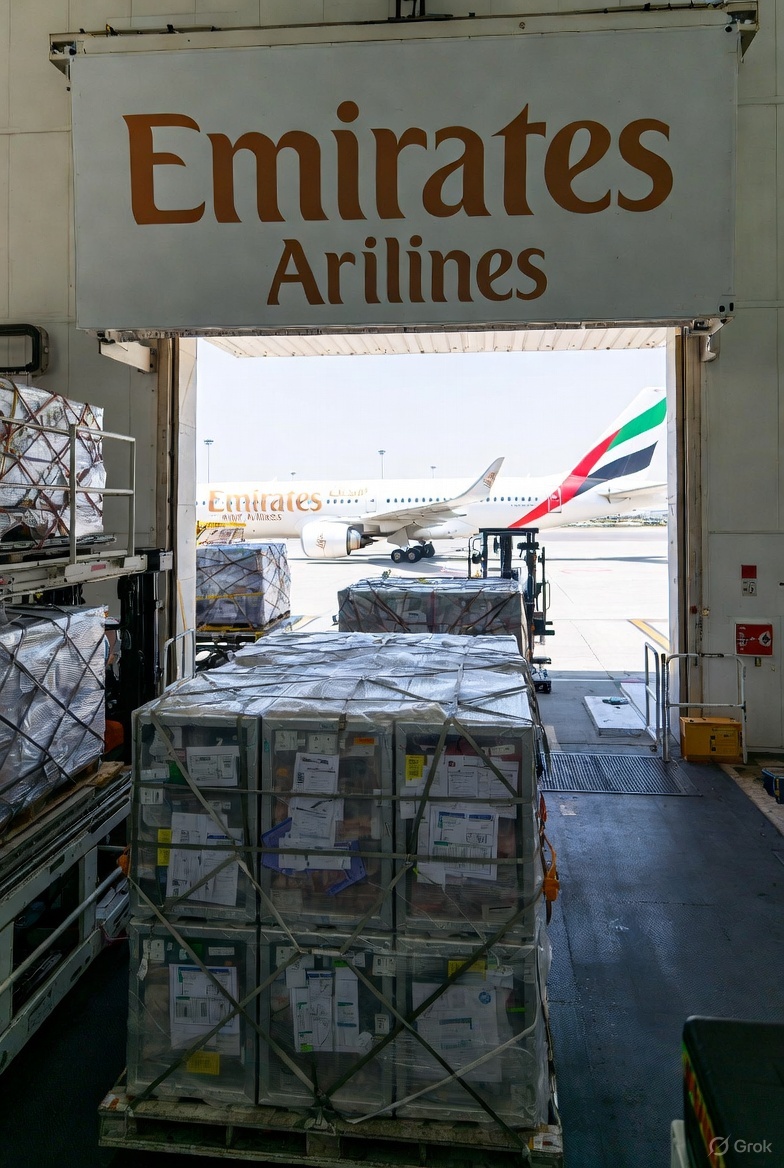
The temperature challenge is unforgiving. Dubai's ambient summer temperatures routinely exceed 40°C. Transfer a shipment of temperature-sensitive flowers or pharmaceuticals from climate-controlled aircraft hold to ground transport in that environment, and product degradation begins within minutes unless thermal integrity maintains throughout the handoff.
The solution: comprehensive ground handling infrastructure engineered specifically for extreme heat conditions. dnata processes 135,000 tonnes of perishables annually (12 months to March 31, 2023), utilizing high-tech "cool dollies" with closed temperature-controlled systems and data loggers ensuring IATA standards are maintained. These systems maintain 2-8°C for flowers during all ground handling, even when ambient temperatures exceed 40°C.
This isn't standard airport equipment - it's specialized infrastructure deployed because standard logistics breaks down at these temperatures. The cool dollies function as mobile cold rooms, maintaining product integrity during the critical vulnerability window between aircraft and warehouse.
Dubai Flower Centre operates with 180,000-tonne annual capacity across 100,000 square meters of automated floor space, featuring specialized cold storage, export chambers, and automated sorting. The scale reflects Dubai's positioning as global flower hub - not because roses grow in the desert, but because the cold chain infrastructure can move them reliably between continents.
The logistics model works through three-tier service stratification. Emirates Fresh provides different service levels for varying perishable tolerances, enabling 24-48 hour farm-to-shop transit times. Ecuadorian roses cut Monday morning can reach European retail shelves Wednesday, passing through Dubai's 40°C+ environment without thermal compromise.
But infrastructure alone doesn't explain the Gulf's logistics dominance. Geography matters: the region sits at efficient routing intersection for India-Europe flows, Africa-Asia connections, and increasingly, South America to Middle East/Asia movements. What infrastructure provides is reliability - the ability to promise and deliver temperature integrity regardless of external conditions.
The business model only functions if thermal control is absolute. A single cold chain break - equipment failure during ground transfer, delayed aircraft departure extending tarmac time, warehouse cooling interruption - can destroy entire shipments. The financial exposure is substantial: premium perishables like specialty flowers, pharmaceuticals, or high-grade seafood carry significant per-kilo value. Temperature excursions don't just damage product; they eliminate it entirely.
This creates quality of service differentiation. Logistics providers operating through the Gulf compete on reliability metrics: percentage of shipments maintaining full cold chain integrity, speed of ground transfer minimizing exposure time, backup systems preventing single-point failures.
dnata handles popular imports including mangoes, strawberries, tomatoes, avocados, and cherries from Europe, Far East, South Asia, and Africa - each with specific temperature requirements and shelf-life sensitivities. The operational complexity isn't moving volume; it's maintaining multiple simultaneous temperature zones while processing hundreds of tonnes daily in extreme ambient heat.
The result is infrastructure-intensive competitive advantage. New market entrants can purchase aircraft and obtain logistics licenses relatively easily. Replicating the ground handling infrastructure, specialized equipment, trained personnel, and systematic processes that enable reliable perishables movement through 45°C heat - that requires years of investment and operational refinement.
For businesses dependent on these supply chains - florists in Amsterdam receiving Kenyan roses, pharmaceutical distributors moving temperature-sensitive vaccines, specialty food importers serving premium markets - the Gulf logistics infrastructure isn't optional. It's the engineered solution that makes their business models viable despite climate conditions that would otherwise break the cold chain.
The temperatures aren't changing - if anything, they're intensifying. But the infrastructure response continues scaling. More specialized equipment, expanded cold storage capacity, additional redundancy systems. Not because the Gulf is naturally suited to perishables logistics, but because engineering has made it so despite natural disadvantages.
THE ADAPTATION IMPERATIVE: UAE Infrastructure Response
While cold chain logistics address supply chain vulnerabilities, the broader built environment faces a more fundamental challenge: keeping millions of square meters of indoor space at temperatures 25-30°C cooler than exterior ambient conditions, continuously, year-round.
The scale of this cooling demand would strain conventional systems anywhere. In the Gulf's climate, it requires infrastructure transformation.
Tabreed: District Cooling at Scale
Tabreed's H1 2025 performance marks record territory: 41,600 RT (refrigeration tons) of new capacity added - nearly double the entire 2024 annual addition. Through 9 months of 2025, organic capacity additions reached 52,900 RT, more than doubling FY2024's total.
Total connected capacity reached 1.37 million RT in H1 2025, with revenue hitting AED 1.11 billion ($302M) - the highest first-half in the company's 27-year history. FY 2024 delivered AED 2.434 billion revenue and 570M net profit, a 32% increase, with consumption volumes at 2.66 billion RTH, up 5%.
These aren't incremental improvements - they represent infrastructure expansion outpacing regional cooling demand growth. The driver: systematic conversion from individual building cooling systems to centralized district networks offering superior efficiency and reliability.
The major transactions reveal the scale of commitment. Tabreed's acquisition of PAL Cooling combined with the Palm Jebel Ali concession represents the largest deals in company history. The Palm Jebel Ali system alone: 250,000 RT capacity (20% of current total capacity), AED 1.5 billion investment, construction started Q3 2025, first cooling delivery targeted 2027.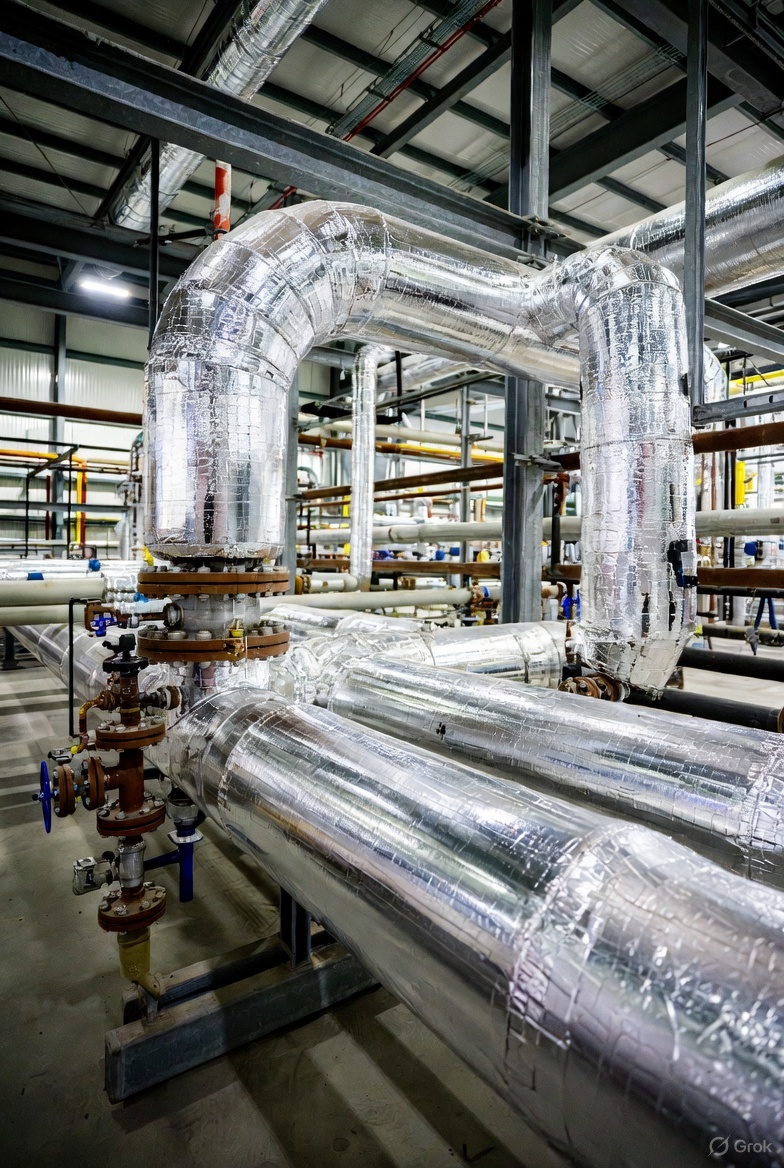
Tabreed operates 75 district cooling plants across the region, serving landmark properties including Sheikh Zayed Grand Mosque, Dubai Metro, Dubai Parks, Al Maryah Island, and Yas Island. Total site capacity expanded to approximately 2.6 million RT.
The business case for district cooling becomes compelling at Gulf temperature extremes. Individual building systems must be sized for peak load - the hottest day, highest occupancy, maximum solar gain. That means equipment running at partial capacity most hours, with redundancy requirements driving up both capital and operational costs.
District systems aggregate demand across multiple buildings with varying usage patterns. Office buildings peak midday, residential properties evening and early morning, retail during operating hours, hotels 24/7 but with occupancy variations. The combined load curve smooths compared to individual buildings, enabling more efficient central plant operation.
The efficiency gains translate directly to operating costs. District cooling typically delivers 30-40% energy savings versus conventional systems - meaningful when cooling represents 60-70% of building energy consumption in Gulf climates.
But efficiency alone doesn't explain the aggressive expansion. Reliability matters equally. In an environment where cooling failure means building evacuation within hours, redundancy isn't optional. District systems build in multiple levels of backup: redundant chillers, diverse utility feeds, backup power generation, interconnected networks enabling load transfer between plants.
For developers, the equation is straightforward: district cooling reduces building capital costs (no need for individual chiller plants, cooling towers, or associated space), lowers operating expenses, improves reliability, and frees up valuable square footage. For building operators, it converts unpredictable maintenance obligations into fixed service contracts.
Port and Logistics Cold Storage
The district cooling model addresses occupied buildings. Logistics facilities require different solutions - particularly ports handling refrigerated containers and perishable cargo.
Jebel Ali Port's Terminal 1 features 2,582 reefer points for refrigerated containers. Cold storage totals 9,665 square meters of floor space: cool storage (10-20°C) provides 3,240 pallet capacity across 3,900 sqm, while cold storage (-29°C to +13°C) offers 8,183 pallet capacity across 5,765 sqm.
These aren't warehouse facilities - they're precision temperature-controlled environments maintaining specific ranges for different product categories. Pharmaceuticals require different conditions than frozen seafood; fresh produce needs different parameters than ice cream. The infrastructure must deliver multiple simultaneous temperature zones while processing continuous cargo flows.
CWT-SML Logistics operates 100,000 sqm of storage across Jebel Ali and Dubai Logistics City. The DC2 facility spans 19,000 sqm with 22°C ±2°C temperature control and full insulation.
Americold announced a $35 million cold storage center planned for Jebel Ali (December 2023) with 40,000 pallet slots. The continued private investment signals market confidence in sustained demand growth.
The UAE cold chain logistics market reached $1.4 billion in 2024, with projected 8.20% CAGR through 2033. Growth drivers: expanding pharmaceutical sector requiring controlled storage, increasing fresh food imports serving growing population and tourism sector, and e-commerce growth driving last-mile cold chain requirements.
FedEx's Dubai World Central facility represents $350 million investment, including integrated cold storage capability - evidence that global logistics players view the Gulf as critical cold chain node worth substantial infrastructure commitment.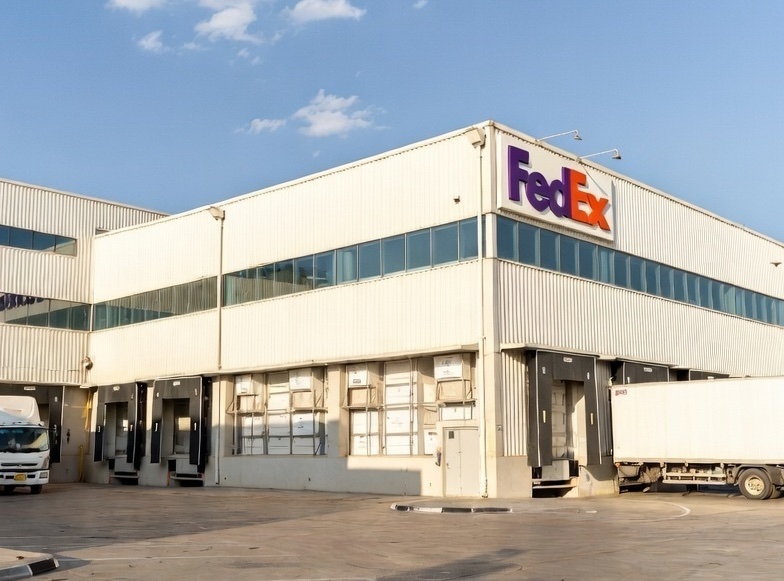
The infrastructure buildout creates network effects. Each new cold storage facility, additional reefer points, or expanded district cooling capacity makes the region more attractive for temperature-sensitive operations. Pharmaceutical companies consolidating regional distribution can deploy in the UAE with confidence that infrastructure supports requirements. Food importers serving GCC markets gain reliable cold chain from port to distribution.
What emerges is infrastructure-driven competitive advantage - not from natural resources or geographical convenience, but from systematic engineering deployment that makes extreme climate commercially irrelevant. The temperature outside may be 48°C, but inside the cold chain network, products move through precisely controlled environments matching specifications for any climate zone globally.
The companies and countries investing billions in this infrastructure aren't betting against climate change - they're engineering around it. The temperatures will remain extreme. The infrastructure will continue evolving to ensure that extreme exterior conditions don't constrain interior economic activity.
For businesses evaluating Gulf operations, the message is clear: the infrastructure exists to support temperature-sensitive activities at scale, proven through billions in annual throughput, and backed by continued investment suggesting sustained confidence in the model's viability.
THE COOLING COST SPIRAL
Perhaps nowhere is the climate impact more visible - and more financially measurable - than in energy consumption. Cooling isn't a discretionary expense in Gulf commercial operations. It's the dominant line item, and it's expanding faster than revenue growth in many sectors.
The numbers are stark. From 1990 to 2016, air conditioning usage in the UAE increased from 25 to 125 terawatt hours, representing 70% of the country's total electricity consumption. This isn't future projection - it's documented baseline reality.
For commercial buildings, the mathematics are even more severe. Cooling systems consume 80-85% of total energy in buildings. In the UAE, roughly 90% of electricity is consumed by the building sector, and within that sector, air conditioners consume approximately 80% of total annual building electricity.
This creates a compounding dynamic. As ambient temperatures rise, cooling demands increase. As cooling demands increase, peak electricity loads surge. The result: upward pressure on both consumption volumes and unit costs precisely when usage is already climbing.
The Cost Escalation Pattern
Dubai's electricity tariff structure reflects this reality through progressive pricing. Under the slab system, residential and commercial consumers using up to 2,000 kilowatt-hours monthly are charged 20 fils per unit. Those consuming 2,000-4,000 kWh pay 24 fils per unit, 4,000-6,000 kWh consumers pay 28 fils per unit, and those exceeding 6,000 kWh pay 33 fils per unit.
For businesses operating large facilities - hotels, shopping malls, office towers, warehouses - summer cooling easily pushes consumption into the highest tariff brackets. A facility that might operate in the 24 fils range during moderate months can find itself paying 33 fils during peak summer, a 38% unit cost increase atop higher consumption volumes.
Per capita electricity consumption in the UAE stands at 15 MWh annually - the 8th highest in the world - driven primarily by air conditioning in buildings and electro-intensive industries. Dubai's peak power demand from DEWA reached 9.5 gigawatts in 2022, growing year over year.
The Operational Impact
For companies operating climate-controlled facilities, this translates into structural cost increases that resist traditional mitigation strategies. You can negotiate supplier contracts, optimize staffing, improve logistics efficiency. But you cannot negotiate with thermodynamics.
A hotel with 500 rooms must maintain guest comfort standards. A shopping mall must keep retail spaces at temperatures shoppers expect. A data center must prevent equipment overheating. A cold storage facility must maintain product integrity. The cooling happens, or the business doesn't function.
The residential sector in the UAE exhibits the highest percentage of energy consumption at 39% of total generated electricity, used primarily for heating, ventilation, and air conditioning due to extreme conditions. Commercial facilities face similar or higher proportions, but with less flexibility to reduce consumption.
The Investment Response
Companies are responding with aggressive efficiency investments. Dubai's Demand Side Management Strategy 2030 targets savings of 30% on electricity and water, focusing primarily on buildings which comprise over 70% of all consumption. With over 30,000 potential retrofit projects to be carried out in Dubai before 2030 under the Etihad ESCO initiative, the market has gained considerable momentum.
The economics are compelling for those with long-term perspectives. A large percentage of savings will come from medium to high investments in HVAC units. Those with a long-term vision for profit margins will see greater returns from investing now.
But these capital investments take time to deploy and years to recoup. Building retrofits, HVAC upgrades, insulation improvements, smart building systems - each requires significant upfront capital and installation disruption. Meanwhile, the electricity bills arrive monthly, reflecting current conditions rather than planned improvements.
The Efficiency Paradox
Even successful efficiency measures face a paradox: they slow cost growth but rarely reverse it. A building that reduces cooling energy consumption by 20% through better insulation and upgraded HVAC has achieved measurable success. But if ambient temperatures are rising 1-2°C per decade, that 20% efficiency gain buys perhaps five to seven years before consumption returns to previous levels - at which point further efficiency improvements become progressively more expensive.
The thermodynamic reality is unforgiving. Each degree of temperature increase requires exponentially more energy to maintain the same indoor conditions. A system designed to cool a building from 40°C to 22°C operates in a fundamentally different regime than one cooling from 45°C to 22°C.
The Competitive Distortion
This creates widening performance gaps between old and new infrastructure. Buildings designed when 45°C was an exceptional peak now operate in conditions where 48-50°C occurs regularly. Their cooling systems weren't specified for sustained operation at these extremes.
Meanwhile, new construction can engineer for current and projected temperature realities from the ground up - building orientation, glazing specifications, insulation standards, HVAC capacity, thermal mass. The result: energy consumption differentials of 30-40% between comparable old and new facilities providing identical service.
For companies operating mixed portfolios, this means their older assets become progressively less competitive, not because they're poorly managed, but because they're engineered for a climate that no longer exists.
The Budget Implications
Energy bills that once represented a predictable 15-20% of facility operating costs are expanding to 25-35% in many commercial operations. This isn't gradual drift - it's structural shift that compresses margins and forces fundamental business model adjustments.
Some sectors can pass these costs through to customers via higher prices. Others - particularly those in competitive markets or with fixed-price contracts - must absorb them, directly impacting profitability.
The companies adapting most successfully aren't simply investing in efficiency - they're fundamentally rethinking facility design, operating hours, space utilization, and business models around the reality that cooling isn't a manageable expense anymore. It's a core operating constraint that shapes everything else.
The Clean Energy Response: Infrastructure-Scale Mitigation
Yet amid these mounting energy pressures, the UAE has deployed perhaps the world's most aggressive clean energy infrastructure build-out specifically designed to address the cooling cost spiral while reducing carbon intensity.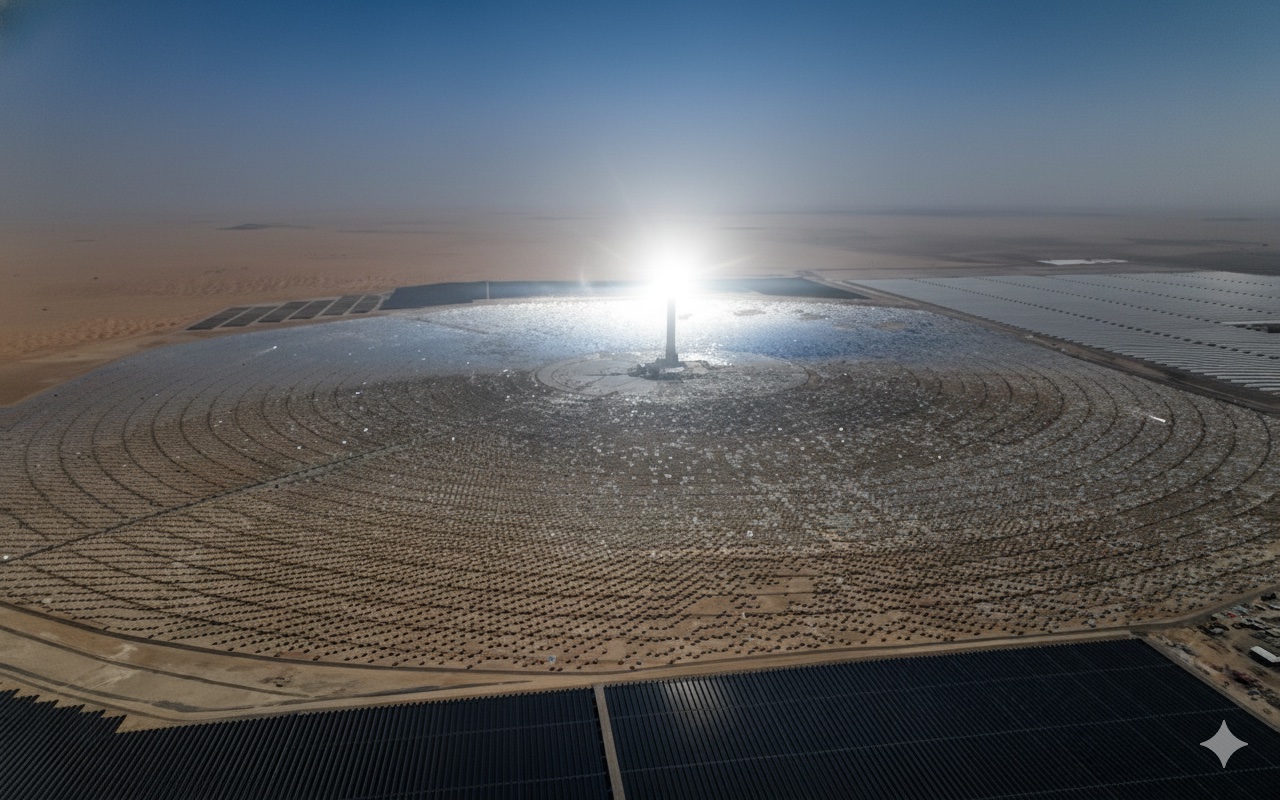
Dubai: Mohammed bin Rashid Al Maktoum Solar Park
The Mohammed bin Rashid Al Maktoum Solar Park has reached a production capacity of 2,427 MW as of 2023, representing 16.3% of Dubai's total production capacity. This isn't aspirational planning - it's operational infrastructure generating power today.
The park is planned to reach 5,000 megawatts by 2030 with total investments of AED 50 billion, making it the largest single-site solar park in the world using the Independent Power Producer model.
The carbon impact is measurable and substantial:
- Phase 1 (13 MW): Reduces 15,000 tonnes of carbon emissions annually
- Phase 2 (200 MW): Reduces 214,000 tonnes annually
- Phase 3 (800 MW): Reduces 1.055 million tonnes annually, powering over 240,000 residences
- Phase 5 (900 MW): Reduces 1.18 million tonnes annually, providing clean energy to 270,000 residences
- Phase 6 (1,800 MW): Will reduce 2.36 million tonnes annually when operational between 2024-2026, providing clean energy to 540,000 residences
Phase 6 achieved the world's lowest levelised cost of energy at USD 1.6215 cents per kilowatt-hour - demonstrating that at scale, solar power in the Gulf isn't just cleaner than fossil generation, it's economically superior.
Abu Dhabi: Al Dhafra Solar PV Project
The Al Dhafra Solar PV project, completed in June 2023, is a 2 gigawatt photovoltaic plant covering approximately 20 square kilometers in Abu Dhabi, making it the world's largest single-site solar power plant upon completion.
The facility uses almost 4 million bifacial solar panels to generate enough electricity for approximately 200,000 homes across the UAE, displacing 2.4 million tonnes of carbon emissions annually. This is equivalent to removing approximately 470,000 cars from the road.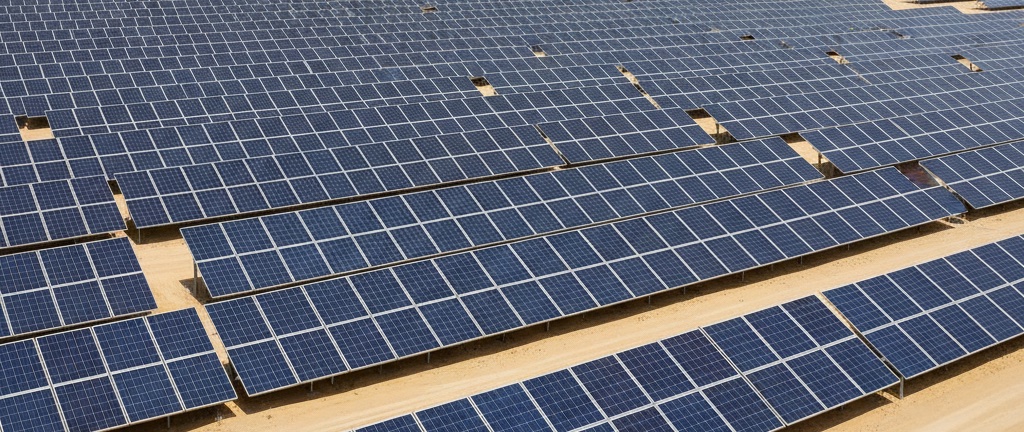
The project achieved record-breaking economics with a tariff of AED 4.97 fils per kWh (1.35 cents per kWh) at financial close, later improved to AED 4.85 fils per kWh (1.32 cents per kWh) - setting new global benchmarks for utility-scale solar cost-competitiveness.
During construction, almost 4 million bifacial solar panels were installed at an average rate of 10 megawatts per day, demonstrating industrial-scale execution capacity.
Nuclear Baseload: Barakah Nuclear Energy Plant
While solar addresses daytime peak cooling loads, baseload power requires different solutions. The Barakah Nuclear Energy Plant consists of four APR1400 reactors with total capacity of 5,600 MW, supplying up to 25% of the UAE's electricity needs.
The plant prevents up to 22.4 million tonnes of carbon emissions annually, equivalent to removing 4.8 million cars from the roads. This contributes 24% towards the UAE's 2030 decarbonization target.
Located in the Al Dhafra region of Abu Dhabi, approximately 53 km west-southwest of Al Dhannah City, the facility became the first nuclear power station in the Arabian Peninsula and the first commercial nuclear power station in the Arab World.
Unlike solar, nuclear provides consistent output regardless of weather or time of day - critical for supporting the continuous cooling demands that define Gulf commercial operations.
The Strategic Integration
These aren't isolated projects - they represent coordinated infrastructure deployment specifically calibrated to offset the electricity consumption surge driven by rising temperatures.
Combined annual carbon emission reductions:
- Mohammed bin Rashid Al Maktoum Solar Park (current phases): ~2.5 million tonnes
- Al Dhafra Solar PV: 2.4 million tonnes
- Barakah Nuclear Plant: 22.4 million tonnes
- Total: ~27.3 million tonnes annually
To contextualize: from 1990 to 2016, air conditioning usage in the UAE increased from 25 to 125 terawatt hours. The clean energy infrastructure being deployed directly targets this growth trajectory.
The economics are equally significant. Total energy consumption in the UAE reached 97 Mtoe in 2023, having increased by 4.5% per year on average since 2017. Without the clean energy deployment, this growth would translate entirely into increased carbon emissions and higher fossil fuel consumption.
Instead, the UAE is engineering a transition where energy demand growth - driven substantially by cooling requirements - is increasingly met by zero-carbon generation. The infrastructure investments required are massive, but so is the scale of the challenge being addressed.
For businesses facing the cooling cost spiral, this clean energy infrastructure deployment offers strategic relief: electricity supply is expanding through sources with lower marginal costs and zero fuel risk. The tariffs achieved on recent solar and nuclear projects suggest that the per-unit cost trajectory for electricity may stabilize or even decline even as total consumption continues growing.
This doesn't eliminate the cooling cost challenge, but it fundamentally changes the equation from "how do we manage exponentially rising costs" to "how do we optimize consumption as the grid transitions to cheaper, cleaner generation."
That's a materially different strategic problem - and one with clearer solution pathways.
THE INDIVIDUAL CARBON ACCOUNTABILITY: Transparency in Personal Impact
While governments deploy billion-dollar infrastructure and corporations implement efficiency programs, a parallel transformation is occurring at the individual level - one where citizens and residents can directly measure and manage their personal contribution to carbon emissions.
Energy Bills as Carbon Dashboards
Dubai Electricity and Water Authority provides innovative digital tools enabling customers to monitor consumption proactively, detect leaks instantly, and adopt sustainable practices through daily habits, in line with UN recommendations to reduce the global average individual carbon footprint from 6.3 tonnes (2020) to 2.1 tonnes by 2030.
The monthly DEWA bill has evolved beyond a payment notice - it now functions as a personal carbon accountability statement, showing households exactly how their cooling, lighting, and water usage translates into environmental impact.
Appliance-Level Transparency: The ESMA Rating System
The UAE Energy Efficiency Label program (EESL) is supervised by the Ministry of Industry and Advanced Technology (formerly ESMA), enforcing energy efficiency standards through the ECAS Product Certification scheme. Test results calculate an energy efficiency rating on a five-star rating scale, with 5 stars representing the highest level of energy efficiency.
Since early 2013, when energy performance labels were made mandatory for residential air conditioning units, the program has extended across multiple product lines. All appliances entering the Dubai market must meet minimum efficiency standards (1 star) and display their energy performance through a label. A 1-star washing machine or dryer consumes 80% more electricity than a 5-star machine.
This isn't abstract environmental policy - it's direct consumer information at point of purchase. When a resident selects an air conditioner, refrigerator, or washing machine, the energy label provides immediate clarity on lifetime operating costs and environmental impact. The market response has been measurable: higher-starred appliances command premium shelf space, and retailers actively promote efficiency ratings as selling points.
The Policy Ecosystem Supporting Individual Action
From January 1, 2022, Sharjah government workers shifted to a four-day working week with Friday, Saturday and Sunday off. A study presented to the Sharjah Executive Council showed traffic accidents decreased by 40%, with reduced vehicular pollution and significant drops in emissions of harmful gases including carbon monoxide, sulfur dioxide, and nitrogen dioxide.
The study evaluating Sharjah's new weekly work system showed that when implemented, there was a decrease in the percentage of emissions of various gases, including carbon monoxide, sulphur dioxide and nitrogen dioxide.
While the three-day weekend addressed work-life balance and productivity, the environmental dividend proved substantial. One fewer commute day per week, multiplied across tens of thousands of government employees, translated into measurable air quality improvements. This demonstrates how policy designed for employee welfare can deliver secondary environmental benefits when implemented at scale.
The Aviation Transparency Challenge
The aviation sector presents a more complex accountability picture. While airlines like Emirates emphasize operational efficiency and participate in carbon offsetting schemes like CORSIA (Carbon Offsetting and Reduction Scheme for International Aviation), Emirates does not yet have direct methods for passengers to offset their carbon output directly through the airline.
In 2022-23, Emirates used 3,494,233 tonnes of fuel, of which 77 tonnes was SAF (Sustainable Aviation Fuel). Its emissions were 11,106,670 tonnes of carbon. The airline has implemented Green Standard Operating Procedures including reduced engine taxi, optimized flap landing, and inflight speed management, which helped reduce fuel burn by more than 50,000 tons and carbon emissions by over 160,000 tons.
For passengers seeking to understand their individual flight impact, third-party calculators fill the gap, though integration of carbon footprint data directly into ticket booking systems - showing the emission cost alongside the financial cost - remains uncommon in regional carriers.
The Transparency Paradox
What emerges is a split-level accountability system. Households receive granular monthly feedback on electricity and water consumption with embedded carbon implications. Appliance purchasers access detailed efficiency ratings mandated by law. Government employees benefit from policies that reduce their commuting emissions.
Yet in other domains - particularly aviation and goods transportation - individual carbon impact remains largely invisible to the end consumer. You can determine the exact energy efficiency of your refrigerator before purchase, but not the carbon cost of your flight or the emissions embedded in products shipped to your doorstep.
This creates an information asymmetry. Those who actively seek carbon data can find it through specialized tools and voluntary reporting. But for the average consumer making routine decisions, carbon visibility depends heavily on which sector they're engaging with.
From Awareness to Action
The infrastructure for individual carbon accountability exists, but its distribution is uneven. DEWA provides digital services including the Smart Living dashboard for consumption monitoring, the 'My Sustainable Living Programme' for comparing consumption with efficient homes in the area, and 'Away Mode' for monitoring consumption while traveling.
These tools work - when used. The challenge isn't technological capability or data availability. It's converting passive information provision into active decision-making. A household can see their monthly consumption, compare it to efficient neighbors, and access recommendations for improvement. But the system relies on voluntary engagement.
The most effective interventions combine information transparency with structural incentives. The ESMA star rating system works not because consumers study energy efficiency tables, but because retailers highlight ratings and price differentials make efficiency economically rational. Sharjah's three-day weekend reduced emissions not through individual choice but through policy that changed the default behavior for thousands of employees simultaneously.
Individual accountability frameworks function best when they make the sustainable choice the easy choice - or when they make the carbon-intensive choice visibly more expensive. Pure information disclosure helps, but behavioral economics suggests it's rarely sufficient alone.
The UAE has built substantial infrastructure for individual carbon visibility. The next evolution would be expanding that visibility across currently opaque sectors and designing choice architectures that turn awareness into systematic behavior change. The data exists. The question is whether transparency alone drives transformation, or whether it requires pairing information with incentives that make low-carbon options the path of least resistance.
THE OUTDOOR ECONOMY UNDER PRESSURE: Adapting to Extreme Heat
The Gulf's tourism and hospitality sector presents a paradox: businesses built around outdoor experiences operating in a climate increasingly hostile to outdoor activity. The solution isn't abandoning the model - it's engineering around it.
The Seasonal Stereotype Broken
Traditional assumptions about Dubai tourism - thriving in winter, dormant in summer - no longer hold. Dubai's tourism sector maintains an impressive hotel occupancy rate of over 80% across both summer and winter months. With more than 150,000 hotel rooms available, the city continues to thrive year-round, driven not only by leisure travelers but also by a robust calendar of corporate and MICE (Meetings, Incentives, Conferences, and Exhibitions) events during the traditionally slower summer months.
In 2024, Dubai's hotel occupancy rate reached 77.7%, with 18.7 million overnight guests representing a 9.1% increase from 2023. This performance defies climate constraints through strategic programming and infrastructure investment.
The mechanism is straightforward: when outdoor temperatures exceed comfortable human thresholds, economic activity migrates indoors. Hotels that once featured poolside lounging as primary amenity now position climate-controlled retail, dining, and entertainment as core attractions. The outdoor elements remain - pools, terraces, gardens - but their utilization patterns have fundamentally shifted.
Golf: Engineering Green in the Desert
Perhaps no outdoor business confronts the heat challenge more directly than golf. Maintaining championship-quality grass courses in desert conditions where summer temperatures routinely exceed 45°C requires industrial-scale resource deployment - particularly water.
The response has been aggressive efficiency investment. Emirates Golf Club, after investing in state-of-the-art Toro golf irrigation technologies including the Lynx Central Control System, reduced irrigation water consumption by more than 30%, later achieving a 34% reduction through comprehensive system upgrades.
Jumeirah Golf Estates achieved a 20% reduction in irrigation consumption over three years through auditing and best practices, using state-of-the-art TORO irrigation systems able to control each individual sprinkler to maximize efficiency.
Emirates Golf Club changed water supply to treated sewage effluent water - 100% recycled water that would otherwise maintain a high environmental cost to dispose of. The club transitioned turfgrass to a variety far better adapted to lower quality water and initiated a turfgrass reduction programme to minimize areas requiring high maintenance.
Dubai Creek Golf & Yacht Club removed overseeding practice from the golf course, reducing water consumption by 25%, and removed non-native landscape planting while planting over 300 native low water use trees.
These aren't marginal improvements - they represent fundamental operational redesign. Individual sprinkler control, moisture sensors measuring salinity and water content, weather stations calculating precise evapotranspiration rates, and transition to recycled wastewater have transformed golf course management from resource-intensive to efficiency-optimized.
Yet efficiency only addresses half the equation. The other half is playing patterns. Peak summer temperatures make midday golf physiologically dangerous. Courses respond with twilight programming, early morning tee times, and climate-controlled clubhouse amenities that extend dwell time indoors. The outdoor experience becomes time-bounded rather than all-day.
The Outdoor Dining Contraction
Restaurant operators face similar dynamics. Outdoor seating that drives profitability eight months per year becomes unutilizable for four months when sidewalk temperatures can reach 60°C and ambient air temperatures make al fresco dining medically inadvisable.
The adaptation strategies vary by establishment. High-end venues invest in misting systems, shade structures with integrated cooling, and evening-only outdoor service when temperatures drop to merely uncomfortable rather than dangerous. Mid-market restaurants increasingly view outdoor seating as seasonal amenity rather than core revenue driver.
Some operators have reversed the equation entirely: outdoor spaces designed primarily for winter use, with indoor capacity scaled to handle summer demand. This requires different space planning - larger indoor footprints, higher cooling capacity, architectural features that work year-round rather than optimized for outdoor flow.
The economic impact isn't trivial. Outdoor seating typically generates higher per-table revenue than indoor (better ambiance, higher check averages, alcohol consumption). Losing four months of that revenue stream forces either annual planning around compressed high season or year-round operational models built entirely on indoor economics.
The Pool Paradox
Hotels and resorts face their own outdoor utilization challenges. Pool areas - traditionally prime amenity space - see usage patterns that have inverted from historical norms. Peak summer temperatures make midday pool time uncomfortable despite water cooling. The heat radiating from surrounding concrete and the intense direct sunlight create conditions where even immersion doesn't provide relief.
Properties respond with multiple strategies: expanded pool shade structures, misting systems, chilled pools maintained at lower temperatures, evening pool programming with lighting and entertainment, and most significantly, positioning pools as visual amenity rather than primary activity driver. Guests see the pool from their climate-controlled rooms, take brief early morning or late evening dips, then retreat to indoor facilities.
This shifts capital allocation. New developments dedicate increasing square footage to climate-controlled amenities - spas, fitness centers, indoor entertainment, retail - while outdoor spaces, though still prominent for marketing imagery, receive less operational emphasis during summer months.
The Experience Economy Pivots Indoors
The broader pattern is unmistakable: outdoor economic activity in the Gulf increasingly occurs in narrow time windows - early morning, late evening, winter months - while mid-day and summer operations migrate indoors or cease entirely.
This isn't business failure - Dubai's hospitality sector continues setting records, with 18.7 million overnight guests in 2024 - but it is business transformation. The outdoor experiences that once defined Gulf tourism haven't disappeared; they've been time-shifted and climate-engineered.
The companies succeeding in this environment don't fight the heat - they design around it. Advanced irrigation controlling individual sprinklers. Recycled wastewater as primary supply. Turfgrass varieties tolerant of lower-quality water. Seasonal programming that accepts rather than resists climate constraints. Indoor amenities positioned not as weather backup but as primary offering.
Yet engineering has limits. You can optimize irrigation to reduce water consumption by 30%, but you cannot eliminate it. You can shift golf tee times to early morning, but you cannot expand the hours of physiologically safe outdoor activity. You can install misting systems and shade structures, but you cannot make 48°C comfortable for extended outdoor dining.
The outdoor economy under pressure responds by compressing into available windows and compensating through intensity: higher prices during viable periods, infrastructure investments that maximize efficiency during operation, and business models that acknowledge rather than deny climate reality.
What emerges is a new normal: outdoor economic activity as premium, time-limited experience rather than baseline assumption. The pool, the golf course, the terrace restaurant - still present, still marketed, still valued. But increasingly seasonal, time-bounded, and engineered rather than natural. An outdoor economy that exists despite the climate, not because of it.
THE BROADER IMPLICATIONS: The Gulf as Global Laboratory
What's unfolding in the UAE isn't a regional anomaly - it's a preview. The combination of extreme heat, significant economic resources, and political will to engineer solutions makes the Gulf the world's most advanced testing ground for climate adaptation at scale.
The Adaptation Playbook
The patterns documented throughout this analysis reveal a consistent approach: when environmental constraints threaten economic activity, deploy capital and technology to engineer around the problem rather than retreat from it.
Mid-day outdoor work becomes physiologically dangerous? Implement mandatory work prohibitions during peak heat hours, enforce through 99.9% compliance rates across 134,000 inspections, and engineer indoor alternatives.
Cooling energy consumption spirals upward? Deploy clean energy infrastructure at unprecedented scale: 2,427 MW solar capacity in Dubai, 2 GW in Abu Dhabi's Al Dhafra plant, 5,600 MW nuclear capacity preventing 22.4 million tonnes of annual carbon emissions.
Supply chains require temperature control? Build district cooling systems reaching 1.37 million RT capacity, with 41,600 RT added in a single half-year, and construct specialized cold storage infrastructure across every logistics node.
Desert golf courses consume unsustainable water volumes? Engineer 30-34% consumption reductions through precision irrigation, transition to 100% recycled wastewater, and redesign courses around native species requiring minimal input.
This isn't incremental adjustment - it's systematic infrastructure transformation. The UAE has essentially decided that climate constraints will not determine economic boundaries. Instead, engineering capacity will.
The Cost Question
The approach works, but at what price? The numbers are staggering.
Mohammed bin Rashid Al Maktoum Solar Park alone represents AED 50 billion in total investments. Tabreed's H1 2025 revenue reached AED 1.11 billion, with major projects like the AED 1.5 billion Palm Jebel Ali system. The Barakah Nuclear Plant cost exceeded $20 billion. District cooling infrastructure, cold storage facilities, advanced irrigation systems, building retrofits - each representing billions in capital deployment.
These investments generate measurable returns: reduced energy costs per unit, lower carbon emissions, operational efficiency gains, competitive advantages for businesses with modern infrastructure. But they require upfront capital at scales that few regions can mobilize.
The UAE model demonstrates what's possible when resources aren't the binding constraint. The question for the rest of the world: what happens in regions facing similar climate pressures without comparable financial capacity?
The Global Relevance
The technologies and approaches being proven in the Gulf aren't regionally specific. Precision irrigation systems that cut water consumption by 30% work anywhere. District cooling infrastructure that reduces building energy use functions in any hot climate. Solar power generation achieving record-low costs of 1.32 cents per kWh scales globally.
What the UAE provides is real-world validation at commercial scale. These aren't pilot projects or academic studies - they're operational systems supporting major cities and generating measurable economic value.
Individual carbon accountability tools enabling citizens to monitor consumption, compare to efficient neighbors, and receive recommendations align with UN goals to reduce global average individual carbon footprint from 6.3 tonnes (2020) to 2.1 tonnes by 2030. The infrastructure exists; the question is deployment.
Sharjah's four-day workweek demonstrated that policy changes can deliver environmental dividends: 40% reduction in traffic accidents, decreased emissions of carbon monoxide, sulfur dioxide, and nitrogen dioxide. The work-life benefits proved substantial; the emission reductions came as measurable co-benefit.
These solutions transfer. The climate conditions may be extreme, but the technologies and approaches scale to any region where heat, energy demand, or water scarcity create economic constraints.
The Limitations of Engineering
Yet for all the infrastructure prowess, fundamental limits remain.
You cannot engineer away thermodynamics. From 1990 to 2016, air conditioning usage in the UAE increased from 25 to 125 terawatt hours, representing 70% of the country's total electricity consumption. Even with massive clean energy deployment, the absolute consumption continues rising.
Per capita electricity consumption stands at 15 MWh annually - the 8th highest in the world. Efficiency improvements slow growth but don't reverse it. Each degree of ambient temperature increase requires exponentially more energy to maintain the same indoor conditions.
The outdoor economy compresses into narrower windows. Golf courses can optimize irrigation, but cannot eliminate water requirements. Hotels can engineer pool comfort zones, but cannot make midday outdoor recreation safe when temperatures exceed human physiological thresholds.
Dubai maintains 80%+ hotel occupancy year-round, but does so by pivoting to indoor amenities, climate-controlled environments, and time-bounded outdoor experiences. The adaptation succeeds commercially, but it represents retreat from outdoor activity, not enhancement of it.
The Sustainability Paradox
The UAE's approach reveals a fundamental tension: massive investment in clean energy and efficiency to sustain an economic model built on energy-intensive climate control in a desert environment.
Combined annual carbon emission reductions from major clean energy projects total approximately 27.3 million tonnes: Al Dhafra Solar (2.4 million), Mohammed bin Rashid Solar Park current phases (~2.5 million), Barakah Nuclear (22.4 million).
These are real, measurable emission reductions. But they enable continued operation and expansion of fundamentally energy-intensive activities: maintaining golf courses in the desert, cooling buildings to comfortable temperatures in 48°C heat, operating cold chains for perishable goods in extreme climate.
The question isn't whether this is technically possible - the UAE proves it is. The question is whether it's globally scalable. Can the world afford to engineer around climate constraints everywhere they emerge, or does this approach work only in resource-rich regions that can deploy unlimited capital?
The Replicability Challenge
The Gulf model succeeds through:
- Significant financial resources for infrastructure investment
- Centralized decision-making enabling rapid deployment
- Political consensus on engineering-first approaches
- Access to global technology and expertise
- Economic diversification providing capital for transition
Most regions facing similar climate pressures lack at least one of these elements. Sub-Saharan Africa will experience comparable temperature increases but without UAE-level resources. South Asian megacities face extreme heat with different governance structures and capital constraints.
The technologies developed and proven in the Gulf can transfer. The financial model likely cannot.
The Acceleration Question
Everything documented in this analysis assumes current climate trajectories. Air conditioning usage increased from 25 to 125 terawatt hours over 26 years - a fivefold increase that infrastructure investments are engineered to address.
But climate change isn't linear. The infrastructure being deployed today is designed for current conditions plus projected increases. If warming accelerates beyond current models, or if threshold effects create non-linear changes, the engineering solutions may prove insufficient.
A building designed to cool from 45°C to 22°C operates in a fundamentally different regime than one designed for 50°C to 22°C. The efficiency gains achieved through current technology may be overwhelmed by future temperature increases.
The UAE is betting that engineering capacity can stay ahead of climate change. It's a bet backed by tens of billions in infrastructure investment. Whether that bet holds depends on questions far beyond any single region's control.
The Model's Message
What the Gulf demonstrates is that with sufficient resources and engineering capacity, extreme climate conditions don't preclude economic development. Businesses can operate, cities can function, outdoor activities can persist - with appropriate infrastructure investment and operational adaptation.
This is simultaneously encouraging and sobering. Encouraging because it proves solutions exist and function at scale. Sobering because it reveals the magnitude of investment required.
The companies adapting most successfully in the Gulf aren't simply more efficient - they're fundamentally re-engineered. The buildings cooling most effectively aren't just better insulated - they're integrated into district systems operating at unprecedented scale. The golf courses consuming less water haven't just upgraded sprinklers - they've transitioned to recycled wastewater and redesigned around native species.
For other regions watching Gulf temperatures rise and wondering about their own climate futures, the UAE provides a clear message: adaptation is possible, but not cheap, not simple, and not achievable through incremental change.
It requires infrastructure transformation at scale, capital deployment in billions, technology integration across entire systems, and willingness to fundamentally rethink how economic activity occurs in extreme conditions.
The Gulf isn't just adapting to climate change. It's engineering a new model for how advanced economies can function despite it. Whether that model represents the future for all heat-exposed regions, or a unique solution available only to those with exceptional resources, remains the defining question.
What's certain is this: the rest of the world is watching, and the laboratory results are generating data points that will shape adaptation strategies globally. The Gulf may be experiencing temperature extremes first, but it won't be alone for long.
COP28 AND THE UAE CONSENSUS: From Local Action to Global Leadership
In November-December 2023, the UAE's climate adaptation story transitioned from domestic implementation to international leadership when Dubai hosted COP28, the UN Climate Change Conference that brought together nearly 200 nations to chart the global response to climate crisis.
Historic Agreements
The UAE Consensus delivered on December 13, 2023, includes the first Global Stocktake setting out ambitious actions needed to keep 1.5°C within reach. It includes an unprecedented reference to transitioning away from all fossil fuels in energy systems, in a just, orderly and equitable manner in this critical decade to enable the world to reach net zero emissions by 2050.
After 31 years of debates, and for the first time, the negotiated text included calls for tripling renewable energy, halting deforestation and doubling energy efficiency by 2030. This resulted in 133 countries pledging to triple global installed renewable power capacity by 2030 compared to 2022 levels.
On Day 1 of COP28, the Presidency facilitated a historic agreement to operationalize and capitalize funding for Loss and Damage, supporting those on the front lines of the climate crisis, with $792 million already pledged.
Mobilizing Finance at Scale
COP28 mobilized more than $85 billion in funding, including $3.5 billion to replenish the Green Climate Fund (increasing the second replenishment to a historic $12.8 billion total) and almost $188 million toward the Adaptation Fund. The conference launched the world's largest private market climate investment fund with $30 billion, and brought 52 national and international oil companies to agree on ambitious decarbonization targets.
The Credibility of Experience
The UAE's ability to deliver the UAE Consensus stemmed directly from its documented track record of climate adaptation at scale. When calling for tripling renewable energy by 2030, the UAE spoke from the position of having already deployed over 4.4 GW of operational solar capacity across Mohammed bin Rashid Al Maktoum Solar Park (2,427 MW) and Al Dhafra (2 GW), with concrete plans for 5 GW by 2030 in Dubai alone.
When discussing adaptation finance, the UAE referenced AED 50 billion invested in solar infrastructure and district cooling systems reaching 1.37 million RT capacity. When addressing energy efficiency, the evidence included golf courses reducing water consumption by 30-34% and policy changes delivering 40% reductions in traffic accidents alongside emission decreases.
The UAE Consensus wasn't theoretical - it reflected solutions the UAE had already proven operational at commercial scale. The credibility came from implementation, not aspiration.
From Agreement to Action
COP28 President Sultan Al Jaber emphasized: "We are what we do, we are not what we say. The UAE Consensus set a new direction and a clear course correction. We must now turn an unprecedented agreement into unprecedented action and results".
This mirrors precisely the UAE's domestic approach: ambitious targets backed by immediate infrastructure deployment, measurable results tracked through transparent metrics, and continuous iteration based on performance data.
The global commitments made at COP28 - tripling renewables, doubling efficiency, transitioning from fossil fuels - echo the trajectory the UAE has pursued domestically. The difference is scale: what the UAE implemented across one nation, COP28 committed the world to pursuing globally.
CONCLUSION: The Desert That Blooms - A Blueprint for Global Resilience
The UAE presents the world with a paradox that resolves into profound optimism: a nation that should, by conventional wisdom, struggle under climate pressure has instead engineered a model of how advanced economies can not only survive but thrive in extreme conditions.
The Six-Month Transformation
Yes, the UAE endures approximately six months of temperatures that challenge human physiology, strain infrastructure, and constrain outdoor economic activity. Summer heat routinely exceeding 45°C would, in most contexts, represent insurmountable development barriers.
But then - as if by desert magic - the climate transforms. October through April delivers conditions that rival the Mediterranean: comfortable temperatures, clear skies, perfect conditions for outdoor activity, tourism, construction, and every economic sector that summer months suppress.
This isn't magic. It's geography. And the UAE has built its entire development model around embracing rather than denying this reality.
The Infrastructure Foundation
What distinguishes the UAE isn't just accepting seasonal climate variation - it's deploying infrastructure to thrive during both extremes.
During the harsh six months: 1.37 million RT of district cooling capacity, 134,000 workplace inspections ensuring 99.9% compliance with heat protection regulations, and comprehensive cold chain networks moving 900-1,000 tonnes of perishables daily.
During the optimal six months: infrastructure that positions the UAE as global hub for tourism, commerce, events, and business activity precisely when climate conditions allow maximum outdoor utilization.
The result: year-round hotel occupancy exceeding 80%, with 18.7 million overnight visitors in 2024, and economic performance that doesn't pause for summer - it adapts.
The Clean Energy Commitment
Most powerfully, the UAE hasn't simply accepted high energy consumption as the cost of climate control. It's systematically transforming the energy foundation itself.
Combined clean energy infrastructure - solar parks in Dubai and Abu Dhabi plus nuclear capacity - prevents approximately 27.3 million tonnes of annual carbon emissions. This represents genuine decarbonization while maintaining the cooling, logistics, and infrastructure services that enable economic activity.
Solar power costs have reached 1.32-1.35 cents per kWh - making clean energy not just environmentally superior but economically competitive with fossil generation. When efficiency meets affordability, adoption accelerates.
The Global Model
For industrial nations watching climate pressures mount, the UAE's message is unambiguous and hopeful: extreme conditions don't preclude development - they require engineering.
Every solution documented in this analysis transfers globally:
- Mandatory energy efficiency labeling on a five-star scale - implemented nationally, scalable anywhere
- Digital tools enabling citizens to monitor consumption, compare to efficient neighbors, and track carbon footprints - proven technology, ready for global deployment
- Precision irrigation reducing water consumption by 30%+ through individual sprinkler control - applicable to any arid region
- Four-day workweeks delivering 40% accident reductions and measurable emission decreases - policy innovation with environmental co-benefits
These aren't theoretical proposals. They're operational systems generating measurable results.
The COP28 Mandate
When the UAE hosted COP28 and delivered the UAE Consensus calling for tripling renewable energy, doubling energy efficiency by 2030, and transitioning away from fossil fuels, it spoke from lived experience.
The conference mobilized $85 billion in climate funding and achieved unprecedented consensus among 198 countries on fossil fuel transition. This wasn't diplomatic abstraction - it reflected solutions the UAE had proven functional at national scale.
The credibility gap that often plagues climate conferences - nations promising actions they haven't demonstrated - didn't apply. The UAE showcased infrastructure already operational, technologies already deployed, and results already measured.
The Imperative for Others
The UAE's enormous carbon footprint reduction - 27.3 million tonnes annually - represents a substantial achievement. But its global significance far exceeds the absolute number.
It proves that nations with high energy demands driven by climate control can decarbonize while maintaining economic growth. It demonstrates that efficiency investments at scale generate returns. It validates that clean energy infrastructure can achieve cost parity with fossil generation.
For industrial nations facing similar climate futures, the UAE provides both blueprint and validation. The technologies work. The economics function. The infrastructure scales. The question isn't whether adaptation is possible - the UAE proves it is. The question is whether other nations will deploy comparable resources and engineering capacity.
The Optimistic Verdict
The UAE's experience offers genuine grounds for global optimism - not naive optimism that ignores climate reality, but evidence-based confidence that engineering solutions exist, function at scale, and generate measurable results.
A nation operating in one of Earth's harshest climates has built thriving cities, maintained year-round economic activity, attracted global tourism, and positioned itself as climate solutions laboratory. It has done so while systematically decarbonizing energy infrastructure and demonstrating that clean power can achieve both environmental and economic objectives.
The challenge for the global community isn't discovering what works - the UAE has validated the approaches. The challenge is deployment at the speed and scale climate change demands.
The desert blooms not through wishful thinking but through systematic engineering, strategic investment, and unwavering commitment to infrastructure transformation. The UAE has shown it can be done.
Now the world must demonstrate it can be replicated. The blueprint exists. The technologies are proven. The urgency is clear.
The UAE's message to the world is ultimately one of practical hope: climate pressures are real, the challenges are substantial, but solutions exist, they work, and they're available today for any nation willing to invest in its climate-resilient future.
The laboratory results are in. The data is clear. The path forward is mapped. What remains is the collective will to act.
Analysis by EcoPulse24 | Environmental Research Platform, UAE