Google and Samsung Unveil AI Smart Glasses to Challenge Meta in Emerging Wearables Race
The devices will allow users to interact directly with Google Gemini using voice commands while integrating cameras, audio...

San Francisco | EcoPulse24
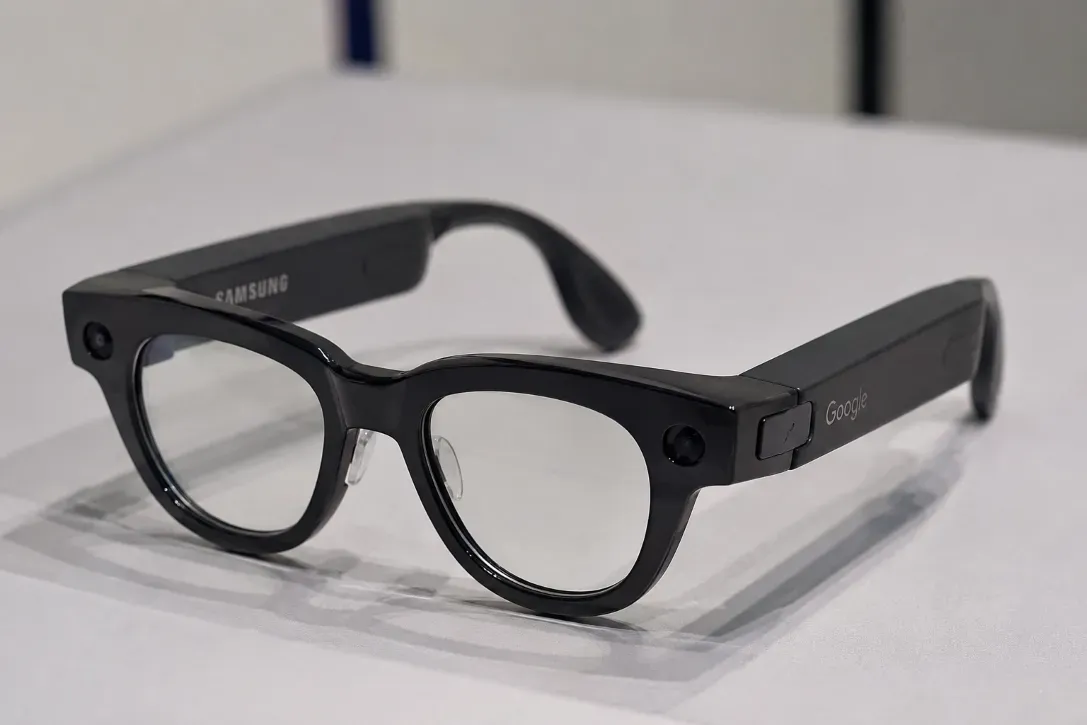
Alphabet’s Google and Samsung Electronics unveiled the first designs of their upcoming AI-powered smart glasses, marking a major escalation in the global race to develop next-generation wearable computing devices built around artificial intelligence assistants and augmented reality technologies.
The companies revealed that the new glasses are being developed in collaboration with eyewear brands Warby Parker and Gentle Monster, with the first commercial release expected later this year.
The devices will allow users to interact directly with Google Gemini using voice commands while integrating cameras, audio systems and AI-powered contextual assistance into lightweight wearable frames.
According to Google and Samsung, the glasses will support features including navigation assistance, voice calls, music playback, notification summaries, calendar management and real-time translation powered by Gemini AI. The integrated cameras will also allow users to ask questions about objects or locations visible in front of them.
The companies said the first generation will primarily focus on audio and camera-based interaction, while more advanced models with built-in displays and augmented-reality capabilities are planned for release in 2027.
Google executive Shahram Izadi said privacy protections are being designed “from the ground up,” with LED indicators alerting nearby people when cameras are active.
Pricing details and final release dates have not yet been announced.
The launch represents Google and Samsung’s most serious attempt yet to challenge Meta Platforms in the rapidly expanding AI wearables market.
Meta currently leads the smart-glasses segment through its partnership with EssilorLuxottica, which produces Ray-Ban and Oakley AI smart glasses powered by Meta AI. Bloomberg reported that Meta sold more than 7 million AI-enabled eyewear units in 2025.
The broader industry is increasingly shifting toward what major technology firms describe as “native AI devices” - products designed around continuous AI interaction rather than traditional smartphone interfaces.
Samsung executive Jay Kim described smart glasses as a fundamentally different computing category focused on “on-the-go” AI experiences, contrasting them with more stationary virtual-reality headsets.
Google is also developing standalone augmented-reality glasses under “Project Aura” in partnership with Xreal, designed to run Android XR software without requiring a connected smartphone.
Apple is also expected to enter the smart-glasses market in 2027, according to previous Bloomberg reporting, intensifying competition among major technology firms over what many see as the next major consumer computing platform after smartphones.
EcoPulse24 Analysis
The importance of the announcement extends beyond wearable gadgets.
The smart-glasses race is increasingly becoming a strategic battle over the future interface layer of artificial intelligence itself.
Technology companies are now competing not only over AI models, but over who controls the hardware through which users continuously interact with AI assistants in daily life.
Unlike smartphones, AI glasses aim to create persistent ambient computing experiences where AI can continuously interpret voice, surroundings, location and user context in real time.
That creates major implications for:
-
consumer electronics
-
digital advertising
-
search
-
operating systems
-
data collection
-
and AI ecosystems.
The market is also evolving rapidly from experimental augmented-reality concepts toward commercially viable AI-first wearable devices centered on audio, cameras and real-time AI assistance.
For Google and Samsung, the launch represents an attempt to prevent Meta from establishing an early dominant position in consumer AI wearables.
For the broader technology sector, the competition signals that AI hardware may become one of the next major battlegrounds in the post-smartphone computing era.
Sources & References
Editorial Note
Disclaimer
© 2025 EcoPulse24. All rights reserved.