IEA Coordinates Release of Over 400 Million Barrels to Counter Iran War Oil Shock
IEA: Over 400M barrels from strategic reserves to flow to global markets, countering the Strait of Hormuz supply shock from the Iran–GCC war.

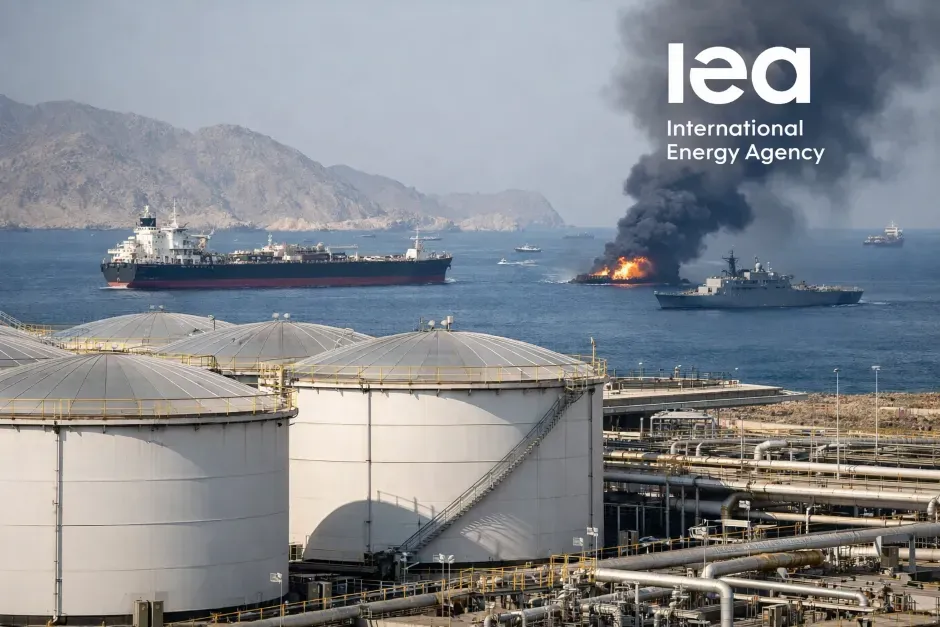
EcoPulse24 | Paris
The International Energy Agency (IEA) announced that more than 400 million barrels of oil from member countries' strategic petroleum reserves are set to flow into global markets in the coming weeks, in the largest coordinated emergency release in the agency's history, aimed at offsetting the severe supply disruption caused by the blockade of the Strait of Hormuz, according to CNBC Arabia.
Scale of the Release: Historic Territory
The 400-million-barrel figure dwarfs previous IEA emergency releases. For context, the largest prior coordinated release - in 2022 following Russia's invasion of Ukraine - totalled approximately 120 million barrels across multiple tranches. The current commitment of 400+ million barrels reflects the far greater severity of the current supply shock, with the Strait of Hormuz blockade effectively removing approximately 20% of daily global oil throughput from the market.
Japan alone announced it would begin withdrawing 80 million barrels from its national petroleum stockpiles, representing one of the largest single-country commitments in IEA emergency history. The United States, Europe, South Korea, and Australia are expected to contribute the bulk of the remaining volume through coordinated drawdowns of their Strategic Petroleum Reserves (SPRs).
Can 400 Million Barrels Move the Market?
While the headline number is enormous, market analysts caution that the release may have limited impact on prices in the short term. Brent crude was trading near $98.91 per barrel on Sunday - elevated but below the $100 psychological threshold - suggesting the market has already partially priced in the IEA response. The critical variable is duration: if the Hormuz blockade extends beyond four to six weeks, even a 400-million-barrel reserve release buys only a few months of partial supply coverage at global consumption rates of approximately 103 million barrels per day.
The announcement has nevertheless had a calming effect on forward oil curves, with some analysts noting a modest narrowing of the contango structure, suggesting markets expect some near-term supply relief.
Impact on GCC Producers and Revenues
The IEA release puts GCC oil exporters - particularly Saudi Arabia, the UAE, and Kuwait - in a nuanced position. While high oil prices are generally positive for Gulf fiscal balances, the Hormuz disruption is simultaneously preventing normal export volumes from reaching market. The reserve release could put a ceiling on prices that GCC producers might otherwise benefit from, while also potentially prolonging the duration of the standoff by reducing Western incentives for rapid diplomatic resolution.
EcoPulse24 Analysis
EcoPulse24 Analysis: The IEA's 400-million-barrel commitment is a bold signal, but it treats a symptom rather than the cause. Strategic reserves are finite and their release does not restore the physical flow of Gulf crude - it merely delays the price impact of the blockade. The true test of this intervention will come in week three and four of the Hormuz closure: if diplomatic channels remain paralysed, the reserves will be drawn down faster than expected and oil markets will re-price sharply upward. GCC investors should treat current price levels as a floor, not a ceiling.
Sources & References
Editorial Note
Disclaimer
© 2025 EcoPulse24. All rights reserved.