IEA warns record oil inventory drawdown is turning Hormuz disruption into a global inflation shock
IEA said global observed oil inventories fell by 129 million barrels in March and by another 117 million barrels in April

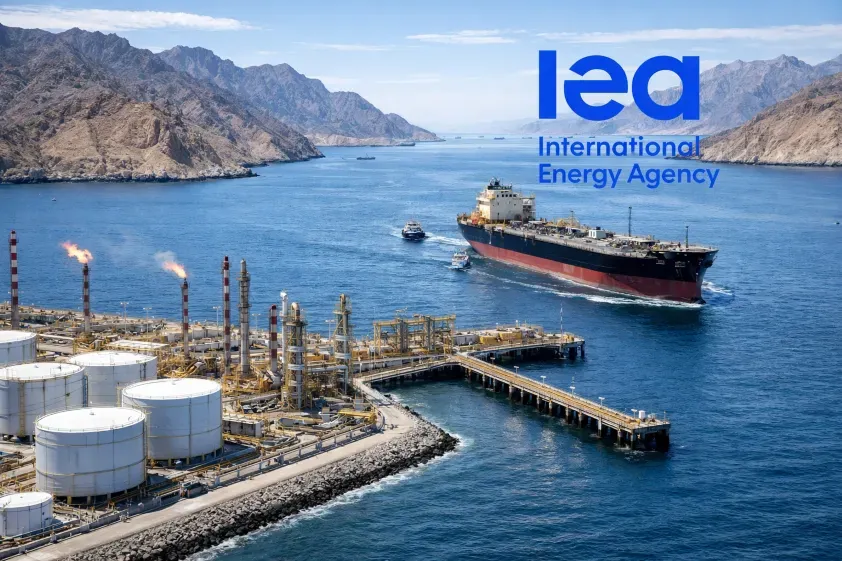
Riyadh | EcoPulse24
Global oil stocks are being depleted at a record pace as Strait of Hormuz disruptions reshape energy markets
Global oil inventories are being depleted at a record pace as prolonged disruption to shipping through the Strait of Hormuz turns the Middle East conflict into a broader energy, inflation and industrial supply shock, according to the International Energy Agency.
In its latest monthly Oil Market Report, the IEA said global observed oil inventories fell by 129 million barrels in March and by another 117 million barrels in April, while on-land stocks dropped by 170 million barrels in April alone as seaborne trade through Hormuz remained restricted.
The agency said global oil supply declined by a further 1.8 million barrels per day in April to 95.1 million barrels per day, taking total losses since February to 12.8 million barrels per day. Output from Gulf countries affected by the Hormuz disruption was 14.4 million barrels per day below pre-war levels.
The IEA described the current disruption as an “unprecedented supply shock,” noting that cumulative supply losses from Gulf producers have already exceeded 1 billion barrels, with more than 14 million barrels per day of oil shut in.
Despite weaker demand, the agency warned that the supply-demand gap remains severe. Its base case assumes flows through Hormuz gradually resume from June, yet the market is still expected to remain in deficit until the final quarter of 2026.
The report also marks a sharp reversal in the global oil demand outlook. The IEA now expects world oil demand to contract by 420,000 barrels per day in 2026 to 104 million barrels per day, which is 1.3 million barrels per day below its pre-war forecast. The largest decline is expected in the second quarter, with demand falling by 2.45 million barrels per day year-on-year.
Asia is absorbing the largest immediate shock. The IEA said Chinese seaborne crude imports fell by 3.6 million barrels per day from February to April, while Japan’s imports dropped by 1.9 million barrels per day, South Korea’s by 1 million barrels per day and India’s by 760,000 barrels per day.
The pressure is spreading beyond crude markets into refining and industrial supply chains. Refinery crude throughputs are forecast to fall by 4.5 million barrels per day in the second quarter, while refining margins remain historically high as middle distillate cracks reach record levels.
Petrochemicals and aviation are among the most exposed sectors. The IEA said LPG, ethane and naphtha account for roughly half of the 2026 demand downgrade from pre-war levels, while jet fuel demand has also been hit as airlines cut routes in response to higher costs and regional flight disruptions.
At the same time, higher prices are beginning to transmit into the broader economy. The IEA noted that consumer inflation in the United States and euro area crossed 3% in March, reviving stagflation concerns, while governments have moved to cushion consumers through fuel price controls, subsidies and energy tax cuts.
The report also highlights a major shift in global trade flows. Atlantic Basin crude exports have increased by 3.5 million barrels per day since February, with gains from the United States, Brazil, Canada, Kazakhstan and Venezuela helping offset part of the lost Gulf supply.
Key figures from the IEA Oil Market Report
| Indicator | IEA Estimate |
|---|---|
| Global oil inventory drawdown in March | 129 million barrels |
| Global oil inventory drawdown in April | 117 million barrels |
| Total supply losses since February | 12.8 million barrels per day |
| Gulf output below pre-war levels | 14.4 million barrels per day |
| 2026 oil demand forecast | 104 million barrels per day |
| 2026 demand revision vs pre-war forecast | -1.3 million barrels per day |
| 2Q26 demand decline | -2.45 million barrels per day |
| 2Q26 refinery throughput decline | -4.5 million barrels per day |
EcoPulse24 Analysis
The IEA report shows that the oil market has moved beyond a temporary geopolitical price shock. The core issue is now physical depletion: inventories are being drawn down rapidly because the global system is trying to replace lost Gulf flows faster than alternative supply chains can adjust.
That distinction matters. High prices alone can pressure consumers and central banks, but rapid stock depletion creates a deeper structural risk because it reduces the buffer available to absorb future disruptions.
The Hormuz shock is also reshaping the geography of energy security. Asia, which relies heavily on Gulf flows, is facing the largest immediate pressure through lower crude imports, tighter petrochemical feedstocks and rising transport costs. This creates a direct link between Middle East geopolitics and Asian manufacturing conditions.
At the same time, the Atlantic Basin is becoming a crisis-balancing region. Higher exports from the United States, Brazil, Canada and others are helping narrow the gap, but not enough to prevent a major drawdown in stocks.
The inflation transmission is now the key macro risk. Rising oil prices are feeding into transport, aviation, petrochemicals, refining margins and consumer fuel costs. That makes the shock relevant not only for energy traders, but also for bond markets, central banks, equity valuations and emerging-market balance sheets.
The report also explains why gold, Bitcoin, equities and bond yields are now moving under the same macro narrative. Markets are not simply pricing war risk; they are pricing the possibility that energy inflation will keep monetary policy tighter for longer.
For Gulf producers, the crisis reinforces the strategic value of export redundancy, pipelines outside Hormuz, storage infrastructure and diversified shipping routes. Saudi Arabia and the UAE are emerging as the two Gulf producers with the strongest ability to redirect flows during disruption, which could become a long-term advantage in energy security negotiations.
The most important message from the IEA is that even if Hormuz flows begin normalizing, the market may remain tight for months. Rebuilding depleted inventories will require time, spare capacity and sustained supply growth, meaning the inflationary aftershock of the current crisis could persist well beyond the immediate conflict window.
Sources & References
Editorial Note
Disclaimer
© 2025 EcoPulse24. All rights reserved.