Oil Rebounds Toward $105 as Iran-Hormuz Risks Revive Inflation Fears
Brent crude futures rose 2.3% to $104.96 per barrel, while US West Texas Intermediate gained 1.8% to trade near $98.08 per barrel..

Dubai | EcoPulse24
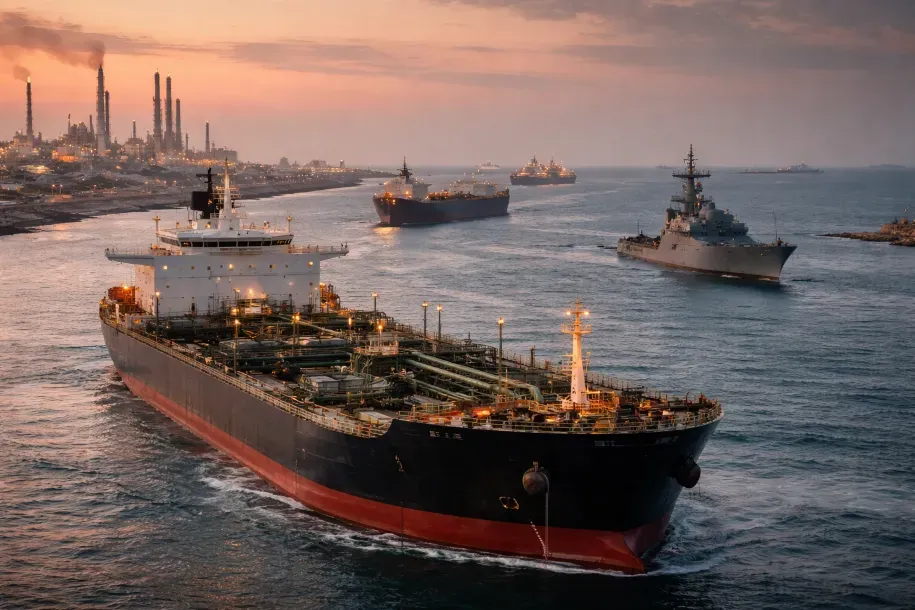
Oil prices rebounded sharply on Friday, with Brent crude climbing back toward $105 per barrel as renewed uncertainty surrounding Iran’s nuclear negotiations and the future of shipping through the Strait of Hormuz pushed geopolitical risk back into global energy markets.
Brent crude futures rose 2.3% to $104.96 per barrel, while US West Texas Intermediate gained 1.8% to trade near $98.08 per barrel, recovering part of the heavy losses recorded during the previous session.
The rebound followed reports that Iran’s Supreme Leader ordered the country’s enriched uranium reserves to remain inside Iran, complicating ongoing negotiations with Washington as dismantling Tehran’s nuclear capabilities remains a central US demand.
Markets also reacted to reports that Iran is discussing a permanent maritime toll framework with Oman tied to shipping traffic through the Strait of Hormuz, a move that could formalize greater Iranian influence over one of the world’s most strategically important energy chokepoints.
US President Donald Trump reportedly rejected the proposal, insisting the waterway should remain open and free of toll charges.
Energy markets remain hostage to Hormuz uncertainty
The latest developments reinforced market concerns that geopolitical tensions surrounding the Gulf could once again disrupt global energy flows and reignite inflationary pressures at a time when central banks remain highly sensitive to energy-driven price shocks.
The Strait of Hormuz handles a substantial share of global oil exports, making any discussion surrounding shipping restrictions, toll systems, or military escalation immediately relevant to energy pricing, freight costs, and broader inflation expectations.
Despite Friday’s rebound, Brent crude remains more than 4% lower for the week, reflecting continued market expectations that diplomatic negotiations between Washington and Tehran could still produce a breakthrough agreement.
US Secretary of State Marco Rubio said there were “encouraging signs” surrounding a possible deal, while Pakistani mediators are expected to visit Tehran as Iranian officials continue reviewing the latest US proposal.
The conflicting signals have left oil markets trapped between geopolitical supply-risk fears and optimism that a diplomatic resolution could eventually stabilize regional energy flows.
Inflation and monetary policy remain closely linked to oil
The renewed rise in crude prices comes as investors increasingly monitor the relationship between Gulf geopolitics, inflation expectations, and central-bank policy.
Higher oil prices risk feeding into transportation, manufacturing, and shipping costs globally, potentially complicating efforts by major central banks to maintain stable inflation trajectories.
Markets are particularly focused on whether sustained energy-price strength could delay expected monetary easing cycles or even revive discussions surrounding further interest-rate tightening if inflationary pressures accelerate again.
The latest rebound also contributed to renewed strength in the US dollar and increased caution across precious metals markets as traders reassessed the broader macroeconomic impact of prolonged energy-market instability.
Oil Market Snapshot
| Indicator | Latest Reading |
|---|---|
| Brent crude | $104.96 (+2.3%) |
| WTI crude | $98.08 (+1.8%) |
| Weekly Brent performance | More than -4% |
| Main market driver | Iran-Hormuz uncertainty |
| Key macro concern | Inflation & rates |
EcoPulse24 Analysis
Oil markets are increasingly behaving less like traditional supply-demand systems and more like geopolitical risk pricing mechanisms tied directly to the evolving power balance across the Gulf region.
The renewed focus on the Strait of Hormuz demonstrates how maritime chokepoints are becoming central to global inflation dynamics. Markets are no longer reacting only to physical supply disruptions, but also to the strategic implications of who controls energy transit routes and under what terms.
The discussion around a possible Hormuz toll framework is especially significant because it introduces the idea that geopolitical leverage over shipping lanes could evolve into a semi-permanent economic instrument rather than a temporary crisis scenario. Even without direct disruption, the mere possibility of increased costs or operational uncertainty can influence freight pricing, insurance premiums, and energy-market volatility.
At the same time, the market’s inability to sustain earlier price spikes shows that investors still believe a diplomatic resolution remains possible. This explains why oil prices remain below peak conflict levels despite renewed geopolitical escalation.
The broader macroeconomic challenge is that persistent oil strength could complicate the global inflation outlook just as central banks hoped price pressures were beginning to stabilize. Energy remains one of the fastest transmission channels into inflation expectations, particularly through transportation, manufacturing, and consumer costs.
More broadly, the interaction between Gulf geopolitics, oil markets, inflation expectations, currencies, and monetary policy is becoming one of the dominant macro frameworks driving global financial markets in 2026.
Explore Related Coverage
Sources & References
Editorial Note
Disclaimer
© 2025 EcoPulse24. All rights reserved.