Battle of the Titans: Your Complete Guide to Understanding the AI Processor War Between AMD and Nvidia Who Wins the Trillion-Dollar Race? Comprehensive Analysis of Technologies, Pricing, and Applications - And What It Means for Investors and UsersLas Vegas/Dubai – January 6, 2026 CES 2026 in Las Vegas witnessed one of the fiercest technological confrontations in modern history, when Jensen Huang and Lisa Su - the CEOs of Nvidia and AMD respectively - took the same stage on the same day, each claiming to possess the "best" AI technology in the world. But beyond the marketing hype, what does this battle really mean for investors, enterprises, and everyday users? And why should you care about processors you'll never see but that power every AI application you use daily?
About EcoPulse24: EcoPulse24 is a UAE-based Arabic-English economic and environmental news platform delivering professional financial journalism with rigorous editorial standards emphasizing accuracy, neutrality, and credible source attribution.
- Why This Battle Matters to You (Even If You're Not an Engineer) When you ask ChatGPT to write an email, use AI filters on Instagram, or rely on intelligent navigation in your car - you're actually using massive computing power from processors made by either Nvidia or AMD. These processors, technically known as "AI accelerators" or GPUs (Graphics Processing Units), are the real brains behind the AI revolution we're witnessing. The market these two companies are competing for isn't measured in billions but in trillions, with projections reaching $3-5 trillion by 2030. Understanding this battle means understanding the future of technology that will shape our daily lives - and your money's future if you're an investor. The processors powering AI today determine which applications become possible tomorrow: from personalized medicine that can predict diseases before symptoms appear, to autonomous vehicles that could eliminate traffic accidents, to climate models that might help us prevent environmental catastrophes. This isn't just a tech story - it's the infrastructure story of the 21st century.
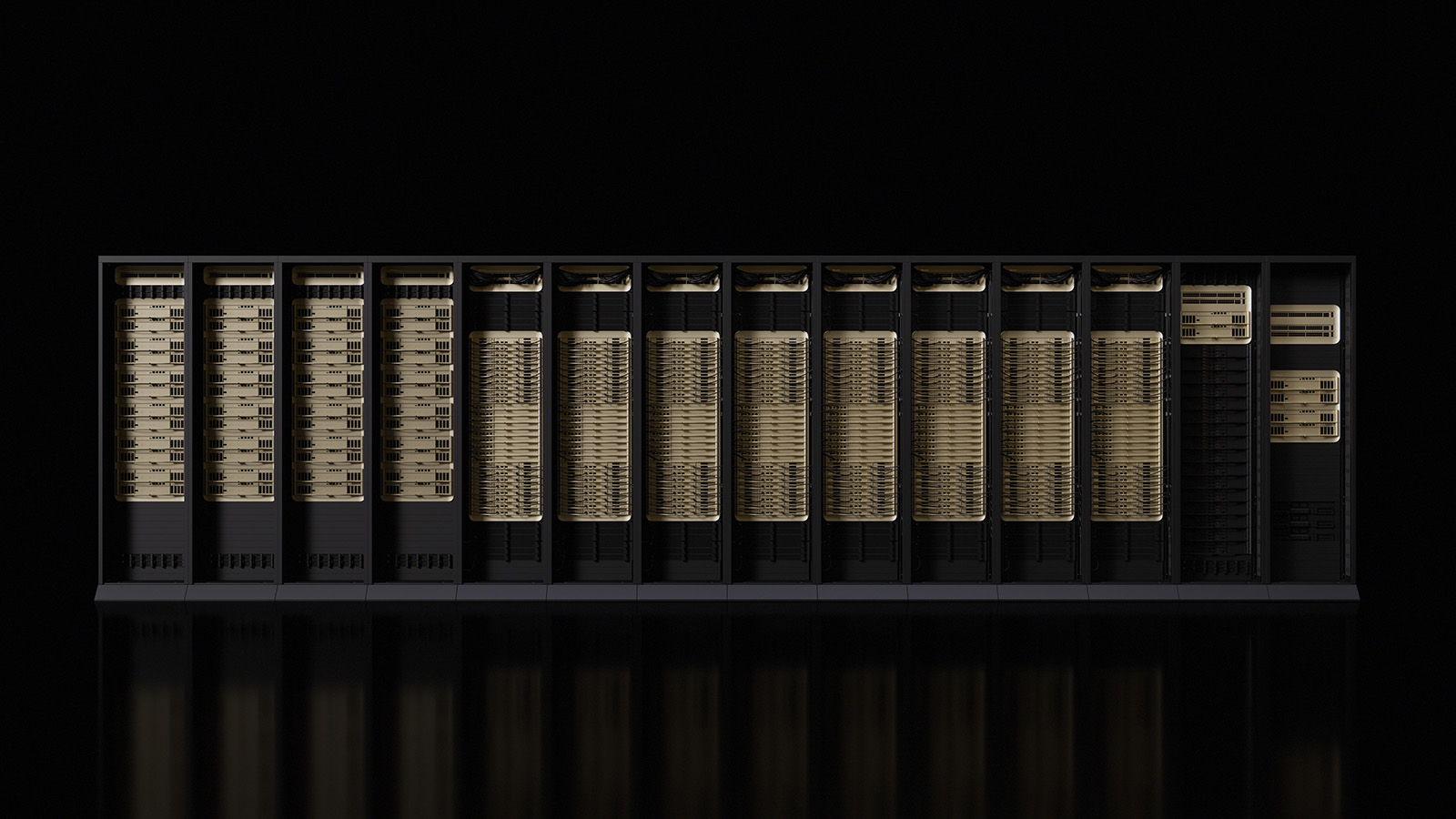
- Nvidia: The Incumbent Trying to Stay on Top Let's start with the current giant. Nvidia controls 88-92% of the AI processor market - a level of dominance rarely seen in the technology world. Their latest product, the Rubin platform, packs 72 Rubin GPUs and 36 Vera CPUs into a single rack weighing thousands of pounds. The numbers are impressive: 5x faster performance than the previous generation (Blackwell), and 10x lower operating cost per "token" - the basic unit of measurement in AI processing. But Nvidia's real strength isn't just in hardware - it's in their CUDA software ecosystem, which has become an industry standard used by millions of developers worldwide. This means switching from Nvidia to a competitor isn't just buying new hardware - it requires rewriting millions of lines of code, a massive barrier that protects Nvidia's position. Think of it like this: CUDA is to AI processors what Microsoft Office is to productivity software or what iOS is to smartphones - once an ecosystem reaches critical mass, dislodging it becomes extraordinarily difficult. Nvidia spent 17 years and billions of dollars building CUDA; competitors can't replicate that overnight.
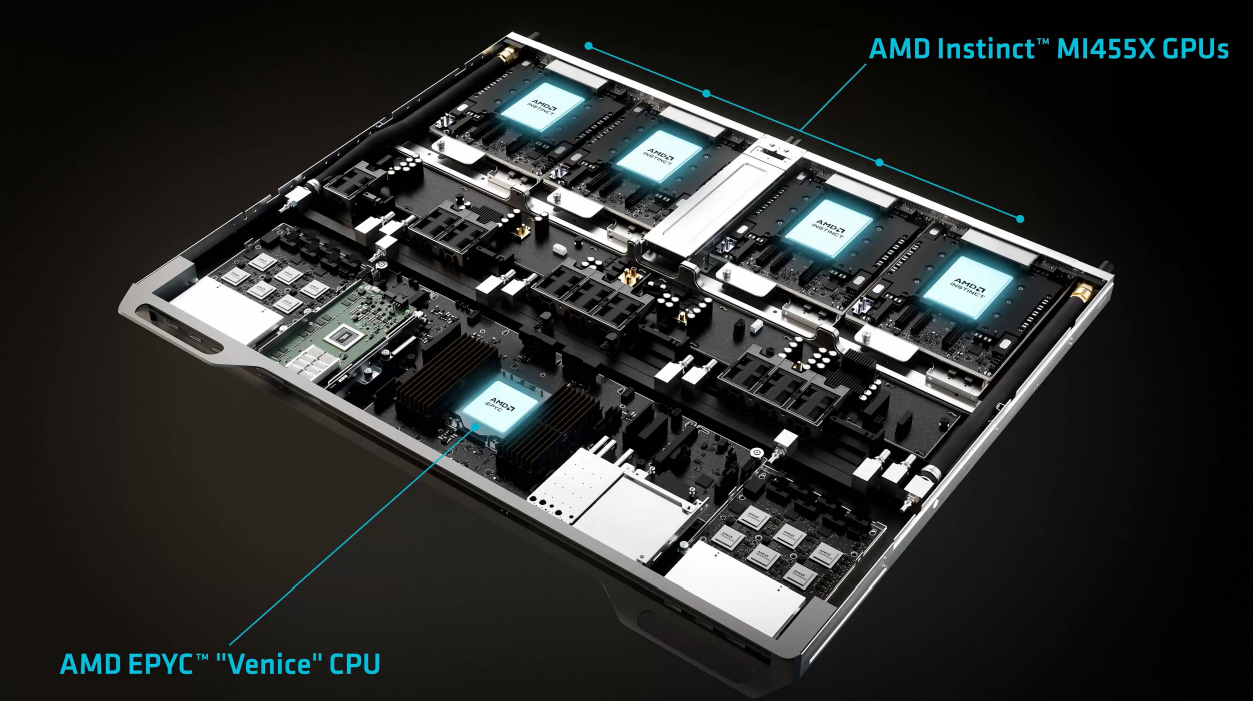
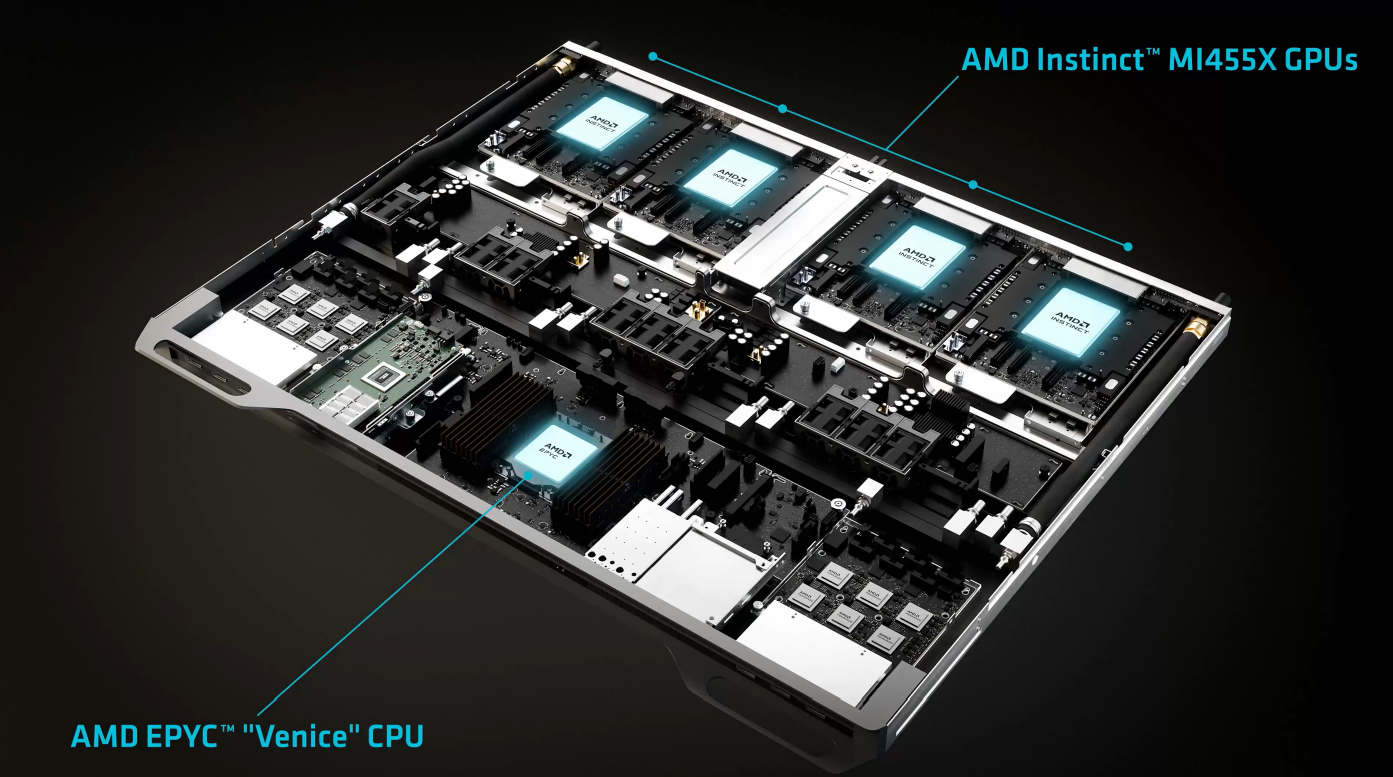
- AMD: The Sleeping Giant That Finally Woke Up On the other side, AMD positions itself as the "smart alternative" - similar performance but 20-30% cheaper pricing. AMD's Helios platform matches Rubin numerically (72 MI455X processors), and their upcoming MI500 Series processors in 2027 promise a 1,000x performance leap. But AMD's biggest challenge is the ROCm software system, which still lags behind CUDA in maturity. Imagine it like comparing iOS and Android in the early days: Android (ROCm) works well, but iOS (CUDA) has more apps, more developers, and a smoother experience. However, AMD is making rapid progress through massive deals with OpenAI (maker of ChatGPT), Meta, and Microsoft - these aren't just hardware sales but strategic partnerships that give AMD time and resources to improve their software. AMD's strategy mirrors what they successfully executed against Intel in the CPU market: offer comparable performance at better prices, gradually improve software support, and let economic pressures force customers to reconsider their loyalty to the incumbent. It worked once; the question is whether history will repeat itself.
- The Real Performance Gap: What Do The Numbers Say? Let's talk in clear numbers. Nvidia's H100 processor (the generation before Rubin) can process about 67 teraFLOPS in FP32 precision. AMD's MI300X processor delivers higher performance in some metrics (approximately 81.72 teraFLOPS in FP32). On paper, AMD's MI300X has advantages like 192GB of memory versus H100's 80GB, but in real-world practice, Nvidia outperforms by 15-20% thanks to software optimizations and better integration. The new Rubin delivers 5x this performance, meaning roughly 20,000 petaFLOPS - a staggering number sufficient to train AI models the size of GPT-6 or larger. AMD hasn't disclosed precise MI500 numbers yet, but their promise of "1,000x" suggests they're targeting the same level or higher, incorporating advances over multiple years including CDNA 6 architecture and HBM4E memory. The problem? MI500 won't arrive before 2027, giving Nvidia an 18-month advantage. To put these numbers in perspective: training GPT-3 (175 billion parameters) originally took about 355 years of single-GPU compute time. On modern H100 clusters, that same training takes days. On Rubin, it could take hours. This isn't incremental improvement - it's the difference between research that's economically viable and research that's prohibitively expensive.
- The Price Difference: Where AMD Speaks With Authority If performance is comparable, where's AMD's real advantage? The answer: price. A complete Nvidia H100 system (8 processors in one rack) costs approximately $300,000-400,000, with individual H200 GPUs reaching $30,000-40,000 amid rising prices in 2026 due to demand. An equivalent AMD MI300X system costs $240,000-320,000 - a savings of $60,000-80,000 per rack. This might seem like a minor detail, but when a company like Microsoft or Meta purchases thousands of these racks, the savings amount to hundreds of millions of dollars. So AMD's strategy is clear: "roughly the same quality, but better price." This strategy worked for AMD in the PC processor market against Intel, and now they're trying to replicate that success against Nvidia. The challenge? Large companies don't buy based on price alone - they look at "total cost of ownership," and here Nvidia still leads thanks to power efficiency and easier maintenance. But here's the crucial insight: in technology markets, the "good enough at significantly lower cost" player often wins in the long run. It happened to IBM mainframes, to Sun Microsystems workstations, to Cisco routers - and it might be happening now to Nvidia's AI accelerators.
- Why Nvidia Dominates (And How AMD Can Break the Monopoly) Nvidia's dominance isn't just about superior technology - it stems from three key factors. First: the CUDA software ecosystem built over 17 years with millions of developers. Second: trust and reputation - companies prefer the "safe choice" even if it's more expensive. Third: supply chain priority - Nvidia has stronger relationships with TSMC (the Taiwanese company that manufactures chips) and gets the best production capacity. But AMD has three weapons to break this dominance. First: lower pricing that attracts startups and emerging markets. Second: openness to open standards, making integration with other systems easier. Third: strategic deals with giants like OpenAI and Meta that give them a foothold in the market. If AMD succeeds in improving ROCm by 20-30% over the next two years, we might witness a real shift in the balance of power. The historical precedent is encouraging for AMD: they've done exactly this before. In 2017, Intel dominated server CPUs with 99% market share. By 2024, AMD had captured 25% through their EPYC processor line - built on exactly this strategy of "comparable performance, better value, more open ecosystem." Can they repeat this feat in AI accelerators? The next 24 months will tell.
- Practical Use Cases: Who Needs What? Let's be practical. If you're an AI startup with a limited budget, AMD is the better choice - you'll get 80-90% of Nvidia's performance at 70-80% of the price. If you're a large enterprise (like banks or pharmaceutical companies) needing maximum performance with guaranteed reliability, Nvidia is the safer choice despite higher cost. If you're an academic researcher, AMD offers excellent university support programs with substantial discounts. If you're developing robotics or autonomous vehicles, Nvidia leads thanks to their specialized Jetson platform. If you're building data centers in the Middle East or Asia, AMD might be better due to relatively lower power consumption and cooling costs in hot climates. The bottom line? There's no "universally best" - it depends on your needs, budget, and geographic location. The decision tree is actually quite straightforward: Are you optimizing for (a) absolute maximum performance regardless of cost, (b) best performance-per-dollar, or (c) easiest development experience? Your answer determines your vendor. Most startups should choose (b), most Fortune 500 companies choose (a) or (c), and most universities should choose (b) with AMD's academic discounts.
- Stocks and Investment: The Cold Financial Analysis From an investment perspective, the numbers tell a fascinating story. Nvidia stock closed at $184.69 (up 28% over one year), with a market cap of $4.6 trillion. AMD stock at $204.06 (up 76% over one year), with a market cap of $342 billion. The key observation? AMD rose much faster despite being significantly smaller - this is typical for companies in "catch-up" mode. Goldman Sachs analysts see Nvidia as "fairly priced" at current levels with a target of $250 (limited upside of 33%). Conversely, Morgan Stanley sees AMD as "undervalued" with a target of $260 (potential upside of 21%). Why? Because the market hasn't fully priced in the impact of OpenAI and Meta deals yet. But the biggest risk to both stocks? Slowing AI spending. If major companies decide to slow their investment pace in 2026-2027, both stocks will suffer. But if spending continues at its current pace or accelerates, AMD might be the better bet from a risk/reward perspective. Here's the sophisticated investor's insight: Nvidia's stock reflects an assumption of maintaining 88-92% market share indefinitely. If that drops to 65-70% (still dominant!), the stock could face 20-30% downside. AMD's stock reflects an assumption of gradual share gains to 20-25%. If they achieve this, there's 40-60% upside. Risk-adjusted, AMD offers better expected returns - but with higher volatility.
- The Geopolitical Dimension: China and Trade Restrictions There's a crucial geopolitical dimension to this battle that cannot be ignored. The US government imposes strict restrictions on exporting advanced chips to China, but Nvidia has disclosed "strong Chinese demand" for their H200 chip with export license applications pending. This gives Nvidia a potentially massive advantage - China represents a market worth hundreds of billions of dollars. But there's another angle: the Arab Gulf states. AMD has signed strategic deals with Saudi Arabia (NEOM, Saudi Aramco), UAE (G42, Khalifa University), and Qatar (Qatar Foundation) worth over $10 billion total. Why? Because Gulf states want to build local AI capabilities without complete dependence on American companies, and AMD is more flexible in technology transfer collaborations. This means the geopolitical map might reshape the competition in unexpected ways - Nvidia might win in China, AMD might win in the Middle East, and the real battle will be in Europe and India. The emerging pattern: regional tech sovereignty. Countries increasingly want indigenous AI capabilities, not just as customers but as partners. AMD's willingness to collaborate on technology development (versus Nvidia's more transactional approach) could unlock entire markets worth hundreds of billions in the 2027-2030 timeframe.
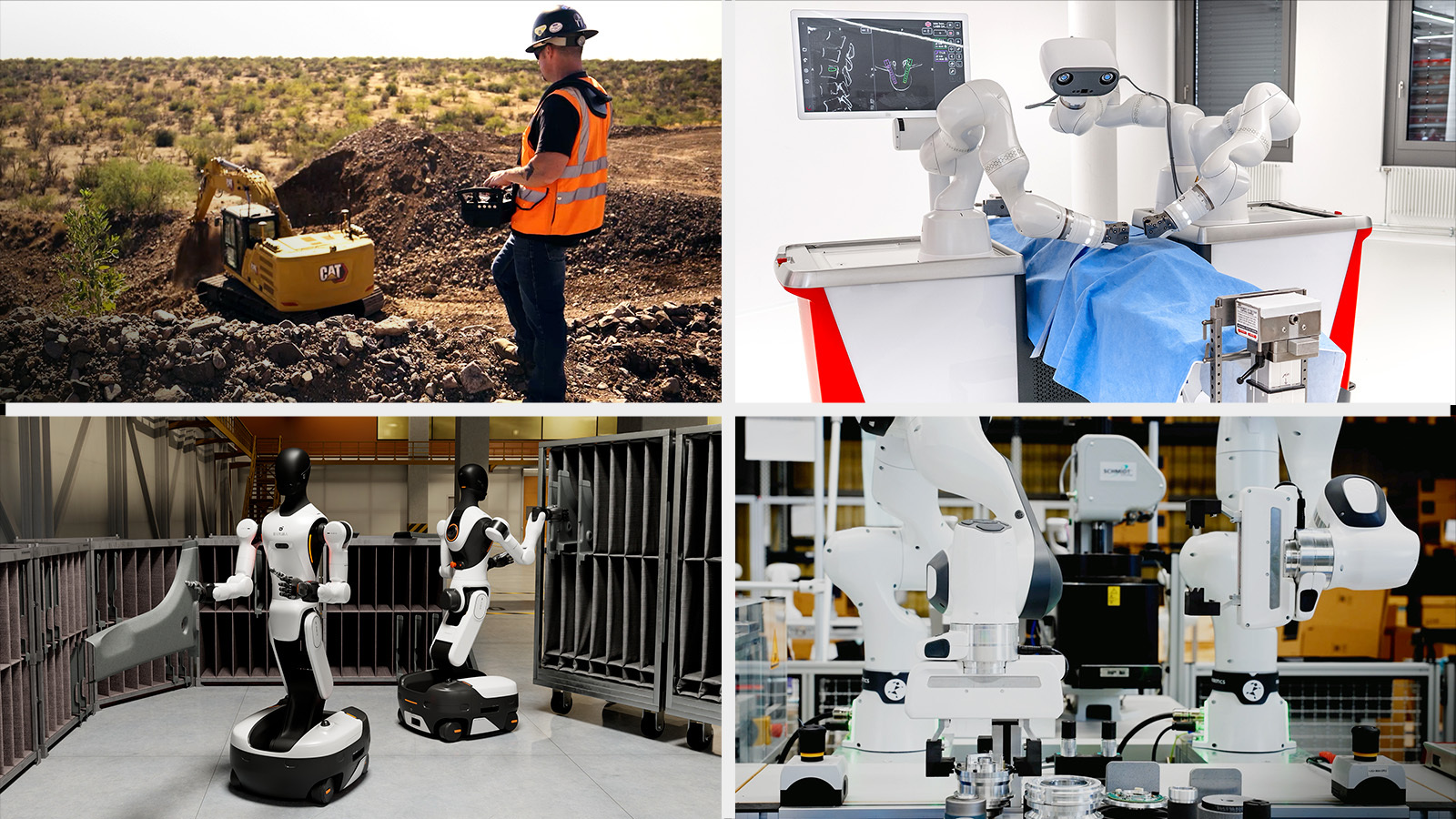
- Strategic Partnerships: Who Has the Best Allies? Strategic partnerships might decide this battle more than technology itself. Nvidia has deep partnerships with Microsoft (Azure), Google Cloud, Amazon AWS, and Oracle - these four companies control 70% of the global cloud computing market. Nvidia's partnership with Siemens for "industrial AI" also opens the smart manufacturing market worth trillions. AMD meanwhile secured a historic deal with OpenAI - the most influential AI company today - that will add billions annually to their revenue. Their partnership with Meta on the open-standard Helios system gives them a foothold in social networks. AMD also works with Telus in Canada, RBC (Canada's largest bank), and major Arab telecom companies. The bottom line? Nvidia dominates "big cloud" (hyperscalers), while AMD builds alliances in "edge computing" and regional markets - two completely different strategies, and both might succeed. Think of it as Nvidia playing chess while AMD plays Go. Nvidia's strategy: control the commanding heights of cloud infrastructure. AMD's strategy: surround Nvidia by winning everywhere else. In five years, we might look back and realize the "winner" wasn't who had the best chip, but who had the best ecosystem of partners creating applications that customers actually needed.
- Upcoming Challenges: What Could Go Wrong? The future isn't necessarily rosy for either company. For Nvidia: the biggest challenge is market saturation. When large customers have purchased all the processors they need, where does the next growth come from? There's also a risk of internal competition - companies like Google and Amazon are developing their own chips (Google's TPU, Amazon's Trainium) to reduce dependence on Nvidia. For AMD: the first challenge is execution - the promise of 1,000x performance is impressive, but what if MI500 is delayed or doesn't achieve promised performance? The second challenge is supply chain - if AMD faces shortages in TSMC production capacity, they might lose to Nvidia who has priority. The third challenge is software maturity - even if the hardware is excellent, if ROCm doesn't improve quickly, companies will stick with CUDA. Both companies also face a shared challenge: power consumption and environmental impact. Modern data centers consume power equivalent to small cities, and pressure is mounting to make AI more sustainable. The inconvenient truth: AI's carbon footprint is exploding. Training a single large language model can emit as much CO2 as five cars over their entire lifetimes. The company that solves "green AI" first might win not through performance but through regulatory compliance and corporate sustainability mandates.
- Forecasts and Conclusion: What Will the Map Look Like in 2027? After analyzing all technical, financial, and geopolitical factors, here are our predictions for 2027. Nvidia will maintain leadership but their market share will decline from 88-92% currently to 65-70% by end of 2027. AMD will double their share from 10-15% currently to 20-25%, becoming a genuine competitor rather than just "the cheaper alternative." Chinese companies (like Huawei and Baidu) will enter the market forcefully if US restrictions continue, capturing 5-8% of the global market. Custom chips from Google, Amazon, and Apple will take an additional 5-7%. The biggest winner? Consumers and companies - competition will reduce prices by 20-30% and improve performance by 300-500%. The biggest loser? The environment - unless companies invest in power efficiency. For investors: if you're looking for stability and moderate growth, Nvidia is the choice. If you're seeking accelerated growth with higher risk, AMD might be better. And if you're truly smart? Invest in both - the market is large enough for both to succeed, and competition will drive innovation for years to come. The battle between AMD and Nvidia isn't just a conflict between two companies - it's determining who will own the AI infrastructure, and therefore, who will own the future of technology in the 21st century.
- For AI Programmers: Which Platform Suits Your Project? If you're an AI developer working on language models or computer vision, your choice between Nvidia and AMD will determine your development speed and hosting costs. For training massive models (like GPT or LLaMA): Nvidia dominates unquestionably - their cuDNN library has been optimized for a decade, and tools like TensorRT accelerate inference by 40-60%. If you're training a 70-billion parameter model on H100, you'll need about 21 days, while on MI300X you might need 25-28 days due to less mature software optimizations. However, if your budget is limited, AMD offers ROCm 6.0 which is now compatible with 85% of PyTorch and TensorFlow code - you can port your project with minor modifications and save 30% on cloud hosting costs. Practical advice: Start development on Nvidia locally (even on consumer GPUs like RTX 4090), then deploy production on AMD cloud to save costs. Companies like Stability AI and Hugging Face use this hybrid strategy. As for fast inference: if you're building a chatbot app needing response times under 100 milliseconds, Nvidia's TensorRT-LLM is currently unmatched - but AMD is working on MIGraphX which promises near-comparable performance in H2 2026. The sophisticated developer's approach: use Nvidia for research and prototyping (where development velocity matters most), then evaluate AMD for production deployment (where operational costs dominate). Monitor the ROCm ecosystem closely - if AMD achieves feature parity with CUDA by Q3 2026 (a realistic timeline), switching costs drop dramatically and AMD becomes compelling even for performance-critical applications.
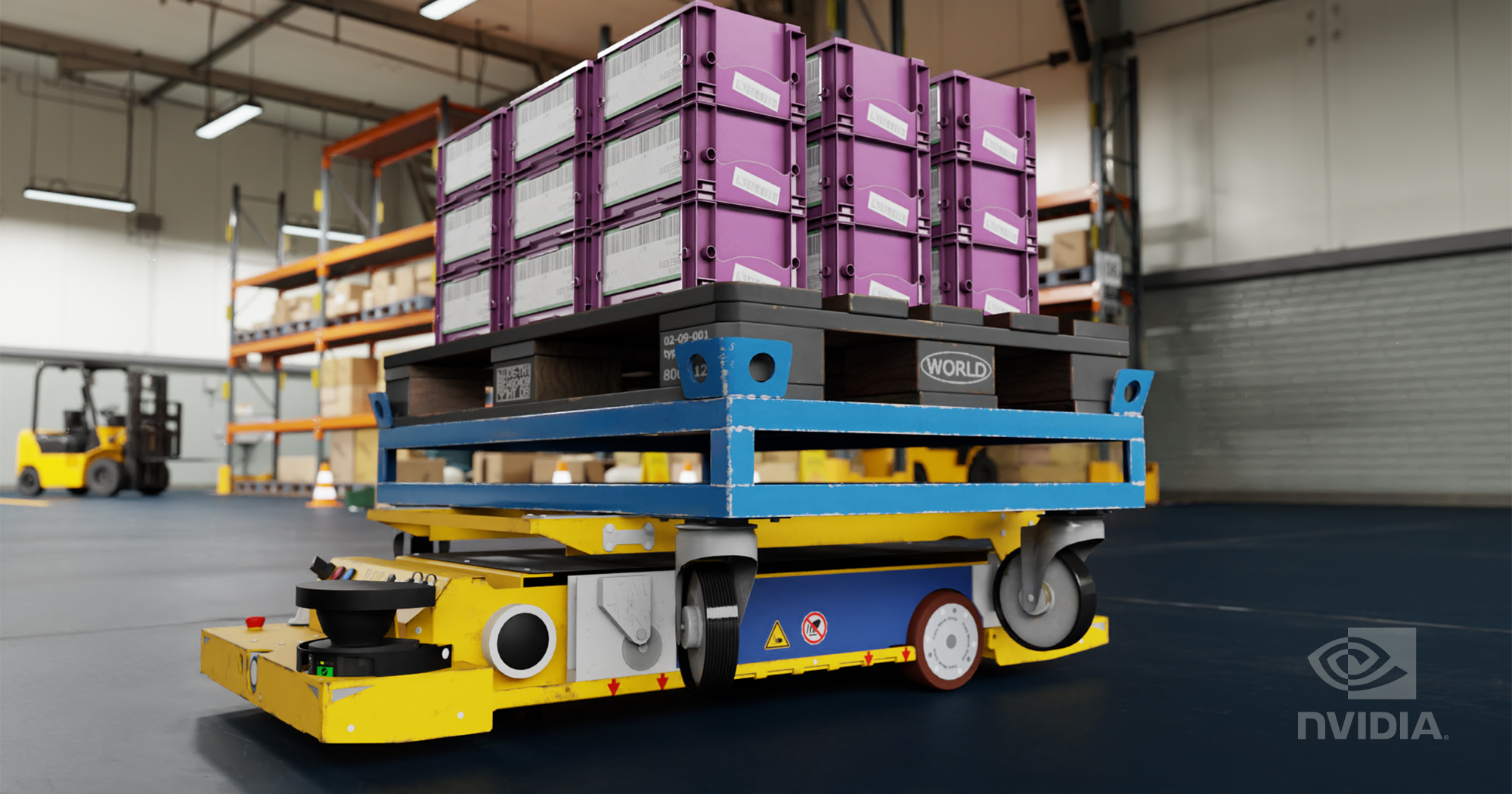
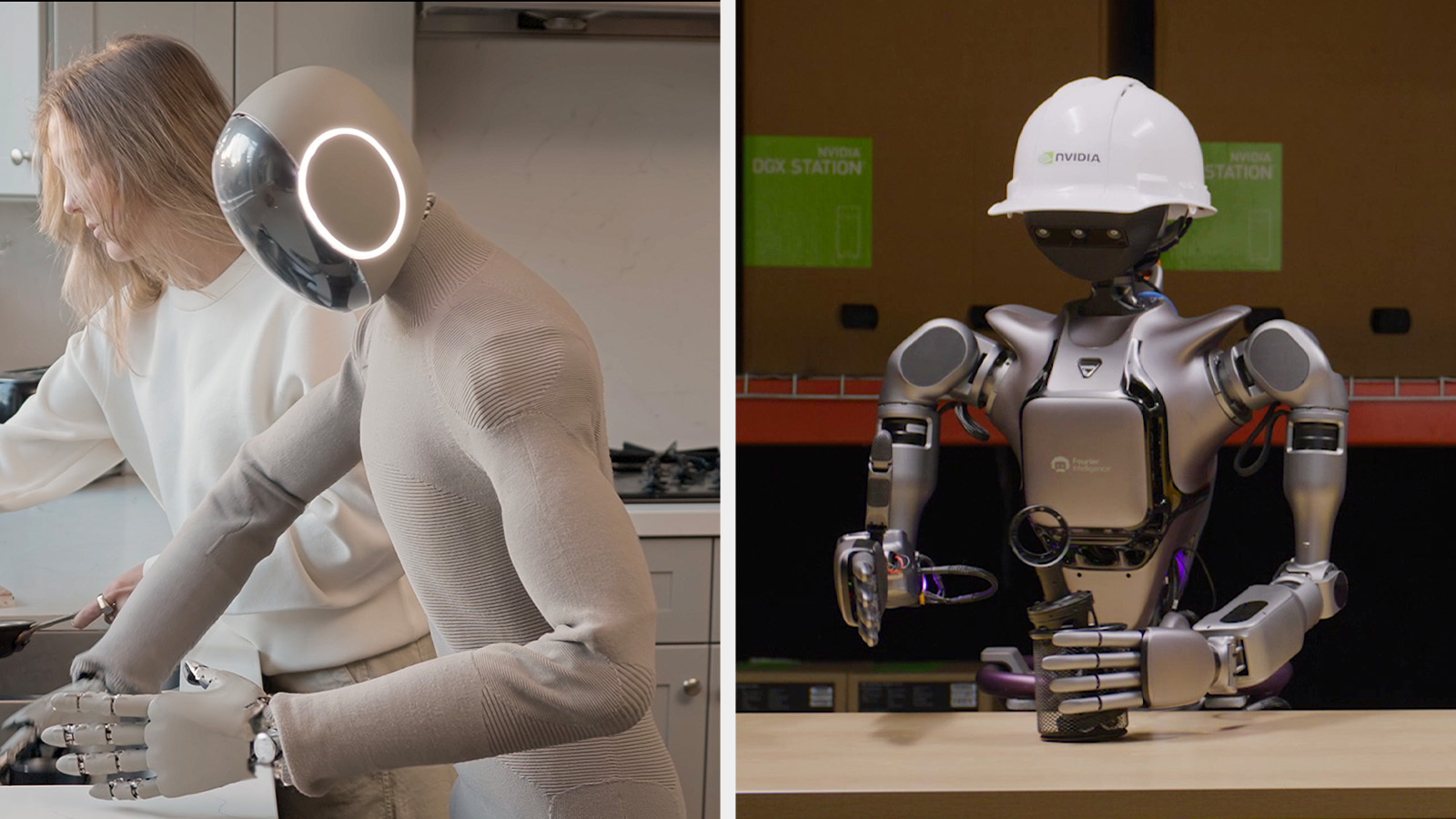
- For Robotics Developers: Edge Computing and Power Efficiency If you're building industrial, service, or medical robots, the embedded AI processor is your system's heart - and the choice here is more complex than for data centers. Nvidia completely dominates this field thanks to their Jetson platform (especially Jetson Orin NX and AGX Orin). Practical example: Serve Robotics' autonomous delivery robot uses Jetson AGX Orin with 275 TOPS (trillion operations per second) and only 60-watt consumption - excellent power efficiency for battery applications. The system supports up to 8 cameras simultaneously with computer vision processing, path planning, and motion control. AMD is currently weak in this segment - their Ryzen AI processors are designed for laptops and aren't optimized for robotics applications. But there's good news: AMD announced a partnership with Generative Bionics to develop specialized processors for humanoid robots - the Gene.01 robot showcased at CES 2026 uses experimental AMD processors. Predictions: by 2027, AMD might launch Kria AI Edge (direct Jetson competitor) at 40-50% lower pricing. Until then, if you're building a robot today, Nvidia is the only practical choice. One exception: if your robot operates on fixed electrical power (like warehouse robots), you can use standard AMD processors with higher power consumption but lower cost. The technical reality: robotics demands real-time processing with deterministic latency - you can't have a robot arm wait 100ms for a decision when moving near humans. Nvidia's Jetson platform guarantees <10ms latency for critical operations. AMD's current offerings can't match this, which is why every major robotics company (Boston Dynamics, Agility Robotics, Tesla Bot) uses Jetson.
- For Drone Developers: Weight, Heat, and Reliability The drone world has unique requirements: very low weight (every 10 grams = one minute less flight time), heat resistance (sun + processor heat), and high reliability (crashes = losing thousands of dollars). Here the picture is completely different from robotics. For consumer and small commercial drones (under 2kg): neither Nvidia nor AMD! The optimal solution is Qualcomm Snapdragon Flight or Intel Movidius. These are processors specifically designed for drones weighing 5-15 grams and consuming only 1-3 watts. DJI Mavic 3 Enterprise uses an ARM-based processor with 2.5 TOPS - much less than Nvidia but sufficient for obstacle detection and target tracking. For military and large industrial drones (10+ kg): here Nvidia enters with Jetson Xavier NX processors (45 grams weight, 21 TOPS, 15 watts). The US military uses them in reconnaissance drones like Black Hornet 3. The ability to process 4K video in real-time with AI-powered target detection is crucial in military applications. AMD is completely absent in this market - they have no suitable drone product currently. Advice for developers: if you're building a drone for photography or commercial delivery, start with Snapdragon 8 Gen 3 - it costs under $100 and gives you 45 TOPS with 5-watt consumption. If you're building a surveillance or search-and-rescue drone needing advanced processing, Jetson Orin Nano ($499, 40 TOPS, 7-15 watts adjustable) is the optimal choice. The physics are unforgiving: in drones, every watt of power consumption translates to carrying extra battery weight, which requires more power to fly, creating a vicious cycle. This is why drone processors must be 10x more power-efficient than datacenter chips - and why this market has completely different economics and technology requirements.
- Practical Comparison: Development Tools and Ecosystems Software tools might be more important than hardware itself. Nvidia provides a massive ecosystem: CUDA library (over 150 specialized libraries), cuDNN for neural networks, TensorRT for accelerating inference, Nsight for debugging and performance analysis, Isaac SDK for robotics, DriveWorks for autonomous vehicles. Developers have comprehensive documentation, active forums, and thousands of ready-to-use examples. AMD offers: ROCm (the basic programming platform - open source), MIOpen (cuDNN equivalent), MIGraphX (TensorRT equivalent but less mature), AMD Infinity Hub (repository of models and examples). The problem? Less comprehensive documentation, smaller community, and limited examples. But ROCm being open-source means you can modify the core code to your needs - a huge advantage for large enterprises. Advice for beginners: start with Nvidia - you'll save months of frustration. Advice for experts: if you have strong engineering teams, AMD gives you greater flexibility and lower cost. For robotics: Nvidia's Isaac SDK has no substitute currently - it supports ROS 2, provides ready-made SLAM algorithms, and integrates with Unity and Unreal Engine for simulation. For drones: use PX4 or ArduPilot (both open-source) - both support Nvidia Jetson excellently, AMD support is nonexistent. The ecosystem gap is real and measurable: Nvidia has 3.2 million registered developers on their platform. AMD's ROCm community has approximately 180,000 active users. That 18:1 ratio means when you encounter a problem with Nvidia, someone else has probably solved it already. With AMD, you might be pioneering the solution - great for learning, terrible for deadlines.
- Total Development Cost: Beyond Processor Price Let's talk about the real cost. For a medium AI project (training a 7B parameter model): on Nvidia A100 (AWS cloud) = $32.77/hour × 48 hours = $1,573. On AMD MI210 (Azure cloud) = $24.69/hour × 56 hours = $1,383. Savings of $190 (12%) - but took 17% longer. For a robotics project: Nvidia Jetson Orin NX = $599 + development board $150 + cameras/sensors $300 + battery $200 = $1,249 for the prototype. No AMD competitor with equivalent capabilities exists, making comparison unfair. For a drone project: Jetson Xavier NX = $459 + drone frame $800 + motors/propellers $300 + control system $250 = $1,809 for the prototype. Cheaper alternative: Snapdragon Flight RB5 = $349 (save $110 on processor but 60% less AI capability). The hidden cost: developer time. If your developer takes 3 weeks to accomplish something on Nvidia and 5 weeks on AMD (due to lacking tools), and the salary is $8,000/month, you lost $4,000 extra on AMD despite saving $500 on hardware. The bottom line: calculate total cost (hardware + development time + hosting), not just processor price. The enterprise CFO's calculation: A $100,000 hardware savings that costs $300,000 in extra developer time is a terrible business decision. This is why Fortune 500 companies overwhelmingly choose Nvidia despite premium pricing - they're optimizing for total cost of ownership, not component costs. Startups often make the opposite calculation: they have more time than money, so AMD's lower hardware costs win despite higher development friction.
- Real-World Scenarios: Which Processor for Which Application? Let's be more specific with realistic scenarios. Scenario 1: Startup developing Arabic-language customer chatbot → Start with Nvidia T4 on Google Cloud ($0.35/hour) for development, then switch to AMD MI210 on Oracle Cloud ($0.28/hour) for production. Save 20% monthly = $600 on a $3,000 bill. Scenario 2: Hospital developing AI tumor detection system → Use Nvidia A100 exclusively - reliability and accuracy matter more than price in medical applications, and Nvidia is FDA-certified for certain applications. Scenario 3: Manufacturing company building quality inspection robots → Nvidia Jetson AGX Orin - needs to process 12 cameras simultaneously with <50ms response time. No alternative. Scenario 4: Agricultural company developing drone for intelligent pesticide spraying → Qualcomm QRB5165 ($250, 15 TOPS, 5 watts) - sufficient for diseased plant detection, cheap enough to buy 10 units. Scenario 5: University teaching AI → AMD through academic program - 60% discount + free educational support. Save $40,000 on a 20-workstation lab. Scenario 6: Independent researcher developing language models → Google Colab with Nvidia GPUs free (T4) or $10/month (A100). Don't buy hardware until you prove project viability. Scenario 7: Fintech startup building fraud detection → Nvidia H100 on AWS - financial industry regulations often require best-in-class performance and auditability. Scenario 8: Gaming studio adding AI NPCs → Nvidia RTX 4090 for development workstations - seamless integration with Unreal Engine and Unity. Scenario 9: Climate research lab running weather simulations → AMD MI300X clusters - lower hardware costs enable 2x cluster size for same budget, more important than per-node performance. Scenario 10: Autonomous vehicle startup → Nvidia Drive Orin - the only automotive-grade AI platform with ISO 26262 certification and support for L4/L5 autonomy. The pattern is clear: mission-critical, safety-critical, or regulation-heavy applications demand Nvidia. Cost-sensitive, scale-out, or emerging market applications favor AMD. Choose based on your primary constraint.
About EcoPulse24: EcoPulse24 is a UAE-based Arabic-English economic and environmental news platform delivering professional financial journalism with rigorous editorial standards emphasizing accuracy, neutrality, and credible source attribution.