AI Crisis in Washington: OpenAI Modifies Pentagon Deal, Treasury Halts Use of Anthropic Products
OpenAI amended its Pentagon deal to limit surveillance use; US agencies halted Anthropic products, escalating AI-government tensions.

Washington | EcoPulse24
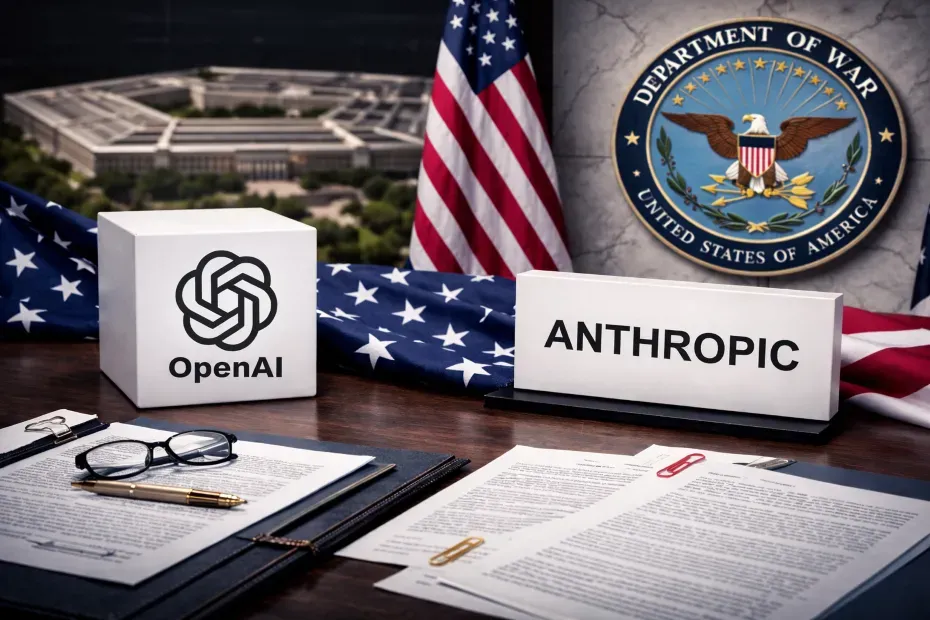
The relationship between AI firms and the US government has reached unprecedented tension after OpenAI amended its contract with the Department of Defense to strengthen usage guarantees. Simultaneously, the Treasury Department and other federal agencies halted the use of Anthropic’s products, particularly the Claude model.
The escalation began when Anthropic refused to sign an agreement with the Pentagon, lacking clear assurances that its models would not be used for mass surveillance or autonomous weapons systems. Following public debate, OpenAI announced a deal to deploy its models within a classified Department of Defense network, sparking widespread criticism, especially since CEO Sam Altman had previously expressed understanding for Anthropic’s position.
Public reactions extended beyond media debates to digital platforms. The Claude app briefly topped Apple’s free app charts, surpassing ChatGPT, while symbolic protests and critical graffiti appeared near OpenAI’s San Francisco headquarters. Conversely, supportive messages were displayed at Anthropic’s offices.
Notably, Altman admitted the company rushed into the agreement, stating the aim was to avoid a “much worse outcome,” but acknowledged the move seemed opportunistic. He later announced contract amendments with the Pentagon, explicitly banning OpenAI technologies from being used in “deliberate domestic surveillance of US citizens or residents,” referencing the Fourth Amendment and national security laws. He also clarified that use by Pentagon intelligence agencies would require separate contractual arrangements.
Meanwhile, the US government took decisive action against Anthropic. The Treasury Department suspended use of its products, with similar moves from the State Department and the Department of Health and Human Services. Treasury Secretary Scott Besant affirmed that no private company would be allowed to impose terms affecting national security.
The General Services Administration removed Anthropic’s services from its digital platform and the USAi program, effectively excluding it from government procurement. Federal housing finance agencies, including Fannie Mae and Freddie Mac, also halted use of Anthropic’s solutions. At the same time, the State Department began operating its internal chatbot using OpenAI’s GPT-4.1 model.
Strategic repercussions are significant. Anthropic was until recently part of the OneGov agreement, providing products to multiple agencies, and had a prior $200 million contract with the Pentagon for AI capabilities. The crisis escalated with the Defense Secretary’s announcement barring any contractor or partner working with the US military from doing business with Anthropic, putting major firms like Amazon Web Services, Google Cloud, and Microsoft in a complex contractual bind.
EcoPulse24 Analysis:
The crisis reflects a deeper struggle over the boundaries of AI use in national security and may signal a reconfiguration of the US government’s technology supplier landscape. OpenAI opted for adaptation through legal guarantees, while Anthropic now faces direct confrontation with the administration. The outcome may redefine the role of AI companies in defense and security, with greater legal oversight in future government contracts.
Explore Related Coverage
Sources & References
Editorial Note
Disclaimer
© 2025 EcoPulse24. All rights reserved.