Anthropic's Revenues Soar to Nearly $20 Billion Amid Tensions with U.S. Defense Department over AI Military Applications
Anthropic's revenue nears $20B amid Pentagon tensions over AI military use, risking government ties but seeing strong private sector growth.

San Francisco | EcoPulse24
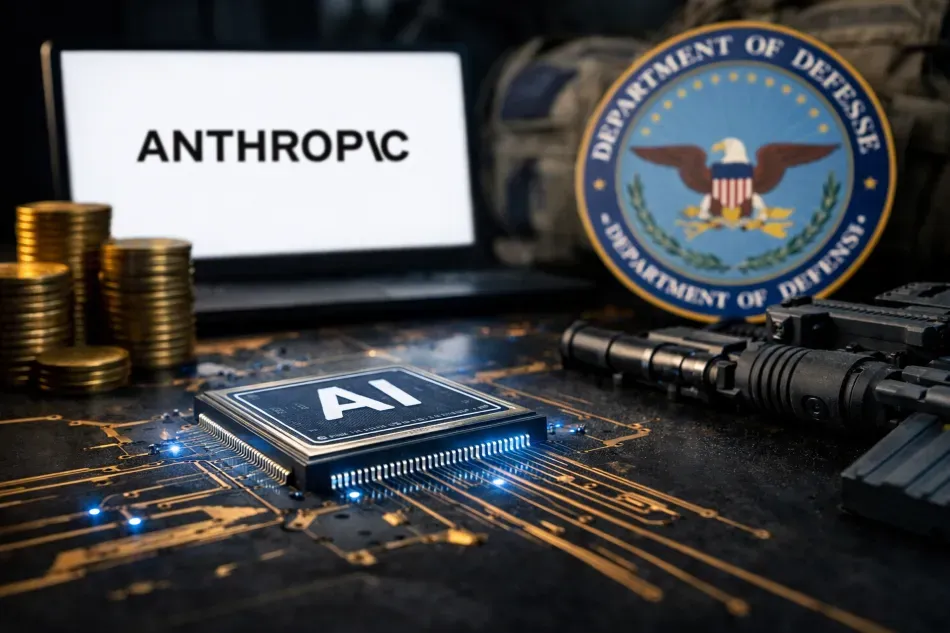
Anthropic, the American company specializing in AI technologies, is experiencing accelerated financial growth, with its estimated annual revenues nearing $20 billion. This comes at a time of heightened confrontation between Anthropic and the U.S. Department of Defense over regulations governing the use of AI in military applications.
Internal company data indicate that Anthropic's current annual revenue rate has exceeded $19 billion, up from about $9 billion at the end of 2025, and $14 billion just a few weeks ago. This reflects a clear acceleration in demand for the company's products and technologies.
The strong growth has been driven by increased reliance on Anthropic's AI models, including AI-powered programming tools like Claude Code, which have gained significant traction among developers and tech firms for automating programming tasks and analyzing complex data.
Anthropic's market value is currently estimated at around $380 billion, placing it among the largest global AI companies, amid intensifying competition among large language model developers that underpin many modern digital applications.
However, this rapid growth coincides with a major regulatory and political challenge. U.S. Defense Secretary Pete Hegseth has designated Anthropic as a potential supply chain risk - a label typically reserved for companies linked to nations viewed as strategic adversaries by the U.S.
This decision followed a sharp dispute between Anthropic and the Pentagon over restrictions on the use of its AI technologies in military surveillance and autonomous weapon systems. Anthropic has advocated for stricter controls on the use of its models in military applications, particularly those tied to autonomous weapons.
The designation poses a direct threat to Anthropic's relationships with U.S. government agencies, potentially barring the Department of Defense and affiliated entities from purchasing or using its products in defense systems. It could also impact government contractors relying on Anthropic's technologies.
In response, Anthropic has rejected the classification as unlawful and signaled its intention to challenge it in court. Company management views the decision as a dangerous precedent in the relationship between tech firms and the U.S. government.
Some experts describe the move as an attempt to weaken Anthropic in the fast-growing AI sector. Dean Paul, a former White House advisor involved in drafting the U.S. AI strategy, called it an effort to "institutionally destroy a company," citing the classification's potential business impact.
Despite tensions with the Defense Department, Anthropic's products continue to see widespread adoption among users and tech companies. The company's main app recently topped download charts on Apple's App Store, reflecting growing demand for its AI tools in the consumer market.
This momentum signals the transformation of AI models from specialized technical tools into productivity platforms used across a broad range of everyday applications, including software development, data analysis, and content creation.
Meanwhile, investors are closely monitoring the impact of the Pentagon dispute on Anthropic's future business, especially since the private sector remains the company's main revenue source.
EcoPulse24 Analysis:
Anthropic's developments highlight the rapid transformation of the global AI economy, with language model developers emerging as major economic players with massive market values and revenues. The conflict with the Pentagon reveals growing tension between technological innovation and security considerations, especially as AI enters sensitive sectors like defense. This signals a likely shift toward a new regulatory framework governing relations between advanced tech companies and U.S. government institutions.
Explore Related Coverage
Sources & References
Editorial Note
Disclaimer
© 2025 EcoPulse24. All rights reserved.