Artificial Intelligence Enters the Battlefield: US Military Deploys Claude Model in Operations Against Iran
US military used Anthropic's Claude AI for Iran operations, sparking debate on ethics, oversight, and tech firms' role in modern warfare.

Washington | EcoPulse24
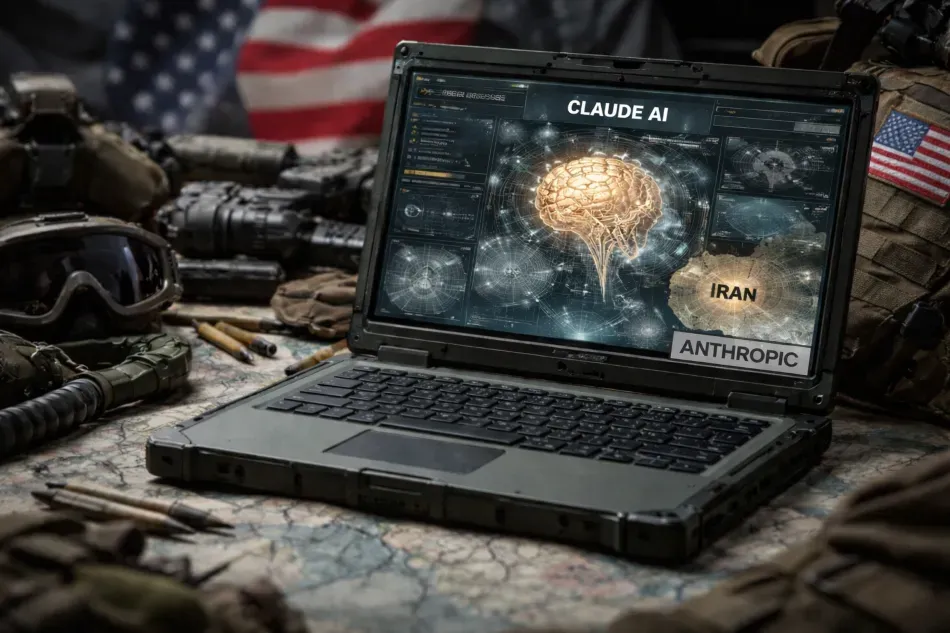
Media reports have disclosed that the US military utilized the Claude artificial intelligence model, developed by Anthropic, to support military operations related to strikes against Iran. According to press coverage, US Central Command relied on Claude for intelligence assessment, target identification, and simulating combat scenarios during recent attacks.
This development signals a clear transformation in the use of AI, extending beyond civilian applications such as text generation and data analysis to become integral to military decision-support systems. Militaries have long used AI for satellite imagery analysis, cyber threat detection, and missile defense management, but deploying natural language models like Claude on the battlefield marks a new phase.
These advancements coincide with intensifying competition among major tech firms to develop advanced AI systems for military and security sectors. Anthropic has partnered with Palantir Technologies, a data analytics company working with the US Department of Defense, to integrate Claude into big-data-driven military decision-support systems.
Anthropic previously proposed a $100 million project to the US Department of Defense for developing voice-controlled drone swarms, using Claude to translate commanders' verbal orders into digital instructions for coordinated drone operations. While this proposal has not been finalized, it highlights the growing trend of integrating AI into autonomous military systems.
Reports raise questions about Claude's exact role in military strikes, as terms like intelligence assessment and target selection could encompass a wide range of activities - from data analysis to identifying potential targets or simulating operational scenarios. However, precise details remain undisclosed, and there are no clear legal requirements for military entities to clarify AI's role in such operations.
This ambiguity has sparked concerns among technology and digital ethics experts, especially since natural language-based AI models are prone to errors or "hallucinations," potentially generating inaccurate information due to their predictive nature.
Modern conflicts have already seen AI used for target identification. For instance, an AI analytics system used during the Gaza conflict analyzed surveillance data, social networks, and geographical locations to identify individuals potentially linked to military activities, raising controversy over accuracy and ethical implications.
Research indicates that such systems may have significant error rates in target identification, prompting worries about their reliability in critical, life-or-death decisions. Experts further note that AI-driven speed in military decision-making could reduce human oversight, complicating accountability when mistakes or unintended outcomes occur.
Meanwhile, international regulatory frameworks for AI use in warfare remain limited. While treaties like the Geneva Conventions require new weapons to be tested before deployment, AI systems constantly evolve with data and algorithm updates, making traditional evaluation processes more complex.
Academic and research institutions are calling for greater transparency in military AI use, especially as tech companies become increasingly involved in developing tools for armed conflict.
EcoPulse24 Analysis:
The use of AI models in military operations reflects a profound transformation in modern warfare, with data and algorithms now central to military decision-making. As AI integration in defense accelerates, debates intensify over balancing technological superiority with ethical responsibility, particularly in the absence of clear regulatory frameworks. This trend also signals the growing role of major tech firms in the global military landscape, raising important questions about the future of technology-innovation and international security.
Explore Related Coverage
Sources & References
Editorial Note
Disclaimer
© 2025 EcoPulse24. All rights reserved.