Canadian Dollar Forecasts Become Less Optimistic as Trade Deal Remains Elusive
Canadian dollar forecasts weaken as U.S. trade deal stalls, prompting likely rate cuts by Bank of Canada; modest gains expected next year.

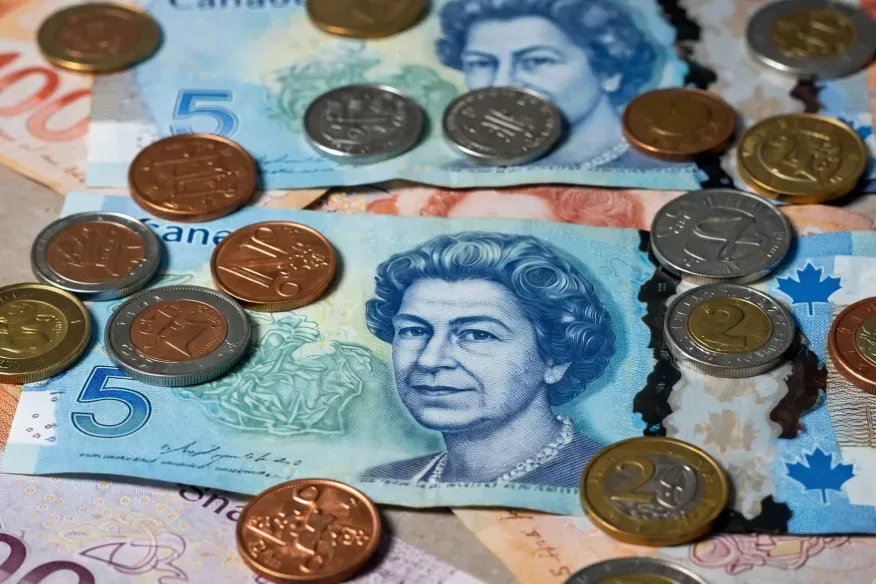
According to a Reuters survey, the Canadian dollar is expected to strengthen less than previously anticipated over the next year if the prolonged timeline for Canada to reach a trade deal with the U.S. increases the outlook for additional interest rate cuts by the Bank of Canada. The median forecast from 33 foreign exchange analysts surveyed between November 28 and December 3 predicts the Canadian dollar will rise by 0.3% to 1.39 USD, or 71.94 cents, over three months, compared to the 1.37 expected in last month's survey.
Over 12 months, the currency is expected to rise by 2.5% to 1.36, versus the previous expectation of 1.35. Bradley Saunders, North America economist at Capital Economics, stated, "With the federal budget being somewhat of a wet blanket, and any form of new trade arrangement with the U.S. still months away, it’s hard to see what will spark a recovery without accommodative monetary policy." Therefore, they continue to expect the bank to reduce its policy rate below its estimated neutral range by mid-next year, once core inflation returns closer to target.
The Bank of Canada is facing the possibility of ending its easing campaign after lowering the key interest rate in October to a three-year low of 2.25%. This is the lower limit of the 2.25%-3.25% range estimated by the central bank for the neutral rate - the level that neither stimulates nor constrains the economy. Investors expect rates to remain unchanged in next week's policy decision, pricing in nine basis points of additional easing by July next year.
Talks on a trade deal in key sectors between the U.S. and Canada have stalled, while the U.S.-Mexico-Canada Agreement (USMCA), which protects most Canadian exports from U.S. tariffs, will undergo a joint review in 2026. Last month, Prime Minister Mark Carney committed billions to combat U.S. tariffs, boost defense spending, and diversify trade, but some analysts said the level of new stimulus was not enough to sharply raise their economic forecasts.
A less-than-expected rate cut by the Federal Reserve may also limit the upside for the Canadian dollar. Saunders added, "In the U.S., we believe robust economic activity - partially driven by the ongoing AI investment boom - with stable core inflation will lead the Federal Open Market Committee (FOMC) to halt its easing campaign sooner rather than later." Key points (summary): Canadian dollar forecasts: the currency is expected to modestly strengthen to 1.39 USD over three months (an increase of 0.3% from current levels) and 1.36 USD over 12 months (an increase of 2.5%), which is less optimistic than previous forecasts of 1.37 and 1.35 respectively.
Reasons for the less optimistic outlook: The delay in the U.S.-Canada trade deal increases the prospects for additional interest rate cuts by the Bank of Canada; the federal budget has been disappointing and unlikely to stimulate recovery without accommodative monetary policy; new stimulus from Prime Minister Mark Carney is insufficient to significantly improve economic forecasts; lower-than-expected U.S. interest rate cuts may limit the upside due to strong U.S. activity and stable inflation.
Trade deal status: Talks have stalled in key sectors; the USMCA protects exports but will be reviewed in 2026; Carney committed billions to combat tariffs, boost defense, and diversify trade, but progress remains months away.
Economic data mentioned: The Bank of Canada lowered its key interest rate to 2.25% (the lowest in three years, at the lower limit of the neutral range of 2.25%-3.25%); investors expect stability next week with 9 basis points of easing by July; core inflation near target may lead to further cuts.
Quotes from analysts/experts: Bradley Saunders (Capital Economics): "With the federal budget being somewhat of a wet blanket, and any form of new trade arrangement with the U.S. still months away, it’s hard to see what will spark a recovery without accommodative monetary policy." He added, "Therefore, we continue to expect the bank to reduce its policy rate below its estimated neutral range by mid-next year, once core inflation returns closer to target." He also stated, "In the U.S., we believe robust economic activity - partially driven by the ongoing AI investment boom - with stable core inflation will lead the FOMC to halt its easing campaign before long."
Sources & References
Editorial Note
Disclaimer
Please review the Terms & Conditions.
© 2025 EcoPulse24. All rights reserved.