China Announces Comprehensive Tariff Exemption for 53 African Countries Starting May 2026
China will exempt tariffs on imports from 53 African countries from May 2026, aiming to boost trade and economic ties with the continent.

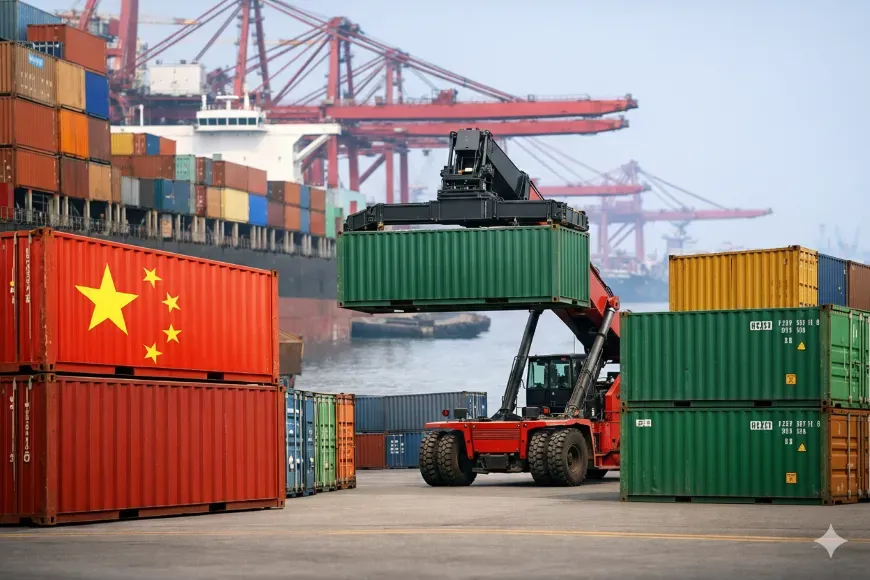
Beijing | EcoPulse24
China has announced that starting May 1, 2026, it will implement a full tariff exemption on imports from 53 African countries with which it maintains diplomatic relations. This expands a policy previously limited to 33 of Africa’s least developed nations, now covering all of Beijing’s diplomatic partners on the continent except Eswatini, which maintains official ties with Taiwan. The announcement was made in a congratulatory message from President Xi Jinping to the African Union leadership during the 39th AU Summit.
The policy not only removes customs duties but also seeks to accelerate the signing of new economic partnership agreements, broaden access to the Chinese market, and activate trade facilitation mechanisms, such as the "green channel" for faster customs clearance and reduced procedural barriers for African exports.
This move comes against a backdrop of escalating global trade tensions, prompting developing economies to redirect their trade strategies. Recent data shows Chinese exports to Africa grew by 25% year-on-year, reaching $122 billion, amid broader shifts in global supply chains. Analysts estimate China could forgo up to $1.4 billion in tariff revenue as a result.
Bilateral steps are already underway: South Africa and China have signed a framework agreement allowing South African exports duty-free access to the Chinese market, with an additional phase expected by the end of March 2026. Kenya has reached a preliminary understanding granting 98.2% of its exports tariff-free entry into China.
Despite the political momentum, questions remain about whether the policy can truly rebalance trade relations, given Africa’s export reliance on raw materials. Experts emphasize that sustainable impact requires parallel investment in local manufacturing, value chains, and digital technologies, beyond just tariff exemptions.
EcoPulse24 Analysis:
This decision is a strategic move strengthening China’s position as Africa’s top trading partner and reshaping South – South trade routes amid a shifting global economic order. For Gulf countries, the development is noteworthy due to shared interests in energy, critical minerals, and supply chains. Greater Chinese market access may boost competitiveness for African exports and stimulate new industrial investments, potentially redistributing trade and finance flows across Red Sea and Gulf corridors. However, the true impact depends on whether exemptions foster broader production bases rather than just increasing raw material flows.
Explore Related Coverage
Sources & References
Editorial Note
Disclaimer
© 2025 EcoPulse24. All rights reserved.