Easing Producer Price Deflation in China Relieves Pressure on Manufacturers and Supports Markets Amid Weak Demand
China's producer price deflation eased to -1.4% in Jan 2026, relieving manufacturers, but weak demand keeps recovery uneven.

Beijing | EcoPulse24
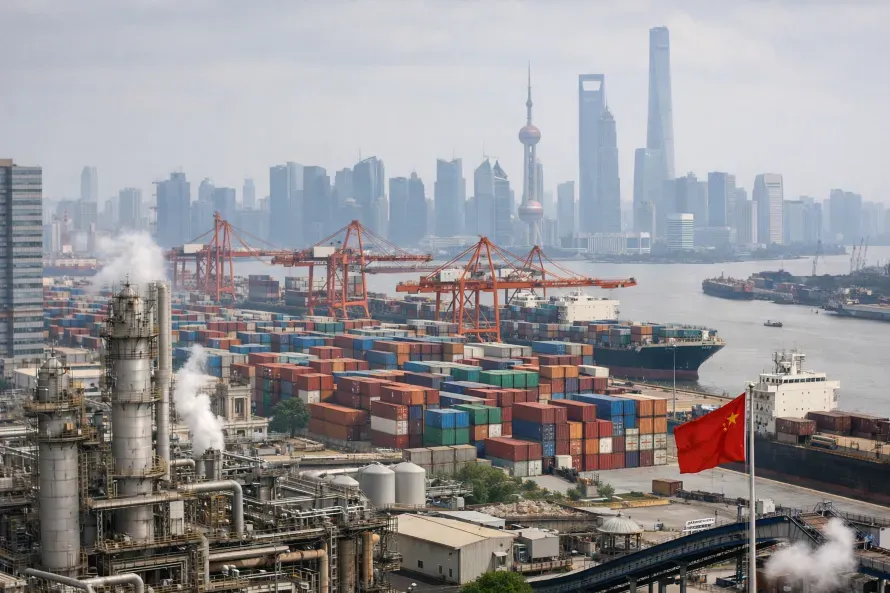
At the start of 2026, China's economic landscape reflects a complex mix of gradual improvements in production and persistent weakness in consumer demand, as authorities strive to balance growth support with measured financial and monetary stability. Recent data shows a slowdown in producer price deflation, with the Producer Price Index (PPI) falling 1.4% year-on-year in January 2026 - less severe than the 1.9% drop in December and the mildest pace since July 2024. This marks the 40th consecutive month of PPI contraction, but the result was better than market expectations of a 1.5% decline, signaling easing deflationary pressures in manufacturing. Input prices fell at a slower 1.3%, raw materials dropped 2.0% versus 2.6% prior, and processing prices eased by 0.4% after a sharper 1.6% fall. Mining prices, however, plunged 8.1%, deepening sectoral pressure.
In consumer goods, price declines accelerated to 1.7% versus 1.3% in December, driven by sharper falls in clothing (-0.7%) and food (-1.9%). Durable goods remained weak (-1.8%), and daily goods prices fell 1.8% after previous gains. On a monthly basis, producer prices rose 0.4% in January, the fastest gain since September 2023, suggesting short-term momentum.
Food prices dropped 0.7% year-on-year in January, reversing a 1.1% rise previously - the first decline since October - amid ample supply and weak pre-Lunar New Year demand. Egg prices fell sharply (-9.2%), cooking oils (-0.7%), and dairy (-0.8%). Pork, a staple in Chinese diets, slumped 13.7% on oversupply. Growth in fresh vegetable and fruit prices also slowed as supply improved and weather effects eased.
Chinese financial markets responded with cautious optimism: the Shanghai Composite rose 0.05% to around 4,130 points, and the Shenzhen index gained 0.1% to 14,220. Gains were seen in individual stocks such as Beijing Enlight Media (+5.7%), Wangsu Science & Technology (+12.4%), and China Northern Rare Earth (+8.6%).
In Hong Kong, the Hang Seng index climbed 0.4% to 27,301 for a third straight session, supported by technology, consumer, and property stocks, despite the approaching Spring Festival holiday. This came as China's annual inflation slowed to 0.2% in January versus 0.8% in December, and producer price deflation persisted but at a slower rate. Notable gains included Wuxi Biologics (+2.6%), Zijin Gold International (+6.2%), and Xiaomi (+4.4%), while SMIC fell 3.8% after disappointing results.
In currency markets, the offshore yuan held near 6.91 per US dollar, its strongest level in about 34 months, supported by a strong daily central bank fixing at 6.9438 - the highest since May 2023. However, gains were tempered as the People’s Bank of China reiterated a commitment to a 'moderately flexible' monetary policy, focusing on supporting growth and restoring prices. This coincided with narrowing PPI deflation to 1.4% and slower consumer inflation at 0.2%.
In bonds, the yield on China’s 10-year government bonds fell to about 1.79%, near an eight-week low, as markets priced in continued measured monetary easing. The central bank pledged to calibrate stimulus tools in line with domestic demand conditions, mindful of overcapacity and weak consumer spending.
EcoPulse24 Analysis:
Recent data indicates China is seeing a slowdown in producer price deflation, offering manufacturers some relief after prolonged pressure. However, persistent weakness in food and consumer goods prices underscores fragile domestic demand and an uneven recovery. The positive market response reflects investor bets on continued supportive monetary policy without tightening, but low yields and a managed yuan highlight official caution against destabilizing moves. The future trajectory hinges on Beijing’s ability to spur real consumption, moving beyond regulatory or monetary actions to ensure sustained price improvement passes from production to the wider economy.
Explore Related Coverage
Sources & References
Editorial Note
Disclaimer
© 2025 EcoPulse24. All rights reserved.