China Moves to Contain Domestic Fuel Price Surge Amid Middle East Energy Volatility
China's government intervened to limit domestic fuel price increases as global energy markets faced sustained pressure from Middle East geopolitical developments.

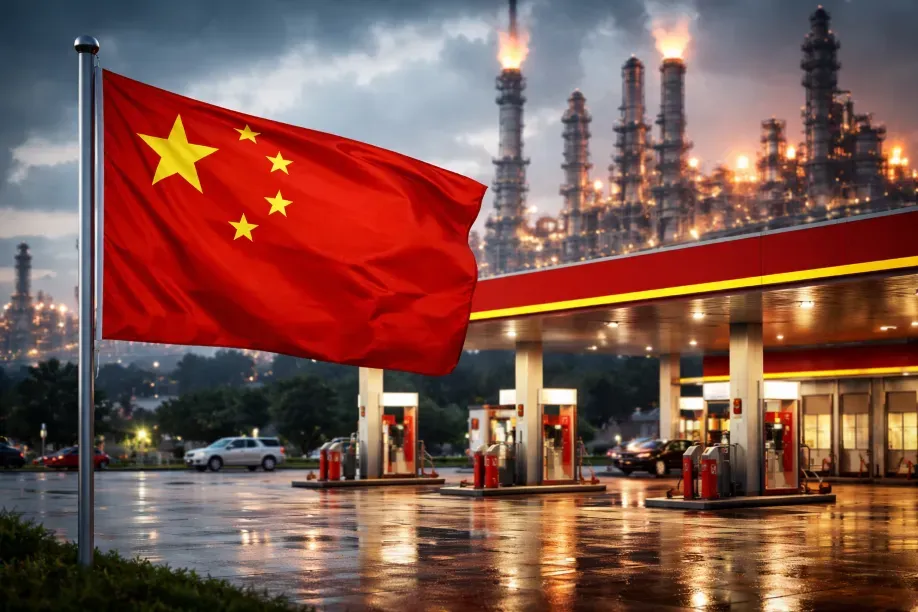
EcoPulse24 | Beijing
China's government moved on Monday to limit fuel price increases domestically, as global energy markets continued to face pressure from ongoing geopolitical developments in the Middle East, according to CNBC Arabia. The intervention reflects Beijing's concern about the domestic economic impact of elevated global energy costs.
China's Fuel Price Intervention
Chinese authorities stepped in to contain rising domestic fuel prices, deploying administrative tools available under the country's managed pricing system for refined petroleum products. China maintains a government-regulated fuel pricing mechanism that allows authorities to set ceilings and adjust prices at regular intervals based on international crude benchmarks and domestic policy considerations.
The move comes as global crude oil prices recorded sharp swings in recent sessions, with Brent crude rising above $108 per barrel at one point before falling back to around $98 per barrel on Monday following diplomatic signals between the United States and Iran. Despite the day's pullback, energy markets remain in a state of elevated uncertainty.
Impact on China's Economy
China is the world's largest importer of crude oil, making it acutely sensitive to global energy price movements. Elevated fuel costs feed directly into transportation, manufacturing, and logistics expenses, with knock-on effects across the broader economy. By limiting domestic fuel price increases, Chinese authorities aim to protect consumers and industrial users from the full pass-through of international price shocks during a period of market volatility.
The intervention also signals broader policy concern about inflationary spillovers from the energy sector into the wider consumer price index. China's government has historically used its managed pricing framework to buffer domestic markets from external commodity price shocks, particularly during periods of geopolitical uncertainty or supply disruption.
Global Energy Market Context
The decision follows a period of significant turbulence in global energy markets linked to geopolitical developments in the Middle East. Brent crude and WTI futures have been highly volatile, with prices rising sharply before retreating on news that the United States and Iran held productive talks and that planned military action on Iranian energy facilities was being deferred.
Other major economies have also taken steps to manage energy market pressures. The International Energy Agency has been in discussions regarding the potential release of strategic oil reserves, according to CNBC Arabia, as part of coordinated efforts to provide a buffer against sustained supply disruption risk.
Implications for Global Energy Trade
China's domestic fuel price management has implications for global energy trade flows. When domestic prices are capped below international benchmarks, state refiners may adjust import volumes or optimize their crude purchasing strategies. However, given the scale of China's energy demand, any significant shift in import behavior would have measurable effects on global crude oil markets and on trade volumes through key maritime routes including the Strait of Hormuz and the Strait of Malacca.
The Philippines had also taken a related step last week, temporarily authorizing the use of higher-sulfur marine fuel to mitigate supply constraints, reflecting how the Middle East situation is prompting policy responses across Asia.
EcoPulse24 Analysis
EcoPulse24 Analysis: China's decision to cap domestic fuel prices is consistent with its historical approach to managing energy market shocks and reflects the global reach of the current Middle East energy situation. While the intervention may ease short-term domestic cost pressures, it also highlights the degree to which energy price volatility is now transmitting across major economies. Should the diplomatic outlook deteriorate and energy prices rise again, Chinese authorities may face a more challenging balancing act between consumer protection and market signals. The policy also underscores the importance of monitoring demand-side responses from major importers like China alongside supply-side developments in the Middle East.
Explore Related Coverage
Sources & References
Editorial Note
Disclaimer
© 2025 EcoPulse24. All rights reserved.