US Heating Oil Futures Top $4 as Iran War Squeezes Hormuz Energy Supplies
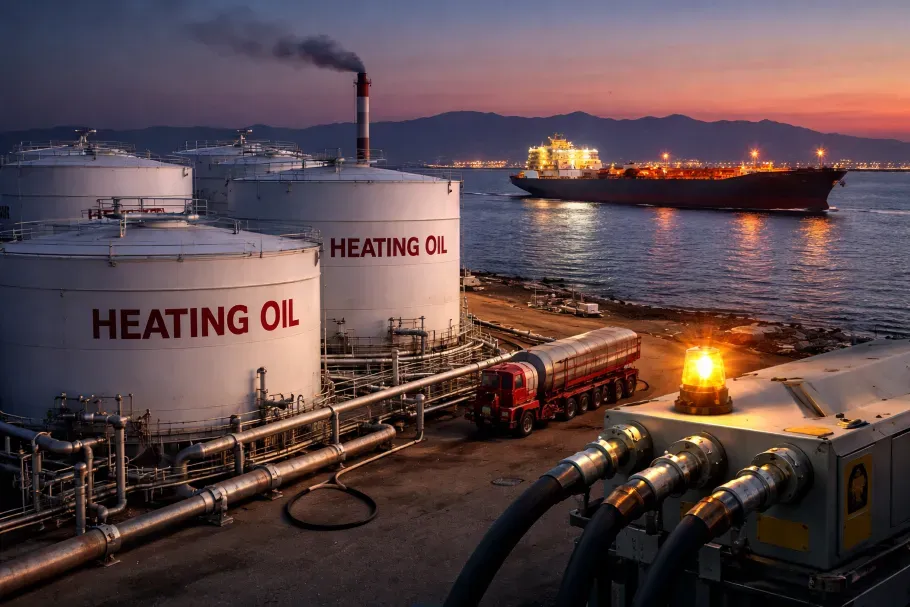
US heating oil futures surged above $4 per gallon, highest since June 2022, up 50% since late February as the Hormuz strait remains disrupted by the Iran conflict.

EcoPulse24 | New York
US heating oil futures surged above $4 per gallon on Tuesday, hitting the highest level since June 2022, as the ongoing conflict in the Middle East continues to disrupt global energy supplies through the near-closure of the Strait of Hormuz. Prices have climbed more than 50% since late February, reflecting the deepening supply shock that has upended global energy markets and raised concerns about inflation and economic growth worldwide.
Hormuz Disruption Drives the Surge
The Strait of Hormuz, the critical waterway through which approximately 20% of global oil flows, has seen dramatically reduced passage due to the ongoing conflict in the region. The near-closure of the strait has sent shockwaves through global energy markets, pushing not only crude oil prices higher but creating acute shortages in refined petroleum products - particularly heating oil and diesel. Countries heavily reliant on Persian Gulf refining capacity have faced the steepest price increases, as supply chains scramble to reroute through alternative and far longer passages, significantly raising transport and storage costs.
Cascading Effect Across the Energy Complex
The surge in heating oil is part of a broader rally across the entire refined petroleum complex. Diesel prices have climbed sharply in parallel, threatening transport and logistics costs across industries. Jet fuel has risen above $200 per barrel, compounding the pressure on airlines already struggling with elevated crude costs, while fuel oil has approached $140 per barrel, raising costs for shipping companies and power generators. These elevated costs ripple through critical sectors including agriculture, construction, and manufacturing, threatening to accelerate headline inflation across multiple economies at a time when central banks are already navigating difficult policy decisions.
Supply-Side Pressures Compound the Problem
Beyond the Hormuz disruption, several additional supply-side factors are amplifying the rally. China, which had been a notable exporter of refined petroleum products in recent years, has begun canceling fuel exports as it prioritizes domestic supply amid energy security concerns. South Korea has announced plans to cap fuel shipments to other markets, while Indonesia faces its own supply pressures. Additionally, cooler weather forecasts for parts of the United States have boosted near-term demand for heating oil, tightening what is already an extremely constrained market. The combination of reduced supply and stable-to-rising demand has created a textbook scenario for price escalation in the futures market.
Political Pressure and Policy Response
The rapid surge in fuel prices is generating significant political pressure on the Trump administration, which is facing calls to release strategic petroleum reserves or negotiate safe passage through the Strait of Hormuz. President Trump has urged allied nations to contribute warships to escort oil tankers through the strait, though several countries have been reluctant to commit troops or vessels. The US government has yet to announce a coordinated strategic reserve release, though such a move is increasingly discussed as likely if prices maintain their upward trajectory heading into the summer months. The broader international coalition effort to protect Hormuz shipping routes remains incomplete, keeping markets on edge.
EcoPulse24 Analysis
EcoPulse24 Analysis: The breach of $4 per gallon for US heating oil signals that the Hormuz crisis has moved well beyond crude oil markets into the broader energy complex, with significant implications for global inflation trajectories and economic growth. For GCC economies, the situation presents a notable paradox: Gulf states stand to benefit enormously from elevated oil and gas revenues while simultaneously facing disrupted trade routes and costlier imports for goods dependent on sea freight. The key risk to watch is whether China and South Korea sustain their export curbs on refined products, which could accelerate the price spiral further. With the Federal Reserve and European Central Bank holding meetings this week, the energy shock may complicate central banks' already difficult policy calculus, potentially delaying anticipated rate cuts well into the second half of 2026.
Explore Related Coverage
Sources & References
Editorial Note
Disclaimer
© 2025 EcoPulse24. All rights reserved.