China Records Highest Solar Power Additions in Six Months, Driving Global Silver Demand
China added 22 GW solar in Nov 2025, boosting silver demand, driving prices to records, and deepening the global silver deficit.

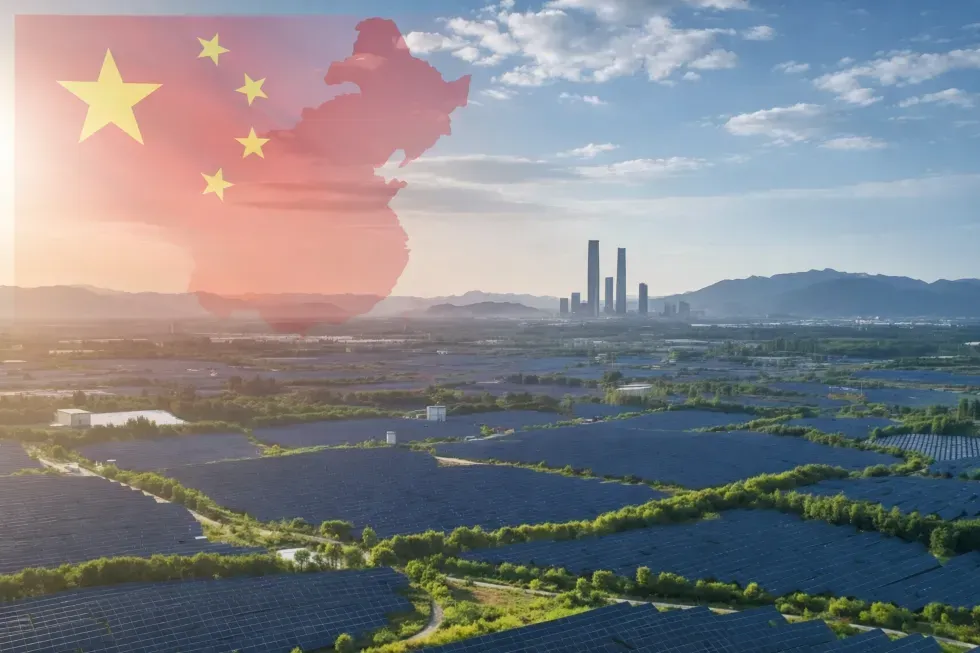
Beijing - Official data released last Friday revealed that China added 22 GW of solar power in November 2025, marking its highest monthly increase since May. Behind these figures lies a deeper story of China's voracious consumption of natural resources, reshaping global metals markets.
According to the National Energy Administration, these additions represent a notable rise compared to previous months this year, though still 12% lower than November 2024's 25 GW. The broader impact is felt in rare metals markets, rather than just energy statistics.
Silent Silver Crisis
Each gigawatt of solar power requires roughly one ton of silver, meaning November's increase alone consumed about 22 tons. Throughout 2025, China has utilized thousands of tons to fuel its renewable ambitions, driving global silver prices to a record $64 per ounce. Silver inventories on the Shanghai Exchange fell below 446 tons by November's end, the lowest since 2016. In October alone, over 300 tons of stock vanished, forcing China to import silver at an 8% premium, paying $78.55 per ounce versus a global price of $72.
The Chinese Pattern: Production Control and Resource Drain
China now accounts for 67% of global solar additions - more than double the rest of the world combined. This dominance reflects a longstanding economic pattern: controlling production chains while heavily consuming rare natural resources.
The solar industry now claims 19% of global silver demand, up from just 5.6% in 2015. New Chinese technologies like TOPCon, which make up 85% of domestic output, use 1.5 times more silver than previous models.
Rising Global Deficit
The global silver market has entered its seventh consecutive year of deficit, with annual production at 835 million ounces and demand exceeding 1.2 billion ounces. The cumulative deficit since 2021 has reached 820 million ounces - equivalent to a full year of global mining output.
China is at the heart of this crisis. By mid-2025, its cumulative solar capacity reached 1.08 terawatts, half the world's installed solar capacity, making it the largest industrial consumer of silver ever.
Year-End Surge
The November spike was driven by state-owned firms rushing to complete projects before the end of China's 14th Five-Year Plan. This deadline spurred developers to accelerate grid connections, fueling exceptional fourth-quarter silver demand.
2025 saw unusual patterns: a record 93 GW of solar was added in May alone - consuming about 93 tons of silver - before Beijing ended guaranteed returns for new projects in June, causing a subsequent market slowdown.
Bleak Outlook
BloombergNEF cut its 2025 forecast by 9% to 372 GW, with a further 14% contraction expected in 2026. Yet, even with this slowdown, pressure on silver markets remains immense. Analysts expect the global silver deficit to widen from 6,003 tons in 2024 to 7,248 tons by 2027, with Chinese demand leading the shortage. Some investment banks predict silver could reach $100 per ounce by end-2026.
Future Challenges
China now faces a complex dilemma: how to pursue clean energy goals without depleting rare resources. Several provinces have imposed higher energy storage requirements, adding complexity and cost, while banks have tightened lending for rural and distributed projects, lengthening development cycles.
Additionally, China added 12.5 GW of wind capacity in November, bringing its total renewable additions for 2025 to over 500 GW for the first time - a figure reflecting both environmental ambition and voracious resource consumption.
The pressing question: Can the world sustain China’s model for clean energy transition, or will it trigger new crises in strategic resource markets?
Sources & References
Editorial Note
Disclaimer
Please review the Terms & Conditions.
© 2025 EcoPulse24. All rights reserved.