China's Inflation Holds at 1.2% as Energy Costs Offset Food Price Weakness
One of the main drivers supporting inflation was a sharp increase in transportation costs, which accelerated to 5.4% year-over-year from 4.6% in April

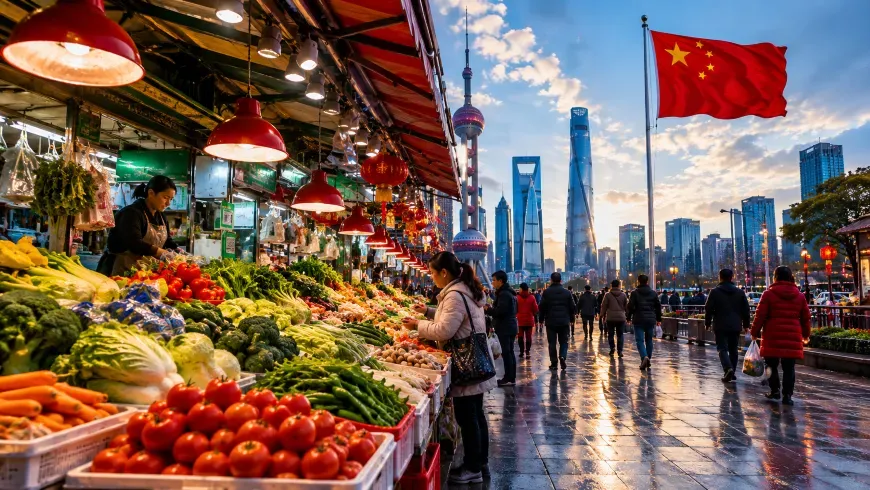
Beijing | EcoPulse24
China's annual inflation rate remained unchanged at 1.2% in May, signaling stable consumer price growth despite rising energy costs and ongoing weakness in food prices.
The reading came slightly below market expectations of 1.3%, reflecting a mixed inflation environment where higher transportation and energy-related costs were largely offset by declining food prices and subdued housing inflation.
Energy Costs Rise as Middle East Tensions Impact Supply Chains
One of the main drivers supporting inflation was a sharp increase in transportation costs, which accelerated to 5.4% year-over-year from 4.6% in April.
The rise reflects higher global energy prices and supply-chain disruptions linked to the ongoing conflict in the Middle East, which has increased transportation and logistics costs across several sectors.
The data highlights how geopolitical developments are increasingly influencing domestic inflation trends in major economies, including China.
Food Prices Continue to Weigh on Headline Inflation
Despite higher energy costs, food prices remained a significant drag on overall inflation.
Food inflation fell 1.7% year-over-year, marking the second consecutive monthly decline and the steepest drop since October.
The weakness was driven primarily by persistently low pork prices and continued declines in fresh fruit costs, two categories that play a significant role in China's consumer basket.
The decline suggests that domestic supply conditions remain relatively comfortable despite external inflation pressures.
Core Inflation Shows Stable Domestic Demand
Core inflation, which excludes food and energy prices, rose 1.1% annually compared with 1.2% in April.
While slightly softer, the figure indicates that underlying consumer demand remains relatively stable and avoids signs of either overheating or significant weakness.
Prices continued to rise across several consumer-oriented categories, including healthcare, education and clothing, suggesting ongoing household spending activity.
Housing costs remained unchanged at negative 0.2%, highlighting the continued challenges facing China's property sector.
China Inflation Snapshot
| Indicator | May 2026 |
|---|---|
| Headline Inflation | 1.2% |
| Market Forecast | 1.3% |
| Core Inflation | 1.1% |
| Food Inflation | -1.7% |
| Transport Inflation | 5.4% |
| Monthly CPI Change | -0.1% |
Monthly Prices Edge Lower
On a monthly basis, China's consumer price index declined 0.1% in May, reversing April's 0.3% increase.
However, the decline was smaller than economists had expected, suggesting that upward pressure from energy costs partially offset weakness in food-related categories.
The data points to a relatively balanced inflation environment that remains well below levels seen in many advanced economies.
EcoPulse24 Analysis
China's latest inflation report reinforces a theme that has increasingly defined the country's economic landscape over the past year: external inflation pressures are rising, but domestic price dynamics remain relatively subdued.
The most important development within the report is the widening gap between energy-related inflation and food prices. Transportation costs are accelerating as oil markets react to Middle East tensions, demonstrating how geopolitical shocks continue to influence economic conditions far beyond the region itself.
At the same time, declining food prices are preventing a broader inflation surge. Weak pork prices, stable agricultural supply chains and moderate consumer demand continue to exert downward pressure on headline inflation.
From a policy perspective, the data provides Chinese authorities with continued flexibility. Inflation remains comfortably contained, allowing policymakers to maintain supportive economic measures if growth conditions require additional stimulus.
The housing component remains another critical signal. Persistently soft housing inflation suggests that property-market recovery remains incomplete despite ongoing stabilization efforts. This continues to limit broader inflationary pressures across the economy.
For global markets, the report offers an important contrast to developments in Western economies. While higher energy prices are beginning to reappear as an inflationary force worldwide, China's overall inflation environment remains relatively stable, reflecting different demand conditions and economic structures.
As Middle East tensions continue to influence commodity markets, investors will increasingly monitor whether rising energy costs begin feeding into broader consumer prices or remain largely contained by weakness in other sectors of the Chinese economy.
Sources & References
Editorial Note
Disclaimer
© 2025 EcoPulse24. All rights reserved.