Chinese and Hong Kong Stocks Under Pressure from Oil Shock and Inflation Fears Ahead of 'Two Sessions' and PMI Data
Chinese and Hong Kong stocks fell on oil shock, inflation fears, and weak auto sales ahead of 'Two Sessions' and key PMI data.

Beijing | EcoPulse24
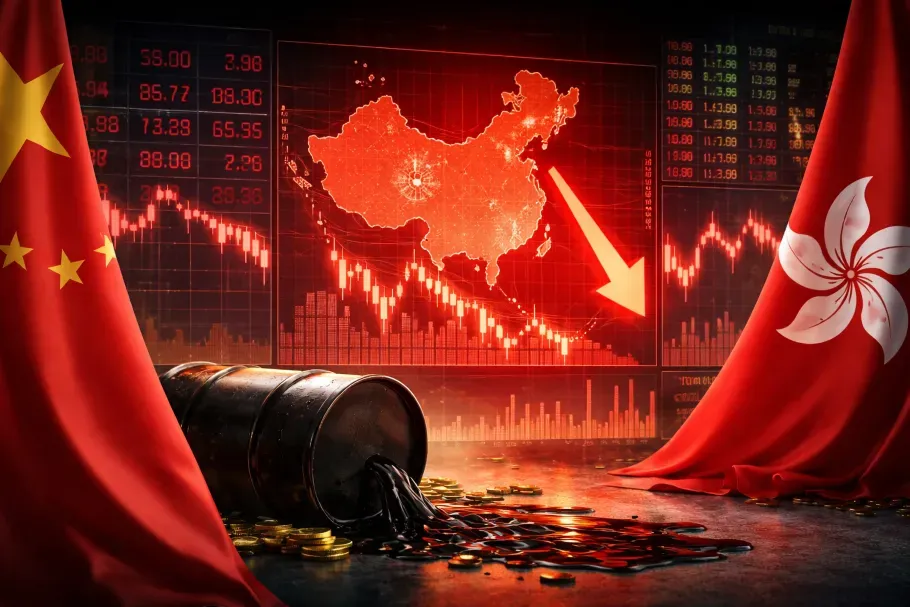
Stocks in mainland China and Hong Kong fell as inflation worries resurfaced following a jump in oil prices driven by heightened tensions in the Strait of Hormuz. This has prompted a repricing of risks in regional markets ahead of the 'Two Sessions' meetings and the anticipated release of the Purchasing Managers' Index (PMI).
In Shanghai, the Shanghai Composite Index dropped 0.8% to below 4,150 points, while the Shenzhen Composite declined 2.2% to 14,145 points, reversing gains from the previous session. The pressure was mainly due to rising energy costs, given China's significant dependence on Middle Eastern oil, raising concerns about slower growth and fueling domestic inflation if high oil and gas prices persist.
Losses in the mainland market were notable among industrial and basic materials companies, with Suzhou TFC Optical down 1.2%, Zijin Mining falling 3.7%, TBEA Co. dropping 4.8%, Victory Giant losing 2.3%, and China Northern Rare Earth down 7.7%. These broad losses reflect the sensitivity of materials and energy-related sectors to input costs and demand fluctuations.
In Hong Kong, the Hang Seng Index fell by around 124 points or 0.5% to 25,941, marking its second consecutive session of declines and approaching a six-week low. Weak US futures weighed on sentiment, while the oil price surge amid threats of Hormuz Strait closure heightened inflation fears. Additional pressure came from Chinese auto companies’ February sales data, which showed a sharp drop due to the Lunar New Year holiday.
All sectors in Hong Kong ended the trading day in negative territory, with significant losses for Zijin Gold Intl. (down 6.3%), Laopu Gold (5.3%), China Hongqiao Group (3.0%), Xpeng (2.4%), Cathay Pacific (2.2%), and ZTO Express (2.0%). Market participants are also awaiting Wednesday’s PMI release, which is expected to provide further signals on industrial and service sector momentum.
Despite these pressures, some investors are betting that the upcoming 'Two Sessions' in Beijing, scheduled for March 4 – 11, may unveil new economic support measures, set growth targets, outline policy priorities, and detail the 2026 – 2030 five-year plan.
EcoPulse24 Analysis:
Risk repricing in China and Hong Kong reflects the transmission of the oil shock into inflation expectations and corporate margins. The broadening losses in materials, energy, and related commodities highlight high sensitivity to input costs, while hopes remain pinned on supportive messages during the 'Two Sessions.' The near-term trajectory will be shaped by PMI data and the sustainability of elevated oil prices, as a prolonged surge could complicate the balance between supporting growth and containing price pressures.
Explore Related Coverage
Sources & References
Editorial Note
Disclaimer
© 2025 EcoPulse24. All rights reserved.