Divergent Price Pressures in Canada: Raw Materials Slow While Producer Prices Continue to Rise
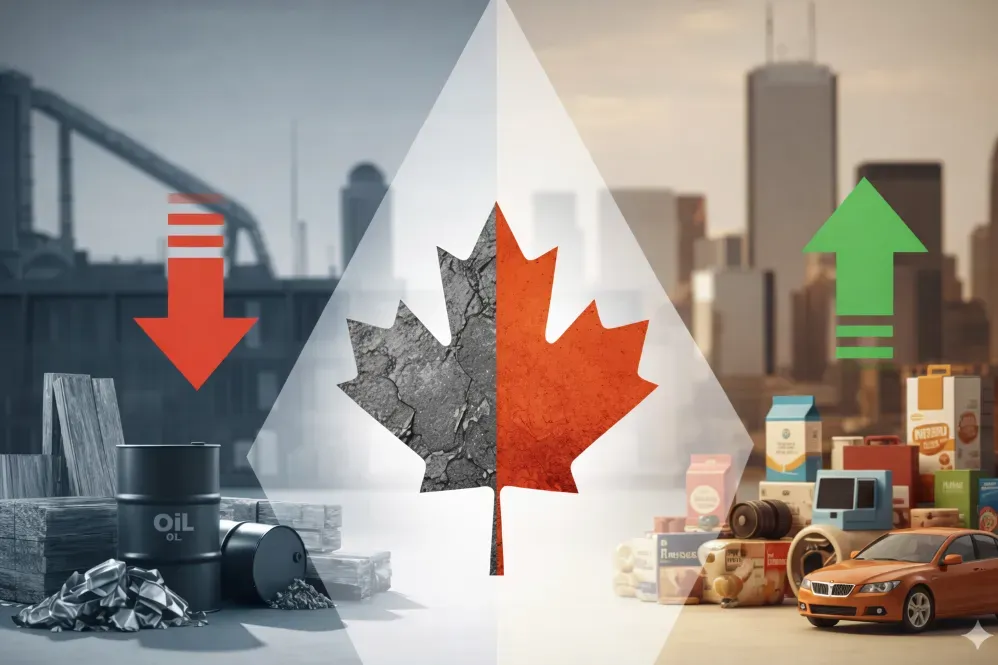
Canada's raw material prices slowed in Nov 2025, but producer prices kept rising, led by energy, metals, and food. Pricing disparities persist.

Ottawa | EcoPulse24
The latest economic data for Canada in November 2025 paints a mixed picture of price pressures. Raw material prices showed a marked slowdown, with the Raw Materials Price Index (RMPI) rising just 0.3% month-over-month - below market forecasts of 0.6% and down from October’s strong 1.6% increase. This deceleration was mainly due to a 2.0% drop in animal and animal product prices, the largest monthly fall since September 2024, driven by a 7.5% decline in hog prices amid increased supply and weaker post-summer demand. Crude energy prices also fell by 0.5%, with conventional crude oil down 0.9% due to global oversupply, although geopolitical risks from the Russia–Ukraine war limited further declines.
In contrast, metal ores, concentrates, and scrap rose 1.5%, led by a 4.0% jump in gold, silver, and platinum group metals - the fifteenth consecutive monthly increase for this component. Excluding crude energy products, the RMPI increased by 0.6%.
On the other hand, the Industrial Product Price Index (IPPI) continued its upward trajectory, gaining 0.9% month-over-month in November after an adjusted 1.7% rise in October, marking the sixth consecutive monthly increase. The rise was led by energy and petroleum products (+4.3%), buoyed by higher prices for diesel (+7.9%) and motor gasoline (+1.5%) amid tight refining margins and supply concerns. Non-ferrous primary metals climbed 0.8%, with silver and gold products up 3.2% and 1.2%, respectively, as markets priced in potential U.S. interest rate cuts and supply constraints. Food prices also contributed, with grains and oilseeds up 7.3%.
Annually, the IPPI rose 6.1% in November, marking the fourteenth consecutive year-on-year increase, driven by robust performance in gold, silver, and platinum group metals.
Overall, the data reflects a relative easing in input cost pressures due to slower raw material price growth, but continued cost pass-through at the producer level, especially in energy and metals. This highlights ongoing pricing disparities across production stages in Canada, as markets closely watch global monetary policy and demand outlooks for the coming months.
Sources & References
Editorial Note
Disclaimer
Please review the Terms & Conditions.
© 2025 EcoPulse24. All rights reserved.