Dollar Weakness Drives Emerging Asian Currencies to Four-Month Highs
Emerging Asian currencies hit 4-month highs as US signals acceptance of a weaker dollar, boosting regional flows and stabilizing the yuan.

Singapore | EcoPulse24
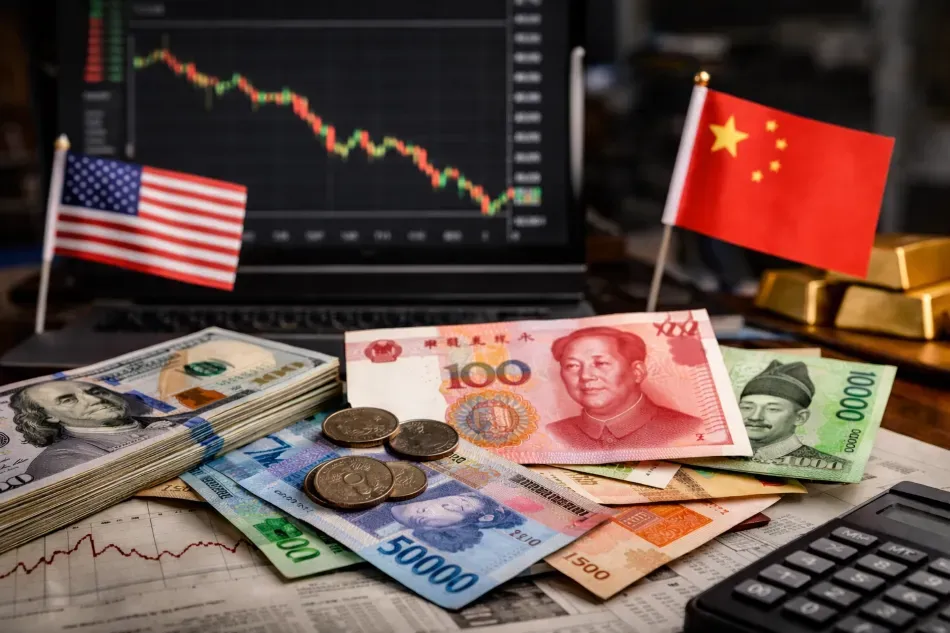
Emerging Asian currencies saw broad gains amid accelerating 'dollar erosion' trades, as the US administration signaled clear acceptance of a weaker dollar, redirecting capital flows toward regional currencies and assets.
Asian Currencies (Context): Growing concerns over dollar weakness coincided with US criticism of some regional currencies, amplifying market moves across Asia.
Bloomberg Asia Currency Index (Performance): Rose 0.2% on Wednesday, approaching levels last seen in July.
MSCI Emerging Markets Currency Index (Performance): Hit a new record high.
In China, monetary policy actions aimed to stabilize the yuan as the global dollar retreated.
Chinese Yuan (Policy): The People’s Bank of China set the daily reference rate higher by the most since August, after the dollar’s overnight drop, following a daily fixing above 7 yuan per dollar last week.
The US dollar remained under pressure amid expectations of broader official acceptance of a weaker currency.
Bloomberg Dollar Index (Performance): Fell to its lowest since March 2022, extending losses from earlier in the week.
Flows (Context): Momentum is building amid speculation that US authorities may coordinate with Japan to support the yen, signaling openness to further dollar weakness.
The strength of Asian currencies may offer relief to those with fiscal imbalances, including the Philippine peso, Indian rupee, and Indonesian rupiah, according to market estimates.
EcoPulse24 Analysis:
The current environment reflects a shift in foreign exchange market dynamics, with dollar weakness redirecting flows to Asia, supported by growth recovery - especially in technology - and sustained capital inflows. Risks are tilted against the dollar versus Asian currencies (excluding Japan) unless unexpected US monetary tightening or a shock to risk appetite emerges. Meanwhile, Beijing’s yuan fixing moves indicate a desire to manage the pace, not reverse the trend, aiming for stability amid global volatility.
Explore Related Coverage
Sources & References
Editorial Note
Disclaimer
© 2025 EcoPulse24. All rights reserved.