Dollar Weakness Redraws Currency Landscape Amid U.S. Policy Uncertainty and Conflicting Official Signals
The U.S. dollar weakens amid policy uncertainty, boosting major currencies and prompting debate over Washington's true dollar strategy.

London | EcoPulse24
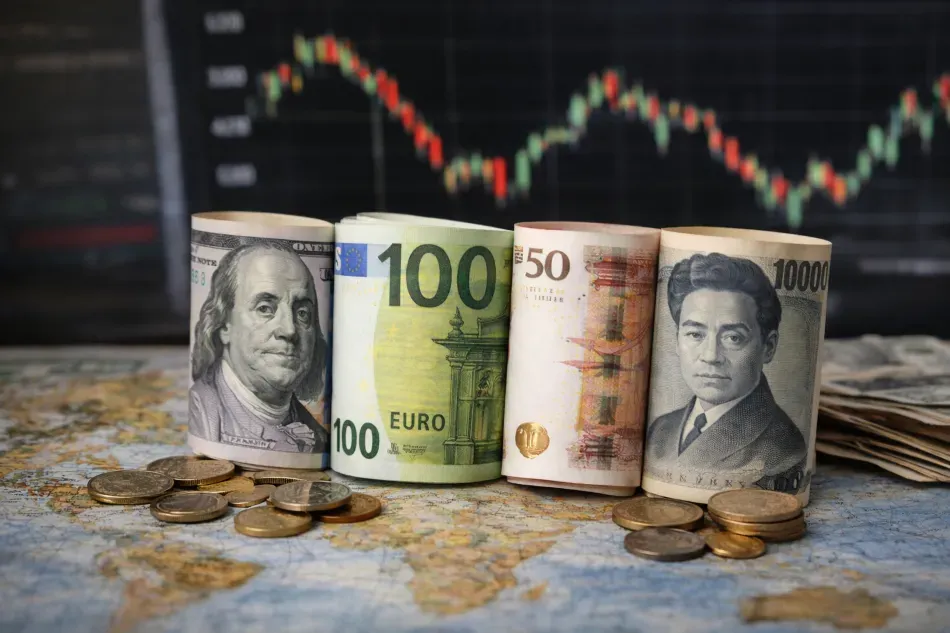
Movements in global currency markets today reflect a clear weakening of the U.S. dollar, influenced not only by economic data but also by rising uncertainty over U.S. monetary and fiscal policy direction, and speculation as to whether Washington is accepting - or even seeking - a weaker dollar. This complex backdrop has allowed major currencies to rise, with a broader repricing of the dollar's global role.
The euro climbed to 1.191 dollars, up 0.00207 dollars or 0.17%, reaching its highest level since late January. This performance was supported by dollar weakness ahead of U.S. jobs data, as well as signals from the European Central Bank indicating that the euro's strength is not an immediate monetary policy concern, given inflation is seen as stable near target.
The pound sterling continued its recovery, approaching 1.370 dollars, rising by 0.00592 dollars or 0.43%. Sterling benefited from two factors: global dollar weakness and eased political tensions in the UK after Prime Minister Keir Starmer managed to contain fallout from his chief of staff's resignation and maintain broad party support. Despite markets pricing in further potential UK rate cuts, the pound found support from reduced political risk premiums.
The Australian dollar posted clearer gains, rising to 0.7120 dollars, up 0.00447 dollars or 0.63%, helped by improving risk appetite and dollar weakness. The New Zealand dollar also rose to 0.60688 dollars, gaining 0.00258 dollars or 0.43%, as investors sought alternatives and bets increased on potential U.S. rate cuts this year.
The Japanese yen strengthened to 153.366 yen per dollar, up about 1.03 yen, marking its third consecutive session of gains. This was supported by domestic optimism over the new Japanese government's agenda and speculation of potential official intervention to curb currency speculation, alongside dollar weakness.
Beyond daily moves, a deeper issue emerges regarding the dollar itself. The recent decline - estimated at around 10% on a trade-weighted basis since the current administration took office - has been accompanied by mixed signals from Washington. While the Treasury Secretary insists on a 'strong dollar' policy, the President has been more accepting - even welcoming - of a weaker currency to support economic activity and exports.
This contradiction has revived debate over whether the U.S. is pursuing a dual strategy: a weaker dollar to improve the trade balance, while maintaining its status as a global reserve currency. The discussion is fueled by talk of potential tools, including tariffs, currency market intervention, or deeper coordination between the Treasury and the Federal Reserve.
EcoPulse24 Analysis:
The currency market's moves suggest that dollar weakness is no longer just a short-term reaction to data or rate expectations, but is tied to strategic uncertainty over the dollar's future role. The rise of the euro, sterling, and commodity-linked currencies points to a gradual repricing of dollar risk, while the yen's gains highlight market sensitivity to any political or monetary signals. The continuation of this trend hinges on greater clarity from Washington: is the goal simply a more competitive dollar, or a redefinition of the 'strong dollar' concept itself? Absent a clear answer, currency markets are likely to remain volatile, with investors reducing dollar exposure as long as uncertainty persists.
Explore Related Coverage
Sources & References
Editorial Note
Disclaimer
© 2025 EcoPulse24. All rights reserved.