Gas Shock Spreads from the Gulf to Europe and America as Qatari Production Halts Drive 40% Price Surge
Qatar's LNG halt sparks 40% gas price surge in Europe/UK, disrupts global supply, and raises inflation, with US exports set to rise.

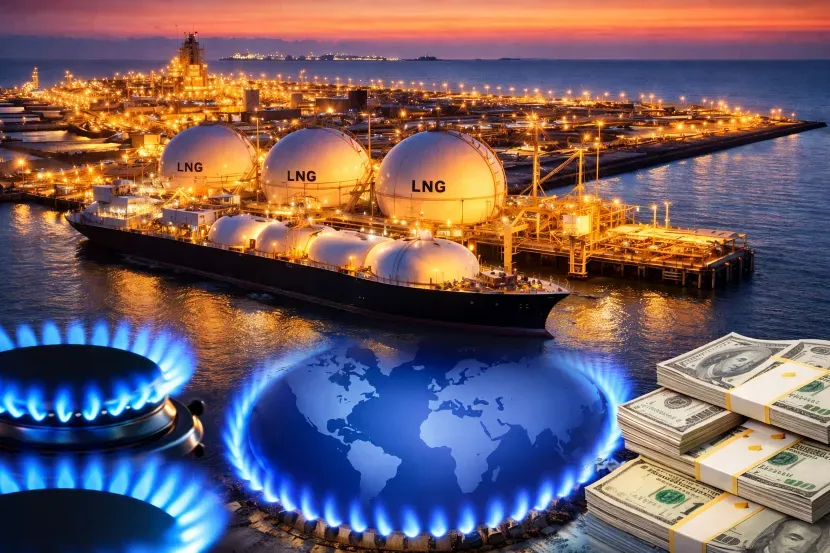
Dubai | EcoPulse24
The repercussions of military escalation in the Middle East have directly hit global gas markets, following QatarEnergy’s announcement of a halt in LNG production at Ras Laffan and Mesaieed industrial complexes. This move sparked sharp price increases from Europe to the US, forcing investors to immediately reprice supply risks.
In the UK, natural gas contracts soared over 40% to reach 115 pence per therm, the highest since February 2025. The surge comes as domestic gas storage levels dropped below 30% by the end of February, leaving the UK market highly sensitive to external disruptions, especially since Qatar supplies about 15% of Europe’s LNG imports.
In Europe, gas futures jumped 40% to nearly 45 euros per megawatt-hour, marking a one-year high. The Qatari halt threatens flows representing around 15% of the EU’s LNG imports in a market already facing relative supply tightness. LNG tanker traffic through the Strait of Hormuz has nearly ground to a halt, further straining supplies from other Middle Eastern producers. European storage currently stands at just 31%, compared to about 40% at the same time last year, intensifying the market’s fragility.
In the US, gas contracts extended gains by about 6%, surpassing $3 per million British thermal units. The US market currently operates at a deficit of approximately 0.3% compared to the five-year average, heightening the likelihood of increased demand for American LNG exports to offset any shortfall in Qatari supply, especially if disruptions at the Strait of Hormuz persist, which handles about 20% of global LNG trade.
This development reflects the shift from a localized crisis to a global energy shock, with gas now at the heart of the equation rather than just oil. Qatar is among the world’s largest LNG exporters, and any production halt or shipping disruption directly affects the supply-demand balance in Europe and Asia.
EcoPulse24 Analysis:
Qatar’s production suspension has marked a turning point in global gas risk pricing. Markets are now factoring in the possibility of structural disruptions to gas flows, not just a temporary risk premium. The fragile storage levels in Europe and the UK mean that prolonged disruptions could trigger fierce competition for available shipments, especially from the US. At the same time, higher energy prices threaten to reignite global inflationary pressures, bringing monetary policy back to the forefront and dampening risk appetite in equity markets. The current crisis underscores that gas has become a central element in international economic stability, rivaling oil’s impact during periods of geopolitical escalation.
Explore Related Coverage
Sources & References
Editorial Note
Disclaimer
© 2025 EcoPulse24. All rights reserved.