US Cannot Immediately Replace Qatar’s LNG Exports Amid Production Halt
US lacks spare LNG capacity to replace Qatar's halted exports; output is maxed, prices surge, and new capacity won't fill the gap soon.

Houston | EcoPulse24
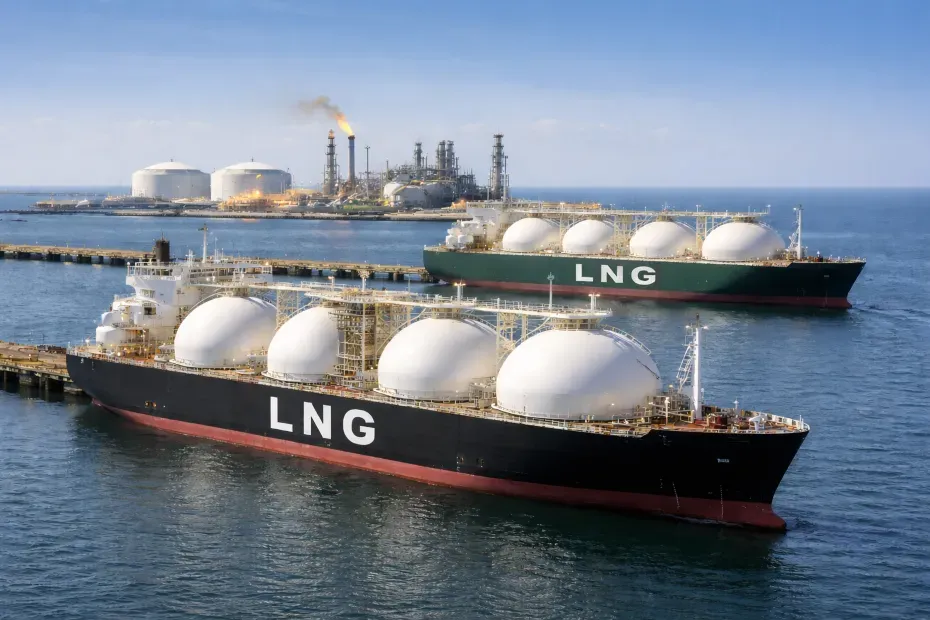
Analyst estimates and Reuters calculations reveal that the United States, while being the world’s largest liquefied natural gas (LNG) producer, does not have sufficient spare capacity to instantly replace lost Qatari supplies after Qatar halted production due to Middle East tensions.
US facilities export nearly 19 billion cubic feet of LNG per day, double the volume Qatar withdrew from the market (10 billion cubic feet per day) following attacks. However, US plants are operating near peak capacity, and most shipments are locked in long-term contracts.
Alex Munton, Global Gas and LNG Director at Rapidan Energy Group, stated, “There is no large idle spare capacity on the sidelines.” Cheniere Energy, the top US LNG exporter, reported pulling over 7 billion cubic feet per day from its Gulf Coast terminals.
Tom Seng, Assistant Professor of Energy Finance at Texas Christian University, added, “We’ve reached the limit. You can’t increase LNG output beyond current levels if you’re already at 100%.”
Reuters calculations indicate that new US capacity coming online soon will not exceed 2 billion cubic feet per day - far less than the gap left by Qatar’s halt. Buyers would also need to secure shipping vessels and absorb the costs of redirecting them globally.
Trinidad and Tobago’s National Gas Company is diverting more gas to its Atlantic LNG plant to maximize exports but can only add about 200 million cubic feet per day in the short term, according to LSEG data.
Two medium-term projects are anticipated:
- Venture Global / Plaquemines LNG could add up to 800 million cubic feet per day if approved by the US Department of Energy - a small fraction of Qatar’s lost capacity.
- Golden Pass LNG, a joint venture between QatarEnergy and ExxonMobil, is expected to begin initial production this month at around 800 million cubic feet per day.
LNG prices have surged sharply. The Dutch TTF benchmark hit nearly $19 per million British thermal units - its highest in three years - while the Japan-Korea Marker reached about $13, the highest in eight months. According to Kpler, a maritime analytics platform, no significant rerouting of shipments has been observed yet, despite expectations of a major supply crisis.
EcoPulse24 - Economic and Technology News | ecopulse24.com
Explore Related Coverage
Sources & References
Editorial Note
Disclaimer
© 2025 EcoPulse24. All rights reserved.