Goldman Sachs CEO at Davos: U.S. Economy Set for Growth, U.S.-China Relations Improving, AI Won't Destroy Jobs
Goldman Sachs CEO at Davos: US growth strong, US-China ties improving, AI to transform - not destroy - jobs, but warns of AI bubble risk.

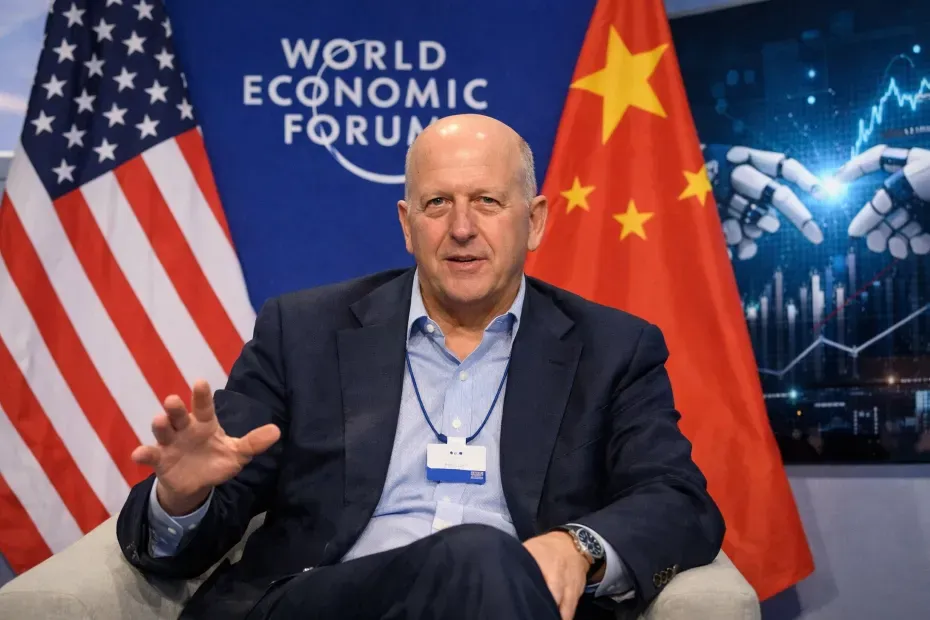
Davos, Switzerland – EcoPulse24
At the World Economic Forum in Davos, Goldman Sachs CEO David Solomon provided a comprehensive outlook on the global economic landscape for 2026. In interviews with TIME and CNBC, Solomon addressed U.S. economic prospects, U.S.-China relations, Trump’s trade policies, AI’s impact on labor, and East Asia’s evolving economic role amid geopolitical shifts.
Key U.S. Growth Drivers
Solomon cited two main factors supporting U.S. growth in 2026: bold fiscal stimulus, including a major bill passed in summer 2025, and heavy capital spending on AI infrastructure - over $400 billion by the four largest tech firms in 2025, accounting for more than 1% of GDP. This trend is expected to continue, fueling economic momentum.
Challenges and Risks
Solomon acknowledged persistent, 'sticky' inflation as a pain point for consumers and a source of macroeconomic uncertainty. He also noted that unclear trade policies and geopolitical tensions impede capital flows and investment, though he believes market participants remain focused on constructive economic developments.
U.S.-China Relations
Solomon observed a significant de-escalation between the U.S. and China, with potential for a more constructive relationship and even a trade agreement by 2026. He emphasized the strategic importance of improving ties between the world’s two largest economies, especially for firms like Goldman Sachs with a strong presence in China.
Regulatory and Growth Agenda
Solomon expressed optimism about the new U.S. administration’s focus on growth, noting that lighter regulation could unlock new private sector investment. However, he cautioned that regulatory change takes time and requires the right personnel in key roles.
AI and the Future of Work
Contrary to some tech leaders, Solomon believes AI will transform rather than eliminate jobs, citing the economy’s historical adaptability to technological change. He emphasized that AI will enable operational efficiencies and free up capacity for growth, rather than causing mass layoffs.
AI Bubble Concerns
Solomon warned that AI valuations may eventually fall short of lofty expectations, though the adjustment could take time. He noted that the largest tech firms are well established, and most new AI companies are still private.
Strategic Approach at Goldman Sachs
The bank is focusing on empowering its highly skilled workforce with advanced AI tools and redesigning internal processes to boost operational efficiency and growth.
Beyond Tech: Other Sectors
Solomon highlighted opportunities in sectors like advanced manufacturing and mining, especially as demand for critical minerals grows alongside the green transition.
Davos Atmosphere: Transatlantic Tensions
The 2026 Davos forum saw public rifts, including ECB President Christine Lagarde walking out of a dinner in protest of remarks by U.S. Commerce Secretary Howard Lutnick. JPMorgan CEO Jamie Dimon stressed the need for a stronger NATO and warned against U.S. credit card rate caps, calling them an 'economic disaster.'
EcoPulse24 Analysis
Solomon’s balanced perspective offers a nuanced roadmap for navigating 2026’s complex economic and geopolitical environment. The forum revealed a world moving from transition to rupture, with the old rules-based order under strain. Success will favor those with flexible, multi-pronged strategies - engaging Asia, maintaining European ties, leveraging U.S. deregulation, and adopting AI with caution. The message from Davos: we are witnessing the end of one era and the turbulent birth of another, filled with both risks and opportunities.
Disclaimer: This analysis reflects EcoPulse24’s editorial perspective based on public statements by David Solomon. It does not constitute investment advice. Readers should conduct their own research and consult professional advisors before making investment decisions.
Explore Related Coverage
Sources & References
Editorial Note
Disclaimer
© 2025 EcoPulse24. All rights reserved.