Hormuz blockade risks triggering worst global energy crisis as oil surges and supply chains fracture
US Hormuz blockade sparks oil surge, supply chain woes, and fears of worst global energy crisis, with risks of $150 oil and wider geopolitical fallout

London | EcoPulse24
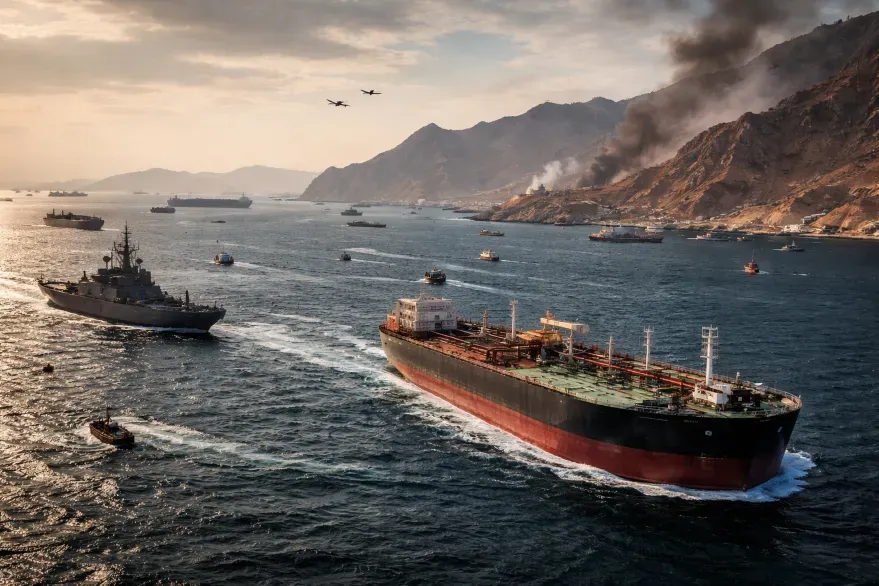
Global energy markets are entering a critical phase as the US decision to impose a naval blockade linked to Iranian flows through the Strait of Hormuz raises the risk of a prolonged supply shock, with analysts warning of the potential for the worst energy crisis in modern history.
Oil prices reacted immediately, with West Texas Intermediate rising more than 8% to around $104.40 per barrel, while Brent crude climbed over 7% to approximately $101.86, as traders rapidly priced in escalating risks to one of the world’s most vital energy corridors.
The escalation follows the breakdown of high-level negotiations between Washington and Tehran, which failed to produce an agreement on nuclear issues or maritime stability. The US move targets vessels linked to Iranian ports and coastal infrastructure, significantly increasing uncertainty around shipping flows in the Gulf.
The Strait of Hormuz is a strategic chokepoint through which roughly one-fifth of global oil supply has historically passed. Since the onset of the conflict, tanker traffic has already declined sharply, with some vessels rerouting or delaying transit, further tightening global supply chains.
The disruption extends beyond crude oil. Supply chains for fertilizers, helium, and industrial goods are also being affected, reflecting the broader economic footprint of the Strait. Analysts warn that clearing existing bottlenecks could take weeks even if tensions ease, increasing the risk of prolonged supply constraints.
Some forecasts suggest that a full-scale disruption could push oil prices toward $150 per barrel, particularly if additional Gulf supply is removed from the market. At the same time, international institutions have already signaled potential downgrades to global growth alongside rising inflation expectations.
The geopolitical dimension is widening. China, as one of the largest buyers of Iranian oil, faces direct exposure to any sustained disruption, while potential US trade measures against Beijing over support to Iran could further escalate tensions between the two largest economies.
EcoPulse24 Analysis
This is no longer a localized geopolitical event - it is a systemic energy shock with global consequences. The focus has shifted from production risks to the security of transit routes, fundamentally altering how markets price oil.
The Strait of Hormuz is not just another supply channel; it is the central artery of global energy flows. Any sustained disruption - whether through enforcement actions, retaliatory measures, or market fear - creates immediate and amplified effects across oil, gas, and industrial supply chains.
The comparison with the 1970s oil crisis is increasingly relevant, but the current situation may prove more complex. Today’s global economy is more diversified in energy sources, yet also more interconnected, meaning disruptions can propagate faster and across multiple sectors simultaneously.
The added geopolitical layer involving China introduces a second axis of risk. Efforts to restrict Iranian flows could collide with China’s energy security needs, raising the possibility of broader economic confrontation beyond the Middle East.
At its core, the market is transitioning into a phase where energy security overrides efficiency, and where prices reflect not just supply-demand balances, but the stability of global trade routes.
If escalation continues, the current volatility may evolve into a structural shift in global energy systems, with long-term implications for inflation, trade flows, and geopolitical alignment.
Explore Related Coverage
Sources & References
Editorial Note
Disclaimer
© 2025 EcoPulse24. All rights reserved.