China: The Biggest Loser in the Iran War as Energy Security Faces Existential Shock
China faces major energy risks from Iran war: oil supply loss, higher prices, and shipping threats, endangering its economy and energy security.

Special Analysis | Energy & Markets
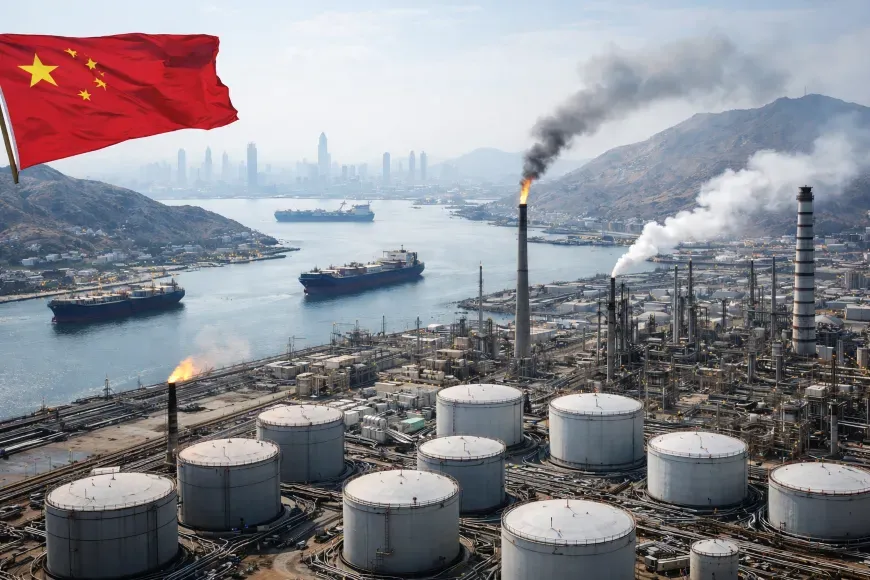
As flames rise over Tehran and smoke clouds the Strait of Hormuz, it becomes clear that the greatest loser in this conflict is not in the Middle East, but behind a desk in Beijing. China, the world's largest oil importer and the main buyer of Iranian crude, finds itself at the heart of a crisis it neither caused nor chose, but for which it will pay dearly.
US and Israeli strikes on Iran on February 28, 2026, triggered widespread Iranian retaliation, affecting several Gulf states and placing Beijing in a triple bind: loss of its cheapest supplier, threat to a vital shipping corridor, and inflationary pressure on an economy struggling to regain momentum.
China buys over 80% of Iran's seaborne oil exports - about 1.38 million barrels per day, accounting for 13.4% of its total maritime imports. Half of China's crude imports transit the Strait of Hormuz, which is now at risk of closure. This threatens both discounted Iranian oil and half of China's supply chain.
Independent refineries, known as "teapots" and mainly located in Shandong, are the primary buyers of sanctioned Iranian oil, benefiting from steep discounts. These refineries make up about a quarter of China's refining capacity and operate on thin or negative margins. State-owned oil giants have avoided direct Iranian crude purchases since 2018-2019 to sidestep US sanctions, leaving the "teapots" to source Iranian oil via complex shadow networks.
Currently, over 46 million barrels of Iranian oil are stored on tankers in Asia, with about 80% near Singapore and off China's coast. China has also stockpiled crude at a rapid pace, including for strategic reserves. However, a full closure of Hormuz would result in a net global crude supply loss of 8-10 million barrels per day, even after accounting for alternative pipelines, leading to fierce competition for available resources.
Any disruption in Hormuz would directly raise fuel and manufacturing costs, threatening China's export and industrial sectors. Sustained oil price increases of 20-30% could lower global economic growth by 0.5-1.0 percentage points and drive inflation, posing major risks to China's growth targets.
Meanwhile, Russia stands to benefit, as China and India would turn to Russian oil. However, Russian crude commands a higher price than sanctioned Iranian oil, erasing the "discounted basin" advantage that underpinned China's energy strategy.
What was once a savvy model for securing cheap energy has become a strategic liability. China's energy security, built on discounted suppliers and vulnerable shipping lanes, faces a crucial test. Strategic reserves may cushion the short term, but the war could force China to redraw its energy map under severe geopolitical pressure rather than deliberate strategy.
Explore Related Coverage
Sources & References
Editorial Note
Disclaimer
© 2025 EcoPulse24. All rights reserved.