How Major U.S. Retailers Are Navigating an Uncertain Holiday Shopping Season
US retailers use discounts, experiences, and automation to attract cautious holiday shoppers amid inflation and tariff pressures.

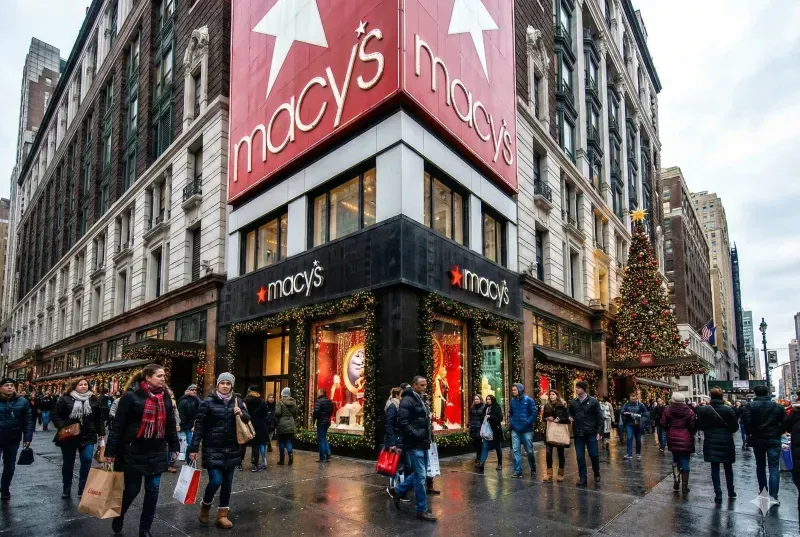
According to CNN, America’s largest retailers are entering the holiday season with bold strategies aimed at winning over increasingly cautious consumers. With President Donald Trump’s tariffs adding pressure to import costs, inflation remaining persistent, and unemployment edging higher, shoppers are carefully controlling their spending.
Wells Fargo expects holiday sales to grow between 3.5% and 4% compared to last year. However, when adjusted for inflation, real spending could remain flat.
Lauren Murphy, retail analyst at Wells Fargo, told CNN that retailers are returning “back to basics” - relying on strong merchandising, meaningful discounting, and curated experiences to bring customers into stores.
Macy’s: Reviving the Classic Department Store Experience
Macy’s is leaning into nostalgia and immersive experiences to differentiate itself. Its New York flagship is rolling out multiple holiday-themed partnerships - from entertainment tie-ins to exclusive product lines - all designed to evoke the charm of traditional department stores.
The company has been working to reinvent its remaining stores after announcing plans last year to close 150 underperforming locations by 2026. Investments have been directed toward customer service, improved inventory, and in-store experiences aimed at boosting traffic and conversion.
The strategy has begun to show results, with Macy’s recently reporting its first sales growth in three years. But the retailer, like others, is now dealing with the added burden of tariffs across its sourcing markets.
Chief merchandising officer Nata Dvir said Macy’s collaborates closely with vendors from more than 25 countries to shield shoppers from price hikes wherever possible. Still, some categories - especially toys and winter apparel - will see increases. To justify higher costs, Macy’s has invested in better-quality materials such as higher-grade cashmere.
Macy’s is also relying on in-house economists to interpret economic trends and rapidly adjust pricing and product assortments. Dvir described this balancing act as “part science, part art.”
Old Navy: Designer Vision Meets Value Pricing
Old Navy is treating the holiday rush like its “Super Bowl,” according to CEO Horacio Barbeito - and its top play remains its wildly successful family pajamas, a multimillion-unit seasonal bestseller.
But with inflation squeezing household budgets, Old Navy is broadening its appeal through new design partnerships. The chain launched its first collaboration with designer Anna Sui and unveiled styles shaped by couture designer Zac Posen, who recently joined as chief creative officer.
Posen told CNN he saw the role as “the opportunity of a lifetime,” aiming to blend elevated styling with Old Navy’s value-driven identity.
Old Navy, which operates in 49 states, posted a 5% revenue increase in the most recent quarter. To maintain momentum, the retailer has adopted RFID technology to track inventory with greater precision - helping staff locate products quickly and reduce lost sales.
Barbeito insists that despite economic uncertainties and tariff pressures, Old Navy’s mission remains unchanged: delivering quality at an accessible price point. Posen echoed that the brand will adapt regardless of economic swings, adding, “When things become more challenging, we rise to the occasion.”
Walmart: Speed and Automation as a Competitive Edge
In Pennsylvania, Walmart’s newest 1.5-million-square-foot fulfillment center represents the retailer’s biggest bet this season: unmatched delivery speed.
The company says orders processed through the facility can move from checkout to outbound trailer in just 30 minutes, thanks to a highly automated system that builds custom packaging, sorts products, and minimizes manual handling.
This center is one of four next-generation hubs that Walmart says double the productivity of its older facilities. The company reported a strong quarter heading into the holidays, with overall revenue up 5.8% and e-commerce sales surging 27%.
As inflation continues to shift consumer behavior, Walmart has attracted more middle- and higher-income shoppers seeking lower prices. But competition remains intense, especially from Amazon and fast-growing Chinese e-commerce players like Temu and Shein.
Walmart executives say their focus remains on driving scale and efficiency. By lowering operating costs through automation, they aim to sustain the chain’s hallmark strategy of everyday low prices.
The company also highlighted major improvements in labor efficiency. Associates in the new centers interact with packages roughly five times - compared to 12 steps in older facilities - and walk far less during shifts, reducing fatigue and increasing throughput.
Summary
Across the industry, America’s top retailers share one priority: capturing holiday demand without overwhelming customers already stretched by economic uncertainty. Whether through immersive shopping experiences, elevated design at value pricing, or next-generation automation, retailers are aggressively reshaping their strategies in hopes of ending the year on solid footing.
Sources & References
https://edition.cnn.com/2…reparation-christmas
Editorial Note
Disclaimer
Please review the Terms & Conditions.
© 2025 EcoPulse24. All rights reserved.