India Slashes Tariffs on European Cars, Opening Market and Paving Way for EU Free Trade Agreement
India cuts EU car import tariffs to 40%, paving way for a free trade deal and opening its market to major European automakers.

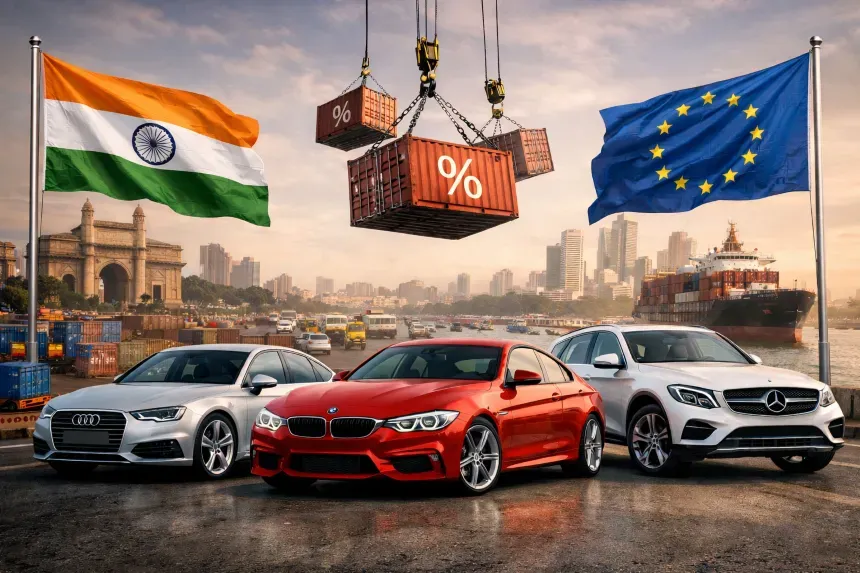
New Delhi | EcoPulse24
India is moving to enact a significant reduction in import duties on cars from the European Union, cutting tariffs to 40% from current levels of up to 110%. This marks the widest step yet to open India's automotive market to European producers, coinciding with the anticipated announcement of a free trade agreement between the two sides.
According to informed sources, Prime Minister Narendra Modi's government has agreed to apply the reduction immediately to a limited number of European vehicles priced above €15,000. The phased reduction is expected to eventually bring tariffs down to 10%, easing entry for major European automakers such as Volkswagen, Mercedes-Benz, and BMW into the world's third-largest car market by sales.
Negotiations for the free trade agreement are expected to conclude within days, paving the way for technical finalization and ratification. The agreement should expand bilateral trade and boost Indian exports of goods like textiles and jewelry, especially as some Indian exports have recently faced higher US tariffs.
India's automotive market is known for high tariff protection, with current import duties ranging from 70% to 110%. This policy has faced repeated criticism from global companies seeking more competitive access.
EcoPulse24 Analysis:
The proposed tariff reduction represents a structural shift in India's trade policy for automobiles, balancing local industry protection with the attraction of advanced European investment and technology. Gradual market opening gives European firms a foothold in a massive, fast-growing market, while pushing local manufacturers to modernize and improve efficiency. Tied to the potential free trade pact, the move enhances supply chain integration and India's competitiveness as a manufacturing and export base, with effects on pricing, technology transfer, and consumer choice.
Explore Related Coverage
Sources & References
Editorial Note
Disclaimer
© 2025 EcoPulse24. All rights reserved.