Escalating US-Iran Conflict Reshapes Oil Pricing, Global Risk, and Poses Crucial Test for Gulf Markets
US-Iran conflict disrupts Gulf oil flows, spiking prices, shaking markets, and raising global inflation and growth risks if disruption persists.

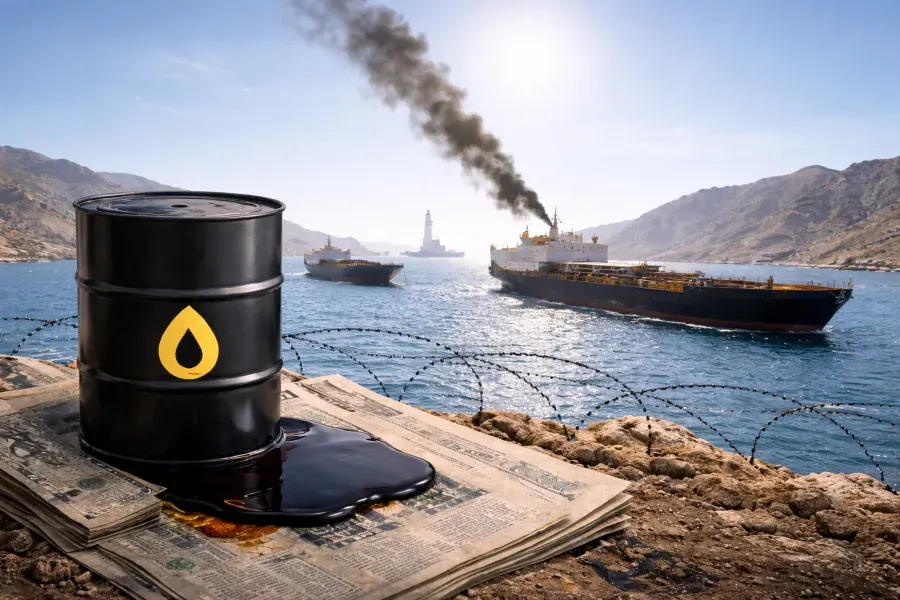
Dubai | EcoPulse24
The ongoing military confrontation between the United States and Iran has become a new focal point for global markets. No longer a peripheral risk, it is now central to asset pricing as military strikes widen, navigation through the Strait of Hormuz is disrupted, and sites in several Gulf countries are targeted. These developments have evolved from isolated geopolitical incidents into economic variables redrawing the global risk map, impacting everything from energy and inflation to capital flows and interest rates.
Oil at the Core
Brent crude was trading near $73 per barrel before the weekend, up about 20% year-to-date. Off-market trades during the weekend saw a surge of nearly 10%, touching $80, with analysts forecasting prices could approach $100 if shipping through the Strait of Hormuz remains blocked.
Roughly 13 million barrels per day pass through the strait - about 31% of global seaborne oil flows. Total oil and product flows reach nearly 20 million barrels daily, equivalent to 20% of world demand. Any prolonged and substantial disruption could result in a net loss of 8 – 10 million barrels per day, according to energy agencies, even with alternative pipelines like Saudi Arabia’s East – West and Abu Dhabi’s export line.
Regional Equity Performance
At the start of regional trading, Saudi and Egyptian stocks came under clear pressure. Saudi Arabia’s main index dropped 2.2% in one session, erasing year-to-date gains - the steepest daily fall since April. However, Aramco’s share price rise, benefiting from higher oil price expectations, limited further losses. Aramco accounts for about 16% of the index’s weight, giving it significant sway.
Egypt’s main index fell 2.5%, extending a downtrend since mid-February, with losses surpassing 8% over that period. The Egyptian pound weakened to around 48.8 per US dollar, its lowest since mid-2025, under the twin pressures of regional tensions and halted Israeli gas supplies, prompting Cairo to accelerate LNG imports ahead of summer.
In the Gulf, Kuwait and Qatar suspended trading as a precaution, while the Dubai Financial Market halted trading for two days in line with UAE Securities and Commodities Authority directives. Meanwhile, the Saudi market remained operational, making it the first regional platform to reflect real-time risk pricing.
Currency and Safe Havens
Globally, investors shifted to a "safety-first" strategy. Gold rose about 22% year-to-date, fueled by hedging against geopolitical and inflation risks. US Treasuries saw defensive inflows, and the Swiss franc appreciated 3% against the dollar. Global equities showed clear fragility, with expectations for major indices to drop 1 – 2% upon full market reopening.
Crucial Factor: Duration of Disruption
Historically, markets have absorbed short-term geopolitical shocks, as seen in previous escalations. The current crisis, however, is distinguished by its impact on navigation and energy. Prolonged disruption of the Strait of Hormuz or attacks on Gulf energy facilities could shift the crisis from a "temporary risk premium" to a global oil supply shock.
If oil prices reach and sustain $100, global inflation could rise by 0.6 – 1 percentage points, complicating interest rate cuts in major economies, according to research estimates. Global growth could also face pressures of 0.5 – 1 percentage points if the price surge persists.
The Gulf Paradox
While higher oil prices boost government revenues in the Gulf short-term, prolonged volatility introduces new risks. Elevated risk premiums may increase sovereign borrowing costs and impact funding for major projects, affecting foreign investment flows - especially as Gulf economies accelerate diversification programs.
EcoPulse24 Analysis:
Markets no longer treat the escalation as an isolated military event but as a driver repricing energy, inflation, and growth simultaneously. Ongoing trading in Saudi Arabia versus suspensions elsewhere reflects differing crisis management strategies but confirms the region’s central role in global risk pricing. The decisive variable remains oil flows through Hormuz: if disruptions are brief, markets may stabilize; if prolonged, a broader economic shock could reshape the entire trajectory for 2026.
Explore Related Coverage
Sources & References
Editorial Note
Disclaimer
© 2025 EcoPulse24. All rights reserved.