Oil Prices Stabilize Amid Stalled Peace Talks in Ukraine and Supply Surplus
Oil prices stabilized Dec 5, 2025, as stalled Ukraine talks, Fed rate cut hopes, and OPEC+ support offset supply surplus and Saudi price cuts.

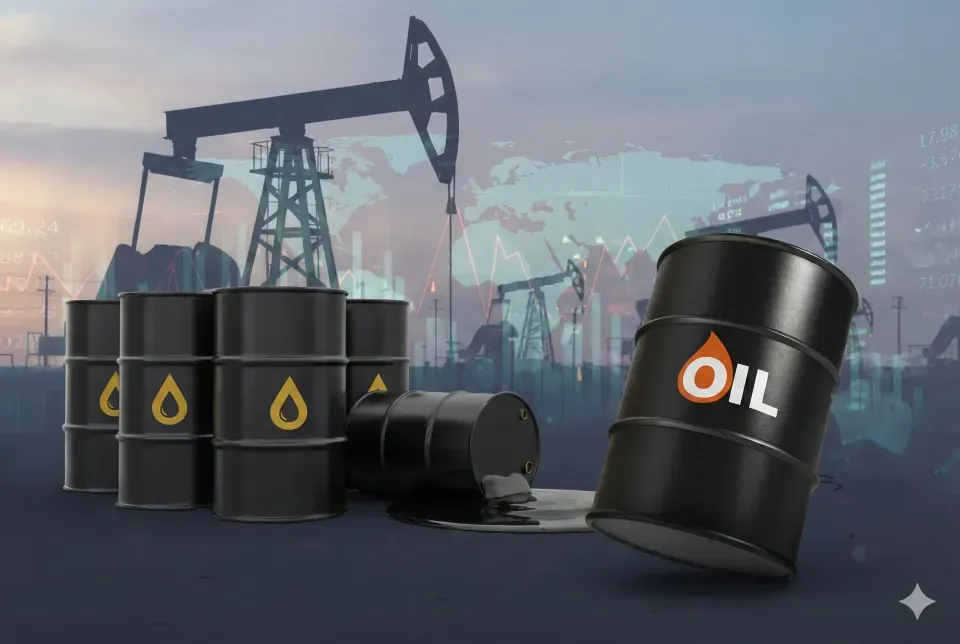
According to Reuters, oil prices stabilized on Friday, December 5, 2025, as the market focused on the stalled peace talks in Ukraine and future supply prospects. Crude prices declined slightly in daily trading, but the weekly trend remains positive, supported by bullish factors such as geopolitical tensions and expectations of interest rate cuts from the U.S. Federal Reserve, countered by bearish pressures from supply surplus.
OPEC+ agreed to keep production stable until early 2026, providing partial support, while Saudi Arabia reduced its prices to Asia to a five-year low. The stalled talks in Moscow, which could involve a deal to return Russian oil to the market, are a key bullish factor, along with the risks of U.S. military intervention in Venezuela, which could disrupt 1.1 million barrels per day.
Experts note that looking ahead, supply factors remain in focus. A peace deal with Russia would bring more barrels to the market and push prices down, while any geopolitical escalation would raise prices. OPEC+ has agreed to maintain stable production until early next year, adding some support to prices as well.
Oil prices remained stable on December 5, 2025, with weekly gains for WTI despite daily declines, as bullish factors from stalled Ukraine talks, expectations of Federal Reserve rate cuts, and tensions in Venezuela resisted bearish pressures from supply surplus and strong OPEC+ production. The main reasons behind price movement (detailed analysis) indicate that stability and the second consecutive weekly gain (approximately 1.7% for WTI) stem from a balance between bullish and bearish forces. Here are the key details of the reasons, focusing on economic and geopolitical factors:
Stalled peace talks in Ukraine (a key bullish factor): The failure of U.S. talks in Moscow to achieve any significant breakthrough reduces the likelihood of a peace deal allowing increased Russian oil back into the global market. Russia, a major producer, is currently cutting its output under the OPEC+ agreement, and any peace deal could raise production, pushing prices down. This stalemate provides a "bullish backdrop" by reducing the risk of increased supply, thereby supporting prices despite daily fluctuations.
Impact: It maintains a relative supply shortage, especially as the ongoing war reduces Russian exports by 20-30% compared to 2021.
Expectations of interest rate cuts from the Federal Reserve (a bullish economic factor): 82% of economists surveyed by Reuters (from November 28 to December 4) expect a U.S. interest rate cut, stimulating global economic growth and increasing energy demand. This enhances market confidence, especially with the global economy slowing, which has driven prices to their lowest in four years (around $60 per barrel).
Impact: It alleviates recession fears, as global oil demand is expected to increase by about 1.2 million barrels per day in 2026, according to OPEC forecasts.
Geopolitical tensions in Venezuela (a potential bullish factor): The threat of potential U.S. military intervention could disrupt Venezuela's production (1.1 million barrels per day, mostly going to China), which could raise prices if tensions escalate. Venezuela faces U.S. sanctions, and any escalation would reduce global supply by 1-2%.
Impact: It adds a layer of uncertainty, as previous sanctions led to temporary price increases of 5-10%.
OPEC+ agreement to keep production stable (partial support): OPEC+ decided to keep production unchanged until early 2026, preventing supply increases and providing support to prices despite bearish pressures.
Impact: It balances the expected surplus (around 1 million barrels per day in 2026) and demand shortfall.
Bearish pressures (which limited the rise): Potential supply surplus and Saudi price cuts to Asia (the lowest in five years) reflect concerns about inventory accumulation, limiting significant price increases. Global production currently exceeds demand, with a focus on renewable energy.
Impact: It makes trading "quiet" within a narrow range, as analysts described.
Conclusion: The stability reflects a balance between geopolitical and economic support (stalled Ukraine talks, Fed cuts, Venezuela, OPEC+) and pressures from supply surplus. Forecasts suggest potential increases if tensions escalate, but global recession may limit this.
Sources & References
Editorial Note
Disclaimer
Please review the Terms & Conditions.
© 2025 EcoPulse24. All rights reserved.