Political De-escalation and Stable Supplies Weigh on Oil as Downward Price Trend Continues
Oil prices fall as Middle East tensions ease, OPEC+ holds output, and stable supply outweighs risk; market focus shifts to fundamentals.

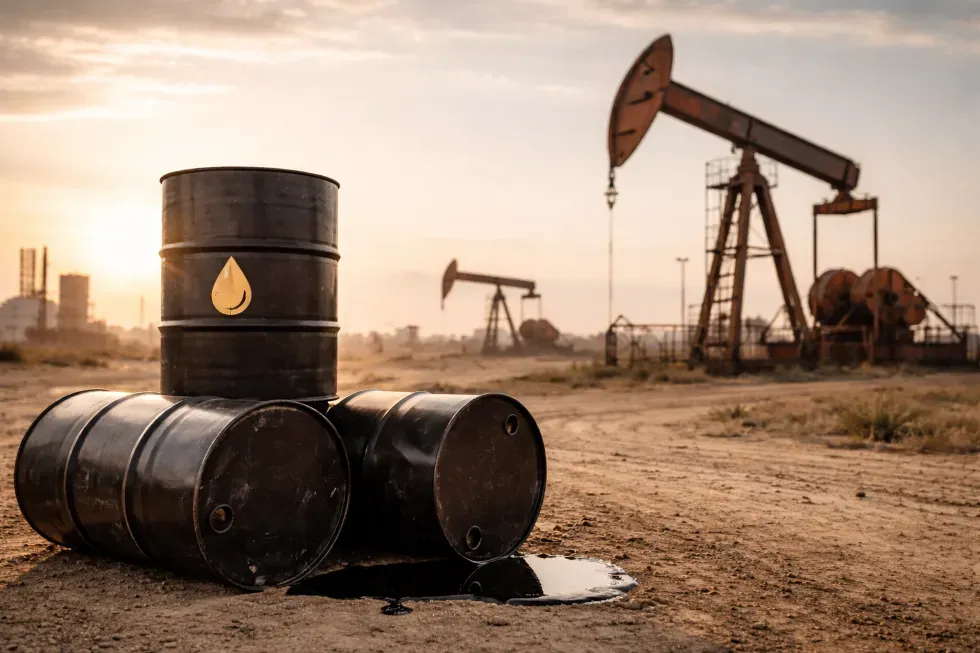
Washington | EcoPulse24
Global oil markets continue to face notable pressure as geopolitical risks in the Middle East subside, resulting in a repricing of the risk premium that had been embedded in oil prices in recent weeks. This shift in the political landscape, coupled with stable supply, has driven crude prices to extend losses for a second consecutive session as investors monitor a complex mix of diplomatic and trade developments.
West Texas Intermediate (WTI) crude fell to $61.879 per barrel, down by $0.261 or -0.42%. Meanwhile, Brent crude traded at $66.025 per barrel, a decline of $0.275 or -0.41%. These levels mark the largest six-month decline and highlight that the market is now more sensitive to political news than to traditional short-term factors.
The main pressures stemmed from renewed diplomacy between the US and Iran, following the announcement that both sides would resume talks on Friday in an effort to revive negotiations related to Iran's nuclear program. This development eased concerns over a potential regional escalation or disruption of oil supplies from the Middle East, leading to a reduction in the geopolitical risk premium that had previously supported prices.
Additionally, trade comments from US President Donald Trump added further pressure. He announced a potential reduction in tariffs on Indian goods from 25% to 18%, following Indian Prime Minister Narendra Modi's commitment to halt Russian oil purchases and increase US energy imports, with the possibility of supplies from Venezuela. This move has redrawn the energy trade map and raised expectations of increased supply in certain markets.
On the supply front, OPEC+ confirmed its plan to keep production levels unchanged for March, reinforcing the perception of abundant supply. This decision follows a previous pause in production hikes amid weak seasonal demand, keeping the market balance tilted in favor of buyers, especially as risk-driven price support has faded.
Market reactions reflect a shift in investor priorities, with a focus on stable supplies and political trends rather than short-term disruptions. As tensions have eased, hedging appetite has declined, increasing selling pressure on oil futures contracts.
Currently, price movements align with a comprehensive reassessment of supply and demand fundamentals, with no immediate catalyst likely to reverse the trend in the short term. The market is operating within a range that reflects relative supply abundance against lackluster demand.
EcoPulse24 Analysis:
The ongoing decline in oil prices signals a clear shift from risk pricing to fundamentals. Easing geopolitical tensions have removed a key support for recent price increases, while steady OPEC+ production reinforces the perception of a well-supplied market. Meanwhile, shifts in energy trade flows between the US, India, and Russia add a new layer of uncertainty but are insufficient on their own to support prices in the absence of sharp risks. The general trend points to continued pressure unless a new geopolitical factor or significant improvement in global demand emerges, with oil remaining sensitive to sudden changes in the political landscape before economic ones.
Explore Related Coverage
Sources & References
Editorial Note
Disclaimer
© 2025 EcoPulse24. All rights reserved.