Saudi Aramco Reroutes Oil Exports to Asia via Yanbu Amid Strait of Hormuz Risks
Saudi Aramco is cutting April crude to Asia, rerouting exports via Yanbu due to Hormuz risks, reducing supply flexibility and impacting refiners.

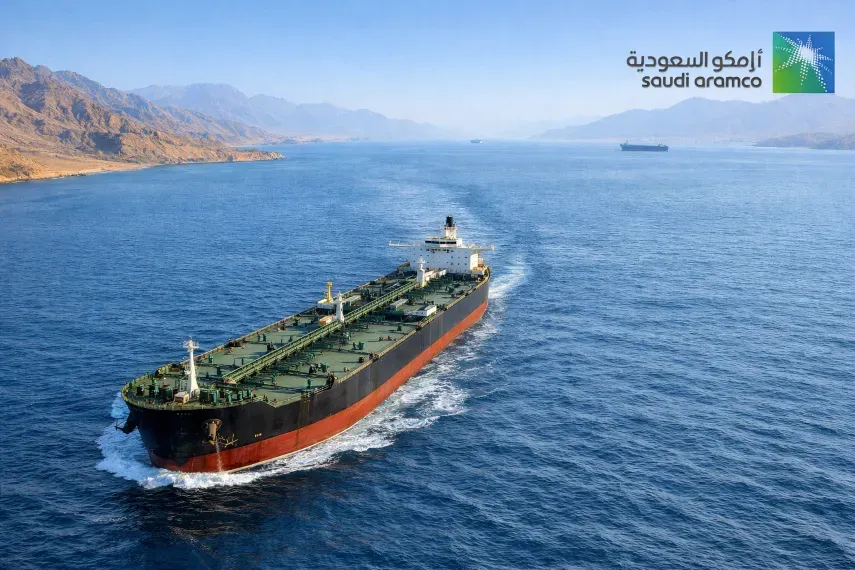
Riyadh | EcoPulse24
Saudi Aramco’s latest move to cut crude allocations to Asian buyers for April is not just another supply adjustment-it is a clear signal that the global oil system is being forced to reroute under geopolitical stress.
According to Reuters, the world’s largest oil exporter has reduced term supplies to Asia for a second consecutive month, limiting deliveries to a single grade-Arab Light-and shifting all loadings to the Red Sea port of Yanbu. This marks a departure from the Kingdom’s traditional export pattern through Gulf terminals such as Ras Tanura, and reflects a deeper shift in how oil is physically moving across markets.
At the center of this shift is the growing disruption around the Strait of Hormuz, a chokepoint that normally handles a significant share of global crude flows. As risks escalate in the region, Saudi Arabia is increasingly relying on its East – West pipeline system to move crude from eastern fields to the Red Sea, bypassing the Gulf entirely.
This is not simply a logistical workaround. It represents a reconfiguration of oil trade geography.
By routing barrels through Yanbu, Aramco is effectively replacing maritime flexibility with pipeline dependency. While the East – West pipeline-with capacity of up to roughly 7 million barrels per day-provides a critical alternative, it also concentrates flows into a narrower system with fewer exit points. That reduces optionality at a time when the market typically relies on routing flexibility to absorb shocks.
The implications are already being felt in Asia.
Refiners across key import markets, including China, India, and South Korea, are facing tighter supply conditions and reduced feedstock flexibility. Being restricted to a single crude grade limits blending options and can affect refining efficiency, particularly for plants designed to process a range of crude types. The result is not just constrained supply, but also pressure on product output-including gasoline, diesel, and jet fuel.
Shipping data reinforces the scale of the shift. Saudi crude exports have fallen sharply in March compared with February levels, while loadings from Yanbu are rising toward record highs as the Kingdom pushes more barrels westward. Individual buyers are already adapting, with large volumes being lifted from the Red Sea rather than the Gulf.
At the same time, Aramco has not publicly commented on the allocation changes, and no precise volume cuts have been disclosed. The adjustments are being communicated through term contracts, underscoring the controlled and strategic nature of the shift.
Beyond the immediate supply picture, the more important signal lies in what this says about the resilience of global oil flows.
For decades, the system has depended on a combination of production capacity and transport flexibility. What is now emerging is a scenario where production remains available, but movement becomes constrained. Oil is not necessarily scarce-but it is becoming harder to move efficiently.
Saudi Arabia’s ability to redirect flows through Yanbu gives it a relative advantage over other regional producers that remain heavily dependent on Hormuz. This creates an uneven landscape, where infrastructure-not just reserves-determines resilience.
EcoPulse24 Analysis
What Aramco is doing is not merely cutting supply-it is redefining how supply reaches the market.
The shift toward pipeline-driven exports highlights a structural change in global energy logistics, where chokepoint risk is no longer theoretical but actively shaping trade routes. As routing options narrow, the system loses flexibility, and each additional disruption carries greater weight.
This is the same pattern now visible across energy markets: concentration risk. Whether in LNG hubs, oil export corridors, or critical infrastructure, the system is being tested at multiple pressure points simultaneously.
In this environment, the key variable is no longer just how much oil is produced, but how reliably it can be delivered. And right now, that reliability is being recalibrated in real time.
Explore Related Coverage
Sources & References
Editorial Note
Disclaimer
© 2025 EcoPulse24. All rights reserved.