Supertankers Crowd Red Sea as Saudi Arabia Accelerates Oil Exports to Bypass Hormuz
Saudi Arabia boosts Red Sea oil exports via Yanbu to bypass Hormuz, with supertankers crowding the port amid Iran war disruptions.

Riyadh | EcoPulse24
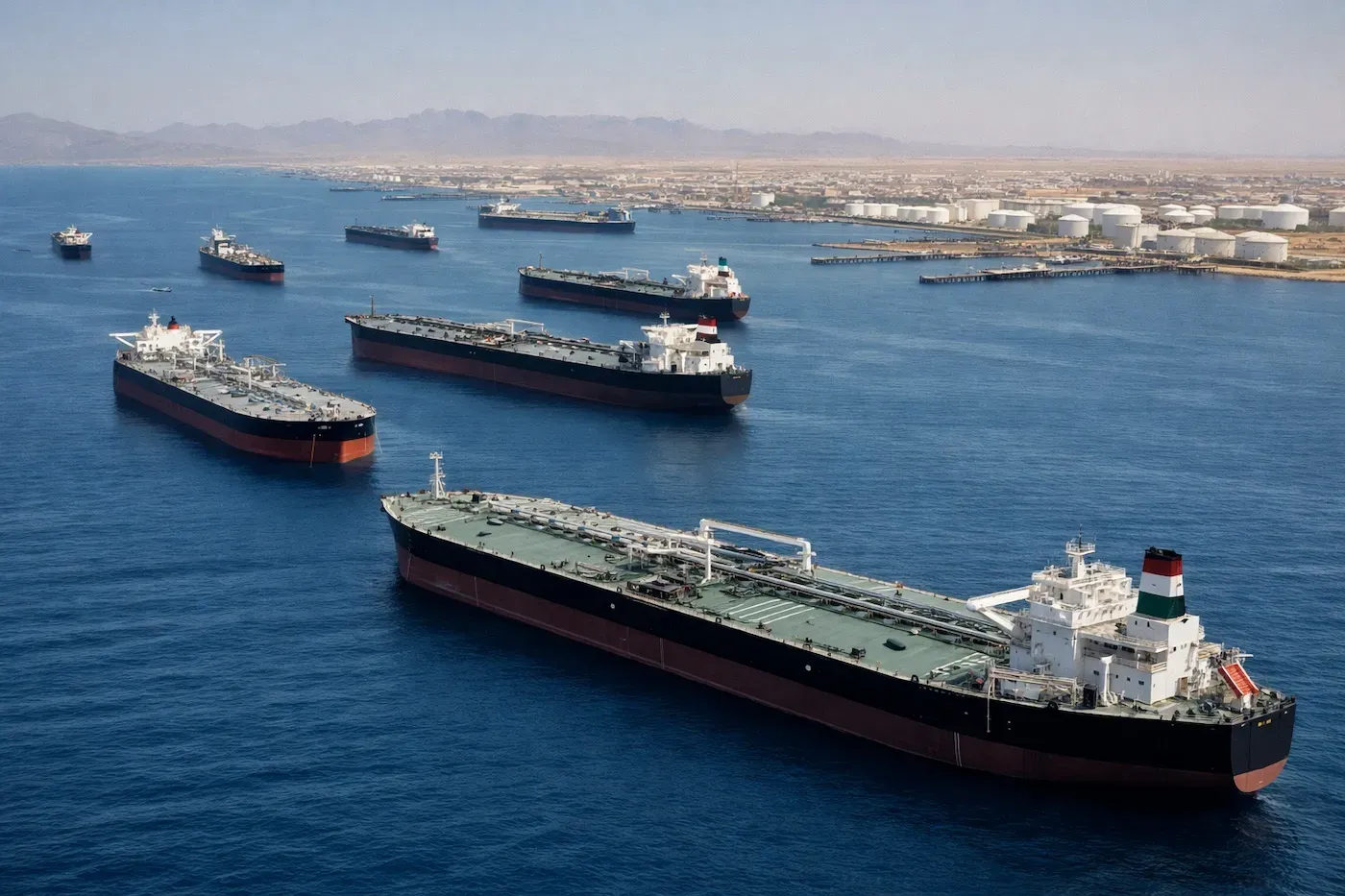
According to Bloomberg, Saudi Arabia is rapidly shifting its oil export routes toward the Red Sea, with a growing number of supertankers gathering off the coast near the port of Yanbu as the kingdom seeks to maintain crude shipments amid disruptions linked to the Iran war.
According to ship-tracking data cited by Bloomberg, at least 11 very large crude carriers (VLCCs) arrived near Yanbu within the past day and are currently waiting offshore before beginning loading operations. Dozens of additional tankers are also heading toward the Saudi Red Sea port, highlighting the scale of the logistical effort underway.
Traders are closely monitoring the pace at which Saudi infrastructure can handle the influx of vessels. Saudi Aramco has indicated that crude shipments routed through the Red Sea could soon reach 5 million barrels per day, although export infrastructure at Yanbu has never previously operated at that level.
So far this month, export flows from Yanbu have averaged around 2.7 million barrels per day, just over half of the targeted capacity. Shipments have already accelerated, averaging 2.9 million barrels per day in the week ending March 12, compared with roughly 1.9 million barrels per day during the first five days of March, indicating a rapid ramp-up in export activity.
Yanbu serves as a critical alternative export hub for Saudi crude, particularly during periods of disruption in the Persian Gulf. The complex includes two main export terminals Yanbu North and Yanbu South (Al-Mu’ajjiz) which together provide seven berths capable of loading very large crude carriers.
Much of the oil exported through Yanbu arrives via Saudi Arabia’s East-West pipeline, which transports crude from processing facilities in Abqaiq in the kingdom’s eastern region across the country to the Red Sea coast. At typical pipeline flow speeds, it can take four to ten days for increases in crude volumes injected into the pipeline to reach Yanbu.
Saudi Aramco Chief Executive Officer Amin Nasser recently said the company is ramping up crude flows through the pipeline, suggesting that additional cargoes may begin arriving at the Red Sea export terminals within days.
At the same time, the destination of these shipments has shifted significantly. Most cargoes leaving Yanbu are now being directed toward Asian markets, rather than traditional routes through the SUMED pipeline in Egypt, which transports crude from the Red Sea to the Mediterranean.
The surge in tanker activity comes as global oil markets face mounting pressure following the outbreak of the Iran war. Crude prices have climbed to nearly $100 per barrel, while the International Energy Agency described the effective disruption of the Strait of Hormuz one of the world’s most critical energy chokepoints as one of the largest threats to global oil supply on record.
EcoPulse24 Analysis
The buildup of supertankers near Yanbu signals a rapid strategic shift in Saudi Arabia’s export logistics. By increasing reliance on Red Sea routes and the East-West pipeline, the kingdom is attempting to reduce its dependence on the Strait of Hormuz, which handles a substantial portion of global oil trade.
While Yanbu has significant theoretical loading capacity, sustaining exports approaching five million barrels per day would represent an operational test for the infrastructure. If successful, the shift could reshape global crude trade flows, particularly as Saudi shipments increasingly pivot toward Asia, the world’s largest energy-consuming region.
Explore Related Coverage
Sources & References
Editorial Note
Disclaimer
© 2025 EcoPulse24. All rights reserved.