How a Bet on a ‘Niche’ Memory Chip Helped SK Hynix Challenge Samsung’s Dominance
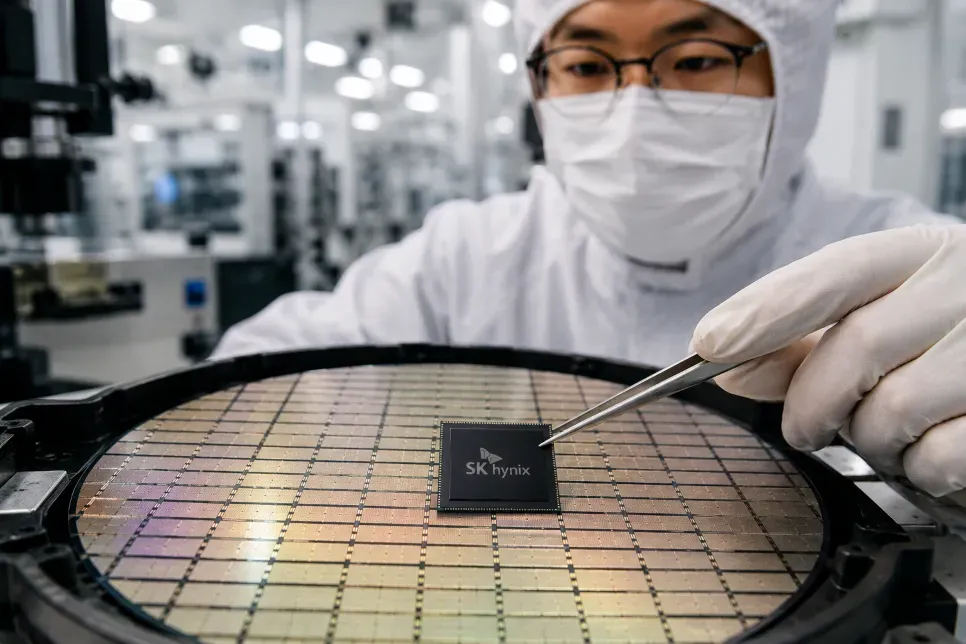
SK Hynix transformed itself from a struggling memory maker into an AI leader through an early bet on high-bandwidth memory chips.

Seoul | EcoPulse24
For years, SK Hynix was viewed as South Korea's perennial runner-up in memory chips, operating in the shadow of Samsung Electronics and struggling through the industry's brutal boom-and-bust cycles.
Today, it stands at the center of the global artificial intelligence boom.
SK Hynix briefly overtook Samsung Electronics on Monday to become South Korea's most valuable listed company, before falling back below Samsung's market capitalization on Wednesday amid sharp market swings, according to a Reuters report based on interviews with former executives and historical accounts of the company.
The fleeting crossover was less important than what it represented: a decade-long strategic bet on a memory technology that many once considered peripheral has become one of the most valuable positions in the AI era.
A Risky Acquisition That Raised Doubts
When SK Group acquired Hynix Semiconductor in 2012, the deal was widely seen as financially risky.
At the time, Samsung was worth more than ten times SK Hynix and dominated the global DRAM market, while the semiconductor industry was notorious for its cyclicality and enormous capital requirements.
According to a book published in January 2026, SK Group Chairman Chey Tae-won envisioned transforming the company from a commodity memory producer into a supplier of indispensable semiconductor technologies.
That vision would ultimately lead the company toward high-bandwidth memory, or HBM.
Betting on a Memory Technology Few Believed In
Seeking a competitive edge, SK Hynix chose to invest in HBM, a type of memory capable of transferring massive amounts of data at extremely high speeds.
At the time, however, the technology was considered a niche product with limited commercial applications.
The company launched the world's first HBM product in partnership with AMD in 2014.
Yet the path forward proved difficult.
Development challenges in second-generation HBM products allowed Samsung to regain ground, and some executives even considered abandoning the technology entirely, according to former company officials interviewed by Reuters.
Doubling Down Instead of Walking Away
Rather than retreat, SK Hynix increased its commitment.
The company redesigned its technology and invested aggressively in new production capacity, anticipating future demand from Nvidia, which at the time was primarily known as a supplier of graphics processors for gaming and computing.
The bet included an investment of approximately 880 billion won ($640 million) in an advanced packaging facility in Icheon.
Initially, the investment appeared to be a mistake.
Demand from Nvidia and cryptocurrency miners weakened sharply in 2019, leaving the facility underutilized.
Shim Dae-young, who led HBM development at the company, later described the plant as having appeared "obsolete" at the time.
ChatGPT Changed Everything
The landscape shifted dramatically following the launch of OpenAI's ChatGPT in late 2022.
The rise of generative AI triggered an unprecedented surge in demand for computing infrastructure and advanced AI accelerators.
HBM suddenly became indispensable.
The chips emerged as a critical component inside Nvidia's AI accelerators used to train and run artificial intelligence models in data centers.
Today, SK Hynix is Nvidia's leading supplier of HBM products.
"No one expected the HBM market to grow this explosively," Shim said. "But we were ready in terms of both performance and production capacity."
From Near Collapse to Industry Leadership
Founded in 1983 as Hyundai Electronics, the company endured multiple crises, including a near-bankruptcy episode in 2001 after a collapse in memory chip prices.
More recently, SK Hynix reported an operating loss of 7.73 trillion won in 2023 as the memory industry entered another downturn.
The recovery, however, was swift.
The company posted record operating profits in 2024 and briefly overtook Samsung in 2025 as the world's largest DRAM producer.
Its shares have risen more than 340% this year, and Reuters previously reported that SK Hynix is preparing for a potential US listing as early as August.
Key Data
| Metric | Details |
|---|---|
| Briefly surpassed Samsung | June 22, 2026 |
| First HBM product | 2014 (with AMD) |
| Icheon facility investment | 880 billion won ($640 million) |
| Operating loss | 7.73 trillion won (2023) |
| Share performance this year | More than +340% |
| Potential US listing | As early as August 2026 |
EcoPulse24 Analysis
A 14-Year Bet That Rewrote the Industry's Rules
This is not simply the story of one company briefly surpassing another in market value.
It is the story of a strategic wager that took more than a decade to materialize.
What many considered a niche memory technology in 2014 became, after 2022, one of the foundational technologies powering the global AI economy.
The lesson is significant.
Leadership in technology industries is not always determined by size, market share or financial resources. Sometimes it belongs to the company willing to invest early in technologies that appear commercially insignificant at the time.
Yet the story remains unfinished.
SK Hynix's market capitalization slipped back below Samsung's only two days after the crossover, raising an important question:
Are investors witnessing a permanent shift in South Korea's semiconductor hierarchy, or merely a temporary distortion created by the current AI investment cycle?
For now, there is no definitive answer.
What is increasingly clear, however, is that high-bandwidth memory has become one of the most strategically important technologies in the global semiconductor industry.
Sources & References
Editorial Note
Disclaimer
© 2025 EcoPulse24. All rights reserved.