UK Retail Sales Jump 1.2% in Surprise Boost to Economy
UK retail sales rose 1.2% in May, beating forecasts and signaling consumer resilience despite higher energy prices and slowing growth.

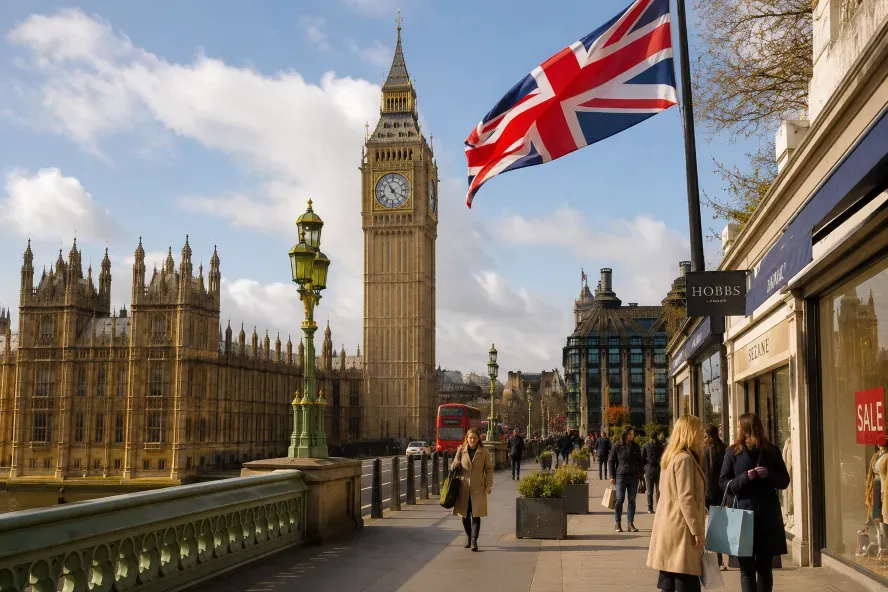
London | EcoPulse24
UK retail sales rebounded unexpectedly strongly in May, offering fresh evidence that British consumers are proving more resilient than feared despite higher energy costs and mounting economic uncertainty.
According to the Office for National Statistics (ONS), the volume of goods sold online and in stores increased 1.2% month-on-month in May, following a revised 1% decline in April, when households were hit by a sharp rise in fuel prices.
The increase was the strongest since January and significantly exceeded economists' expectations of a 0.5% rise.
Promotions and Warm Weather Lifted Spending
The ONS said promotional campaigns and unusually warm weather boosted consumer spending during the month, with department stores and household goods retailers posting particularly strong performances.
The figures suggest that British households have so far weathered the energy shock better than expected, despite rising living costs triggered by the conflict in Iran.
Consumers Are Showing Unexpected Resilience
Markets had broadly expected higher energy prices to significantly weaken household spending and weigh more heavily on economic activity.
Instead, the latest data indicate that consumers continue to spend, treating higher energy bills as a temporary shock rather than a lasting deterioration in their financial position.
Rob Wood, Chief UK Economist at Pantheon Macroeconomics and a former Bank of England official, said:
"May's rebound in retail sales was helped by the weather but also shows consumers have been surprisingly resilient."
He added that households appear to be smoothing their spending by viewing higher energy prices as a temporary state of affairs.
Energy Pressures Remain a Risk
Despite the stronger-than-expected rebound, economic challenges have not disappeared.
Economists now expect the peak in inflation to be lower than previously feared if the preliminary US-Iran truce holds and recent declines in crude oil prices continue to feed through into petrol costs.
However, households are still expected to face a 13% increase in the UK's energy price cap in July, potentially renewing pressure on family finances.
Separate data from market research firm GfK showed that consumer confidence in June remained below levels seen before the conflict, while sentiment among younger Britons fell to its lowest level in two years.
Fiscal Constraints Continue to Build
Official figures released separately on Friday highlighted additional challenges for the British economy, showing that rising debt interest costs pushed government borrowing to its highest level for any May since the pandemic.
The data underscore the fiscal pressures that could constrain future economic policy and complicate the outlook for Britain's next government.
Growth Outlook Remains Mixed
Britain started 2026 strongly, with official data showing the economy growing faster than any other Group of Seven (G7) country.
However, GDP contracted in April, and many economists expect only modest expansion during the second and third quarters of the year.
The rebound in retail sales nevertheless provides a positive signal that domestic consumption - one of the UK's most important economic drivers - may be holding up better than anticipated.
EcoPulse24 Analysis
The significance of the report extends beyond the headline 1.2% increase in retail sales.
The data challenge one of the dominant market assumptions of recent months: that higher energy prices stemming from the Iran conflict would quickly undermine household spending and accelerate the UK's economic slowdown.
Instead, British consumers appear to be demonstrating notable resilience.
That resilience matters because household consumption remains the backbone of the British economy. If consumers continue to spend despite elevated energy costs, the risk of a sharp downturn diminishes and the prospect of a soft landing improves.
However, the picture remains far from clear. Consumer confidence is still weak, energy bills are set to rise again in July, and government finances are under increasing pressure.
For policymakers at the Bank of England, the figures suggest that domestic demand remains sufficiently firm to keep inflation risks alive, reinforcing the case for a cautious approach toward future interest-rate cuts.
The key question for the second half of 2026 is whether this rebound represents the beginning of a more durable recovery or simply a temporary lift driven by favorable weather, promotions and hopes that the recent easing in energy prices will persist.
Sources & References
Editorial Note
Disclaimer
© 2025 EcoPulse24. All rights reserved.