US Dollar Falls to 3-Month Low as Australian Dollar, Yen, and Euro Gain on Widening Policy Divergence
US dollar hits 3-month low as AUD, yen, and euro gain on policy divergence and rate cut bets; dollar set for weakest year in 20+ years.


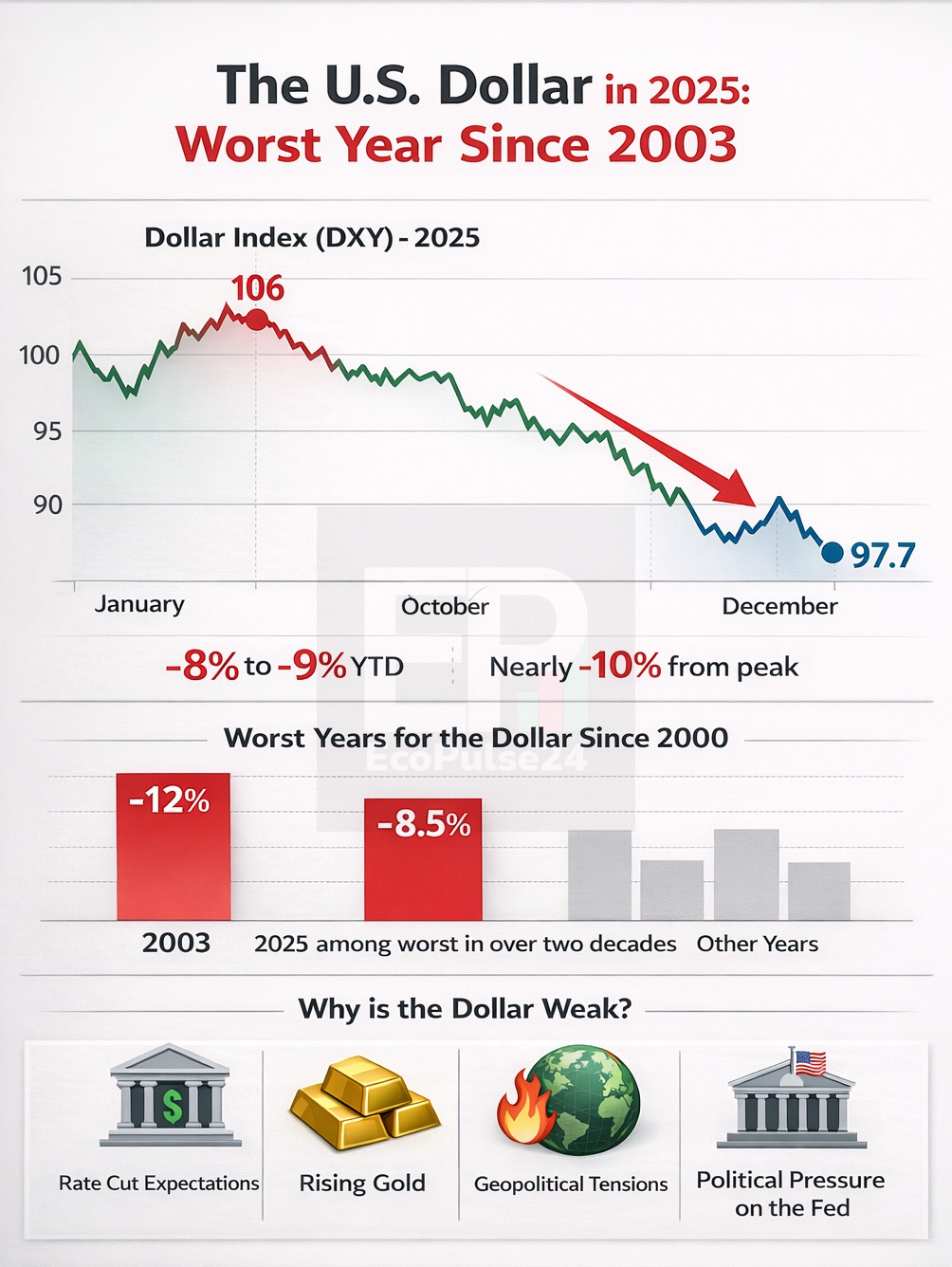
Global currency markets saw notable moves on Wednesday as the US dollar fell to its lowest point in 12 weeks, allowing major currencies - particularly the Australian dollar, Japanese yen, and euro - to strengthen amid growing divergence in global monetary policies and anticipation over the future path of US interest rates. The US dollar index dropped to around 97.7, its lowest since early October, as investors bet that the Federal Reserve has room to cut rates in 2026, despite strong US GDP growth data. Markets currently price in two rate cuts next year, supported by easing inflation, a moderating labor market, and political pressure for more flexible monetary policy. Safe-haven flows into precious metals and heightened geopolitical risks have also weighed on the dollar, alongside a strong performance by the yen.
The Australian dollar continued its climb, with AUD/USD reaching 0.67 - its highest since October 2024 - posting a 3.73% gain over the past four weeks and up 7.88% year-on-year. This was supported by expectations of potential monetary tightening in Australia and record high prices for commodities like gold and copper.
In Asia, the yen rose for a third consecutive session, trading near 156.7 per dollar amid speculation of possible intervention by Japanese authorities to curb currency volatility. Minutes from the Bank of Japan's October meeting reinforced expectations of ongoing monetary normalization and further rate hikes, especially after the latest increase, while markets monitor Japan's 2026 fiscal budget estimated at 122 trillion yen.
In Europe, the euro gained against the dollar, with EUR/USD rising to 1.18 - its highest since September 2025 - delivering a 2.01% gain over four weeks and a 13.26% annual increase. This performance reflects improved confidence in the euro and continued weakness in the dollar as eurozone monetary policy expectations remain relatively stable.
The dollar is now heading for its weakest annual performance in over 20 years, after a year marked by political and trade volatility, growing concerns over monetary policy independence, and widening yield gaps between the US and major economies.
EcoPulse24 Analysis: Current currency market moves reflect a broad repricing of the US dollar, driven by rate-cut expectations and widening global policy divergence. As year-end approaches, markets remain highly sensitive to official signals from central banks or sudden moves in safe-haven assets, which could increase short-term volatility.
Sources & References
Editorial Note
Disclaimer
© 2025 EcoPulse24. All rights reserved.