Global Currencies Under Pressure: Dollar Near Lows, Yuan Strengthens on Seasonal Flows, Yen Declines Amid Fiscal Concerns
Dollar stays near lows, yuan strengthens on year-end flows, yen weakens on fiscal worries; policies to drive currencies into 2026.

Washington | Beijing | Tokyo | EcoPulse24
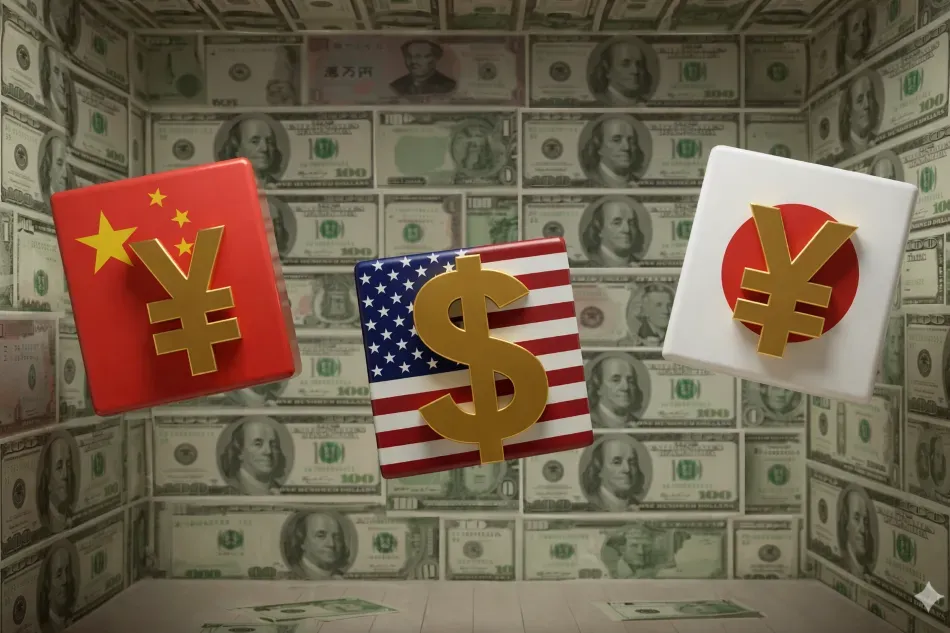
Currency markets exhibited clear divergence, with the US dollar stabilizing near its lowest levels in months, the Chinese yuan remaining strong on year-end flows, and the Japanese yen facing fresh pressures amid concerns over Japan’s fiscal situation.
US Dollar: Awaiting Fed Minutes, Structural Pressures
The dollar index hovered near 98 points, trading at its lowest since early October, as investors anticipated the release of the Federal Reserve’s December meeting minutes for clearer guidance on interest rates. Markets are currently pricing in two additional rate cuts in 2026, despite division within the Fed, with most policymakers seeing one cut as sufficient. US data was mixed, with pending home sales improving in November, but manufacturing activity indicators weakening, increasing uncertainty about economic momentum.
On a yearly basis, the dollar is set to record a decline of around 9.6%, its largest annual drop since 2017, pressured by expectations of monetary easing, narrowing yield differentials with major currencies, and political and fiscal factors, including volatile US tariff policies and concerns over fiscal deficits and monetary policy independence.
Chinese Yuan: Strength on Seasonal Flows, Official Caution
In contrast, the offshore Chinese yuan continued trading near 7 per dollar, its highest in about 15 months, buoyed by year-end seasonal demand and a weaker dollar. Chinese exporters typically convert foreign currency to yuan to cover payments and administrative obligations at year-end, a trend expected to continue into January ahead of the Lunar New Year holiday. However, the yuan’s rapid appreciation raised official concerns, with Chinese state media warning against one-way bets.
The People’s Bank of China reiterated its commitment to curb “excessive price moves,” setting the daily reference rate below market expectations for the past two weeks. Over 2025, the yuan has gained more than 4%, heading for its best annual performance since 2020.
Japanese Yen: Fiscal Pressures, Intervention Signals
The Japanese yen weakened to around 156 per dollar in thin holiday trading, giving up the previous session’s gains as investors focused on Japan’s expansionary fiscal policy. The government recently approved a record budget of 122.3 trillion yen under Prime Minister Sanae Takaichi, seeking to balance robust spending with debt management by limiting new bond issuance. However, Japan’s fiscal position remains a concern, with public debt exceeding twice the size of the economy, limiting the government’s ability to implement broad stimulus packages.
In a bid to curb yen weakness, officials signaled possible intervention, with Finance Minister Katayama emphasizing Japan’s right to act against “excessive” currency moves. On the monetary front, markets are eyeing July as a possible date for another rate hike, though an earlier move remains possible if yen weakness persists.
EcoPulse24 Insight
Current trends highlight diverging paths for major currencies: US monetary easing and political uncertainty weigh on the dollar, the yuan benefits from seasonal flows and a weaker dollar, while the yen remains volatile amid fiscal constraints and authorities’ stance on currency moves. Monetary and fiscal policies are expected to remain the key drivers of currency market direction into early 2026.
Sources & References
Editorial Note
Disclaimer
Please review the Terms & Conditions.
© 2025 EcoPulse24. All rights reserved.