Warsh Wins Senate Approval for Federal Reserve Board as Markets Brace for Potential Leadership Shift
Kevin Warsh was confirmed to the Fed Board, signaling a possible leadership shift as markets brace for oil-driven inflation and political pressure.

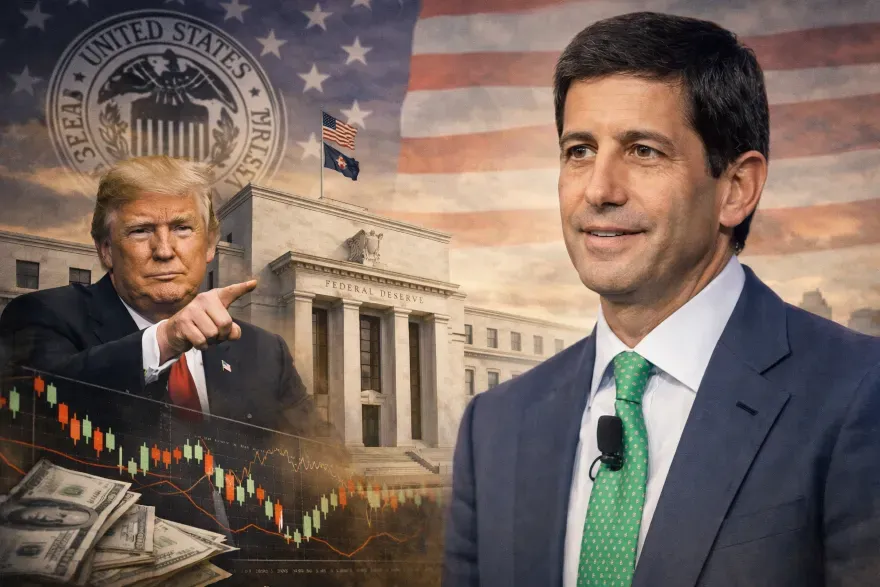
Washington | EcoPulse24
Federal Reserve, Kevin Warsh, Jerome Powell, interest rates, inflation, oil prices
The US Senate approved Kevin Warsh as a member of the Federal Reserve Board on Tuesday, marking a major step toward a potential leadership transition at the US central bank as political pressure on monetary policy intensifies under President Donald Trump’s administration.
Warsh was confirmed by a 51-45 vote, with Democratic Senator John Fetterman joining Republicans in supporting the nomination. At the same time, the Senate advanced procedural steps toward confirming Warsh as Federal Reserve chair for a four-year term, with a final vote expected soon.
The development comes only days before Jerome Powell’s term as Fed chair is set to expire, increasing speculation that the US central bank may soon enter one of its most politically sensitive periods in decades.
Political Pressure on Fed Independence Intensifies
The leadership transition is unfolding amid growing political pressure from the White House for faster interest-rate cuts as the US economy faces renewed inflationary pressure linked to rising energy prices and the ongoing Iran war.
The Trump administration has repeatedly criticized the Federal Reserve’s policy stance in recent months, arguing that borrowing costs remain too restrictive despite mounting geopolitical and energy-related risks.
The broader political climate has also included legal and institutional pressure surrounding the Federal Reserve itself, including scrutiny tied to renovation projects at the Fed’s headquarters and broader debate over the bank’s operational independence.
Jerome Powell has indicated he intends to remain on the Federal Reserve Board after his term as chair ends, a move widely interpreted as an effort to preserve institutional continuity amid escalating political tension.
Warsh Calls for Structural Changes
Warsh, a former Federal Reserve governor and investment banker, is widely viewed as supportive of broad institutional reform within the central bank.
He has previously argued for reducing the size of the Fed’s balance sheet and strengthening coordination between monetary and fiscal authorities on certain economic matters.
Supporters believe such measures could eventually create conditions allowing interest rates to decline without reigniting inflation pressures.
Markets are increasingly focused on whether Warsh’s leadership could alter the Federal Reserve’s policy framework, particularly regarding the pace of monetary easing and the balance between inflation control and economic growth.
Oil Prices Push Inflation Back Into Focus
The possible leadership transition comes as inflation risks have returned to the center of market attention following the sharp rise in oil prices since the outbreak of the Iran war and disruptions across the Strait of Hormuz.
Those developments have significantly reduced expectations for rate cuts during 2026 while increasing speculation that the Federal Reserve may ultimately need to tighten policy further if inflation accelerates again.
The current federal funds rate stands between 3.50% and 3.75%, while markets are now pricing in roughly a one-third probability of another rate hike by December.
June Fed Meeting Under Spotlight
The Federal Reserve is scheduled to hold its next policy meeting on June 16-17, which could become the first meeting chaired by Warsh if his nomination is finalized before then.
Although the Fed chair formally holds only one vote within the Federal Open Market Committee, the position carries enormous influence over monetary policy communication, market expectations and broader financial conditions.
EcoPulse24 Analysis
Kevin Warsh’s rise inside the Federal Reserve represents more than a leadership change.
It may signal the beginning of a broader shift in the relationship between US monetary policy and political power.
Global markets are not only watching who leads the Federal Reserve next - they are watching whether the traditional independence of the US central bank can remain intact during a period of rising geopolitical instability, energy-driven inflation and growing political intervention.
The timing is especially sensitive.
The transition comes as markets face:
-
elevated oil prices
-
renewed inflation pressure
-
volatile Treasury yields
-
geopolitical conflict tied to Iran
-
uncertainty around future US rate policy
If Warsh ultimately adopts a more flexible stance toward rate cuts or closer coordination with the White House, the implications could extend far beyond the United States.
Such a shift could reshape expectations across global bond markets, the US dollar, gold prices and broader capital flows during the second half of 2026.
Explore Related Coverage
Sources & References
Editorial Note
Disclaimer
© 2025 EcoPulse24. All rights reserved.