Washington Pressures with Tariffs: Threatens 100% Duties on Korean and Taiwanese Chips Unless Made in the US
US may impose 100% tariffs on Korean, Taiwanese chips unless firms build US plants, pressuring Asian giants to invest in American production.

Washington | EcoPulse24
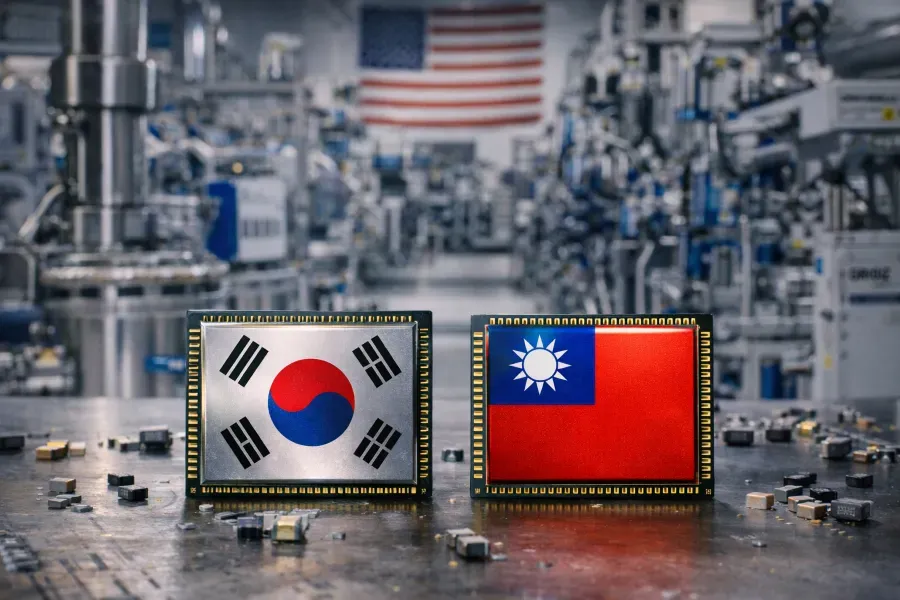
US Commerce Secretary Howard Lutnick has signaled the possibility of imposing tariffs of up to 100% on semiconductor manufacturers from South Korea and Taiwan if they do not expand production within the United States. This marks a clear escalation in US industrial policy aimed at reducing dependency on foreign semiconductor imports.
Lutnick's comments came on Friday after attending the groundbreaking ceremony for a new Micron Technology plant in New York. He stated that memory companies have only two choices: pay a 100% tariff or build factories in the United States, describing this approach as “direct industrial policy.”
Tariffs as Leverage and Investment Tool
The remarks coincided with a recent US – Taiwan trade agreement, which cut tariffs on Taiwanese imports to 15% in exchange for large-scale commitments to US manufacturing. This demonstrates Washington’s use of a mix of incentives and pressure to push Asian companies to relocate their supply chains.
Under the agreement, Taiwanese technology firms will invest $250 billion directly in the US, along with $250 billion in credit guarantees to support the expansion of the American chip supply chain, with temporary tariff exemptions during the construction phase.
Impact on Major Memory Producers
The US warning implicitly targets major companies such as:
- Samsung Electronics
- SK Hynix
- TSMC
These firms dominate the high-bandwidth memory (HBM) chip market, critical for AI data centers amid surging global demand and supply chain concerns.
Markets reacted swiftly, with Micron shares jumping 7.8% in a single session, reflecting investor bets that domestic producers will benefit from potential restrictions on foreign competitors.
Industrial Policy at the Heart of the AI Race
These developments come as President Donald Trump’s administration seeks to re-shore strategic industries, especially semiconductors, seen as vital for:
- Artificial intelligence
- National security
- Digital and energy infrastructure
While the White House has not yet imposed broad tariffs on all imported chips, it has authorized the Commerce Department and US Trade Representative to negotiate with trade partners, keeping the maximum tariff threat on the table.
EcoPulse24 Analysis
This warning signals a clear shift from soft support policies to a more forceful approach in the chip sector, with Washington using high tariffs to redraw the global manufacturing map.
The message to markets and Asian firms is clear: investing in America is no longer just a strategic option, but a condition for competitive survival.
If these tariffs are enacted, we could see:
- Accelerated announcements of new manufacturing projects in the US
- Short-term increases in global chip costs
- Rising trade tensions in Asia
Explore Related Coverage
Sources & References
Editorial Note
Disclaimer
© 2025 EcoPulse24. All rights reserved.