Weather Risks and Supply Disruptions Push Global Food Price Index to Four-Month High
FAO Food Price Index hit a 4-month high in Feb 2026 due to grain and oil price hikes from weather and supply issues; sugar and dairy prices fell.

Rome | EcoPulse24
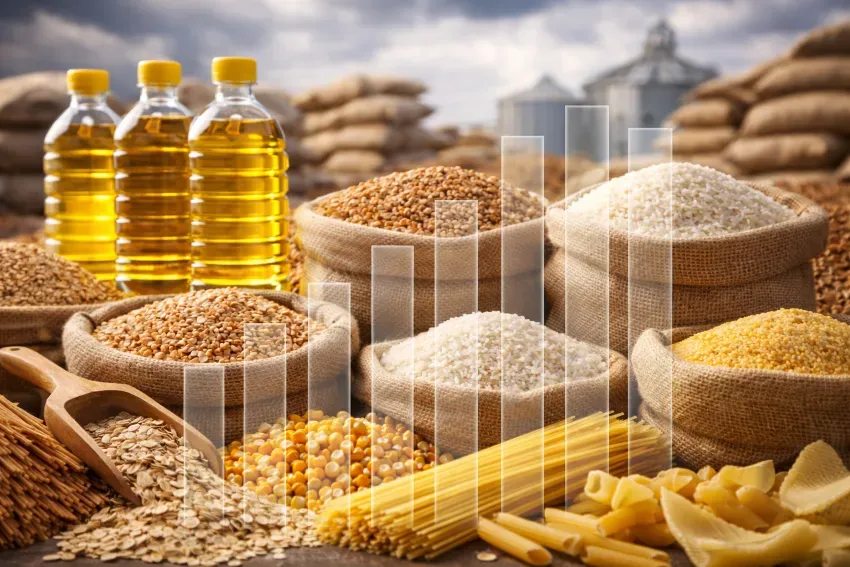
The United Nations Food and Agriculture Organization (FAO) Food Price Index rose to 125.3 points in February 2026, marking its highest level in four months. This increase was largely due to higher global prices for grains and vegetable oils, prompted by adverse weather conditions and supply chain disruptions.
The index, a key global benchmark for tracking developments in food commodity prices, measures monthly changes in a basket of staple foods including grains, vegetable oils, meat, dairy, and sugar.
On a price basis, the index climbed from a revised 124.2 points in January, reflecting ongoing pressures on certain food components at the start of 2026.
Within the index, grain prices rose 1.1% to a nine-month high, driven by a 1.8% increase in global wheat prices. This was attributed to reports of frost and risks to winter crops in parts of Europe and the US, raising concerns over expected production in the upcoming season.
Persistent tensions in the Black Sea region and logistical disruptions in Russia further pressured the grain market, as the area is a major global exporter of wheat and grains.
Meat prices increased 0.8% in February, supported by higher beef and lamb prices internationally, reflecting sustained global demand for animal protein despite economic pressures in some regions.
Vegetable oil prices jumped 3.3% to their highest since June 2022, with palm, soybean, and rapeseed oil prices all rising. The surge was due to tight supplies in some producing regions and increased industrial and food demand.
Conversely, some key food commodities saw price declines, helping limit the overall index rise. Sugar prices fell 4.1% to their lowest since October 2020, thanks to expectations of abundant global supply amid improved output in several major producing countries. Dairy prices dropped 1.2% to their lowest since January 2024, mainly due to falling cheese prices in Europe, where weak demand and higher production have weighed on the market.
These mixed movements within the index reflect the complex state of global food markets, where weather, geopolitics, and supply-demand dynamics interact.
EcoPulse24 Analysis:
The rise in the global food price index underscores the continued sensitivity of agricultural markets to climate volatility and geopolitical disruptions, especially in key grain and vegetable oil exporting regions. While lower sugar and dairy prices have helped curb the overall index, ongoing pressures on grains and oils may impact food inflation, particularly in food-importing economies. With persistent Black Sea tensions and growing climate risks, global food markets remain vulnerable to further fluctuations in the coming months, bringing food security concerns back to the forefront of economic policy in many countries.
Explore Related Coverage
Sources & References
Editorial Note
Disclaimer
© 2025 EcoPulse24. All rights reserved.